















MOREE Plains Shire councillor Kelly James was muted during a fiery extraordinary council meeting on Thursday, convened for councillors to discuss a recommendation from senior council staff to request the NSW Government to ‘stage’ funding for the Special Activation Precinct south of Moree.
Cr James attended the meeting via audiovisual link from Queensland.
Councillors debated a report tabled by senior staff warning the current delivery model could overwhelm Council’s finances if proceeded as planned.
Report 16.1 Moree Special Activation Precinct Update notes Council is engaging with the Regional Growth NSW Development Corporation regarding the negotiation of the Deed for the Moree Special Activation Precinct Master Plan.
The report recommended Council endorse a staged delivery approach for the Moree Plains Special Activation Precinct infrastructure; support an initial infrastructure cap of approximately $40 million, with road infrastructure capped at approximately $20 million; delegate authority to the general manager to formally write to the Regional Growth NSW Development Corporation seeking this revised staging approach prior to the finalisation of contractual arrangements; and note that this approach is intended to protect Council’s financial sustainability while still supporting the long-term objectives of the Special Activation Precinct.























The recommendation before Council was to ‘stage’ the project by reducing the initial infrastructure burden from $79 million to around $40 million – a recommendation Cr James strongly disagrees with.
Cr James said asking the State Government to stage funding could hinder progress of the SAP.
“It could stop the development all together, or damage the amount (of funding) we do receive,” Cr James said.
“We all know the majority of spending is always spent in the cities, and the government will not hold on to funds forever.
“I fully understand we receive the cost of depreciation of the infrastructure once it’s built, but by design, SAPs are set up to succeed and grow regional communities, not send them under,” she said.
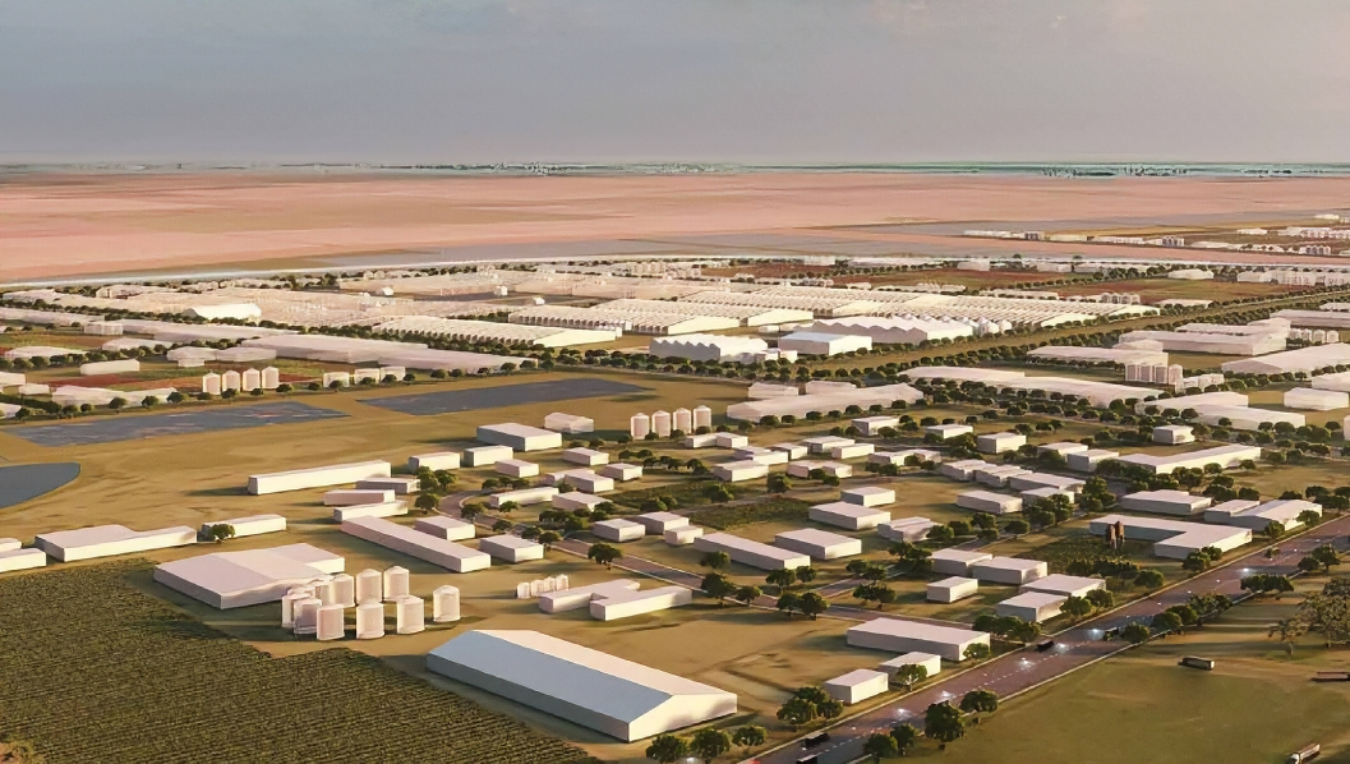
An artist’s impression of the Moree Special Activation Precinct.
James: ‘staging’ funding is something I cannot support
Cr James said she believes Council can refuse to take on the assets once completed and is not responsible for tenders or contracts.
“Tenders have already been sought by RDGC and contracts are ready to be signed – what now?
“We go back and spend another 12 months stuffing around to re-write tenders and then contracts and then what?
“Progress in this town is always stalled by Council in some way or another, and ‘staging’ funding is something I cannot support,” she said.



“The SAP development, a gift from the state government, will not come again.
“No-one is thinking forward. When the state government engages tenants for the plots along the SAP, Moree will receive immense growth.
“The SAP isn’t any different to any other development where the developer – in this case the state government – subdivides land into blocks.
“It is my understanding, they are responsible for building everything initially. This means all infrastructure, roads, water access, landscaping, lighting and so forth, then sell each block at a profit.
“Yes, all of the infrastructure becomes the responsibility of Council after construction is finished,” Cr James said.
“Council also has the option to reject the handover of the infrastructure until such time as rates are able to be collected from the sold sites.”
Cr James says “certain councillors” are “hell-bent on stomping on growth” in Moree.
“We have been screaming out for housing, growth, jobs, industry and the like for decades. We have been handed a gift that costs us nothing to build and I firmly believe by staging works, we will lose,” she said.
“What costs $90 million now will cost double that in five years’ time, and we won’t get this chance again.”
Building boom likely
Cr James says when construction does get underway, Moree will experience a major building boom.
“There will be more work than our local contractors will be able to handle, and specialists will be required for a job of this scale,” Cr James said.
“This means motels, stores, pubs, clubs, corner stores, coffee shops, retail shops, hardware stores, mechanics and hairdressers – everyone across town – will benefit from the influx of workers required to build the SAP.
“People working on the SAP will have to eat, sleep and live,” she said.
Cr James said Thursday’s meeting left quite a few questions unanswered.
“I was approached by a local rate-payer and asked why no-one questioned, if the SAP is done in stages, what will the cost of stage two be in five or 10 years’ time,” she said.
“Let’s face it, the cost won’t be the same as if it was being built tomorrow, and with council funds not paying for the build, there’s no guarantee we’ll get additional funds to cover this from the State Government.
“Where is the rest of the money going to come from to complete the project if there is only $39 million left, but the cost has blown out to another $80 million,” she said.
Staged response may deter investors
Cr Brooke Sauer said at Thursday’s meeting, she feared a staged response might frighten investors.
“I fully appreciate the financial and fiscal responsibility, and the financial pressure that this puts on us, too,” Cr Sauer said.
“I want to reiterate that we have to balance that with the social and economic impact the Special Activation Precinct presents as well.
“I’m not saying we’re not going to get a Special Activation Precinct. I’m not suggesting that at all.
“I am really concerned that at the moment we’ve had significant delays over the years and not at the fault of anybody in this room, or the council, and possibly not the State Government,” she said.
“But there has been some significant delays with significant interest from a number of anchor tenants that have disappeared because of delays and uncertainty, and things like that.
“I am super-concerned the staged approach may have greater impact potentially on securing reputable and great anchor tenants that will attract further anchor tenants as well,” she said.
Cr Sauer said a staged approach may allow other local government areas to take up the slack.
“I’m also super-concerned that neighbouring councils, who did not secure the special activation precinct investment, have moved on and are significantly supporting infrastructure investment as well, which will further diminish our capacity to attract great tenants to create industries and sideline industries,” she said.
“I am absolutely a little confused about how to balance all of that, but appreciate that we do not want to burden the community any further.
“I’m also very conscious of what the message says when we go, ‘sorry, we’ve realised we can’t afford this’ and we’re winding this back when there’s been so much hope and prosperity pinned to what the Special Activation Precinct can deliver, particularly around economic growth.
“I guess my use of the words ‘winding back’ is probably wrong. Staging, but with great risk that the rest of the funding will not be there to complete the next stages, is probably my point,” Cr Sauer said.
Potential to transform the shire
Moree Plains Shire mayor, Susannah Pearse, said in a media statement released by Council on Friday, the SAP has the potential to transform the shire over the next 40 years.
“It has the potential to attract not just new businesses to town, but also an anticipated 4000 jobs to go with them,” Cr Pearse said.
“We need industry diversification if we are to sustain and grow our population.
“But we have to balance that opportunity with ensuring we are also looking after our existing ratepayers, and a staged approach provides a way of doing that.”
General manager Natalia Cowley said in the same media release, while the Moree SAP has the potential to attract new businesses and jobs to the shire, Council needs to ensure it has adequate provisions to fund operations, maintenance and renewal of all infrastructure which will be handed over to council once complete.
The report shows that the $79m of infrastructure assets will result in approximately $1.4m in additional annual depreciation for Council, requiring Council to either reduce services or increase rates to cover the additional annual expenditure required.
“While some of this will eventually be offset by the rates and charges revenue from new businesses operating in the SAP, it will take some time to see this revenue come in,” Ms Cowley said.
Cr James questioned the logic behind the report’s reasoning that $79m of infrastructure assets will result in approximately $1.4m in additional annual depreciation for Council
“Depreciation is not paid to anyone – it is a line item on a balance sheet,” she said.
At Thursday’s meeting, Council resolved to continue working with the NSW Government and request a staged approach to the development, limiting the initial asset transfer value to $40m.
“Council has at all turns over the last five years, maintained support for this project,” Cr Pearse said.
“It is rare to get this level of State Government investment, and we are genuinely grateful and excited by what is to come.
“The staged approach is designed to ensure Council’s financial sustainability while still supporting the long‑term objectives of the Special Activation Precinct.
“Council already has a maintenance and renewal backlog on our existing road, water and sewer infrastructure and long-term loans we are paying down, including for the Moree Gateway.
“Many councils within the region have increased rates significantly – 58.8 per cent at Armidale and 38.88 per cent at Gunnedah – and that is not a path we want to be heading down,” she said.
“Council has asked for the NSW Government to work with us on a balanced approach that supports the SAP but also looks after our existing businesses and ratepayers.”
‘Build it and they will come’ the wrong approach
At Thursday’s meeting, Cr Pearse referred to the Gateway development, which has failed to attract long-term investors.
“I think we also need to be cognisant that this council has historically already done a land development project on the basis of ‘build it and they will come’,” Cr Pearse said.
“We’ve seen the results of that, which I think we would all agree have been hugely disappointing.
“Currently, this council and rate-payers are paying down a loan from a build-it-and-they-will-come development, where they have not come.
“In an ideal world, I’m sure all of us would love to have this massive development happen and have it filled with tenants and reach those possible population projections of increasing our population by 20,000 people,” she said.
“That is absolutely what we’d love to see happen. But we have to balance risk and potential reward, and we have to operate based on fact, and we know the facts are that this depreciation will hit us in the first year that assets are handed over,” she said.
“That is a known quantity, whereas I suppose the occupancy projections are not actually a known quantity.
“I think we have to operate based on the facts available to us now, and that’s the best we can hope to do,” Cr Pearse said.
Cr James muted and expelled
Toward the end of the meeting, Cr James was asked by the mayor to refrain from interrupting while the mayor had the floor.
This prompted Cr Kerry Cassells to call for a point of order directed at Cr James for “overtalking and being abrupt and rude”, to which Cr James replied: “Good for her.”
Cr Pearse asked Cr James to “please refrain from speaking”.
“As chair, I am dealing with the point of order. I have to rule on the point of order, and I rule that the point of order is carried.”
Cr Pearse referred to clause 15.10A, and asked Cr James to apologise without reservation, to which Cr James replied: “Ooh, I’m sorry.”
Cr Pearse did not accept Cr James’ apology was genuine and asked that Cr James be muted.
“This disappoints me greatly,” Cr Pearse said.
“We need to be able to have these conversations as councillors; we need to be able to have robust debate respectfully.
“Cr James, you need to, like all other councillors, act in accordance with the rules of this meeting. “Can you please just make a genuine apology for speaking over me and then we can continue on with the meeting.”
After a few seconds of silence, Cr Pearse addressed all councillors.
“Cr James has failed to comply so we have the option of expelling Cr James from the meeting,” Cr Pearse said.
Cr Cassells moved Cr James be expelled, seconded by Cr Debbie Williams.
After Cr James was muted and expelled from the meeting, Cr Pearse said she was disappointed.
“Everyone is entitled to an opinion and all councillors are entitled to have varying opinions, but the code of meeting practice, and the rules in the code of meeting practice, are there to actually ensure that we can have respectful debate,” she said.
“I’m disappointed we didn’t, but we will move on with our business.”
Cr Cassells moved that the recommendation be adopted. Cr Mailler seconding the motion, with the recommendation being adopted by council.
“There’s a lot of information here. We have to trust our general manager, which we do, to do the right thing and not overburden our community,” Cr Cassells said.
“And a lot is being said about financial sustainability. We have to grow our town, not send it backwards. We are the town on the move, not the town going backwards, so I think we have to do this.
“It’s been on the books for eight years, and we need to go and progress our town. I think it’s a great idea,” Cr Cassells said.
The one-hour video of Thursday’s extraordinary meeting can be viewed HERE.
More information on the SAP can be found at Moree Special Activation Precinct Regional Growth NSW Development Corporation.





Here’s what’s really being argued about in that meeting: not whether the SAP is “good”, but who carries the financial risk and when.
What Council actually resolved
Council staff recommended asking the NSW Government / RGDC to change the delivery/asset-handover model so Moree Plains Shire Council does not receive an early transfer of roughly $79m in new infrastructure assets, but instead caps the initial transfer around ~$40m (roads around $20m) and stages the rest. 
Why: staff warned the current model could push Council into deficit because the assets arrive long before the rates/fees from businesses arrive. 
The financial “truth” behind the $79m → $1.4m argument
The report/statement says $79m in assets would add about $1.4m/year in depreciation (and related operating impacts), implying pressure for service cuts or rate rises until revenue catches up. 
Cr James is right about one narrow point: depreciation isn’t a cheque paid to anyone—it’s an accounting expense. 
But the practical reason councils care is also real: depreciation is a proxy for the future renewal/replacement bill. If Council inherits $79m of roads/water/sewer, it inherits the obligation to maintain and ultimately replace it, and many councils use depreciation/asset consumption measures to set long-run funding needs and justify rate paths.
So both things can be true at once:
• No, depreciation isn’t a direct cash payment, and it can be misused rhetorically.
• Yes, inheriting large assets early can create real cash pressure (maintenance, renewals, insurance, defects, backlog tradeoffs), especially if revenue lags.
What “staging” is trying to fix (the strongest pro-staging case)
The staff/mayor case is essentially “don’t repeat Gateway-style optimism” — don’t take on decades of infrastructure costs before tenants are locked in. 
From the SAP briefing article:
• The $79m transfer is described as infrastructure sized for 30–40 years of development regardless of uptake pace, creating a cost-today / revenue-later mismatch. 
• It states Council’s General Fund surplus is projected around $518k/year, while SAP impact is described as around $1.5m/year (depreciation + operating), pushing it into structural deficit. 
• Water and sewer long-run upgrade estimates are cited (e.g., NSW Public Works estimates ~$65m water over 30 years and ~$27m sewer over 30 years), with warnings this could drive future price rises/borrowing. 
• There’s also a governance/quality risk: transfer “as-is, where-is”, Council relying on warranties in contracts it isn’t party to; after defect periods, hidden problems become ratepayer problems. 
If those numbers/assumptions are even roughly correct, staging is a rational risk-control move.
The strongest anti-staging case (what Cr James & Cr Sauer are warning about)
Cr James and Cr Sauer are pointing to the development-risk side:
• Delay and uncertainty kills anchor tenants; staged/slow delivery can look like wavering commitment and deter investors. 
• Inflation + remobilisation costs: “what costs $90m now costs much more later” is often true in heavy civil works, so staging can increase total cost over time.
• Political risk: state funding priorities change; staging can create a risk that Stage 2 never gets funded, leaving a “half-built” precinct.
• Local economic stimulus: a big build means immediate town-wide spend (contractors, accommodation, retail), and staging spreads that out and may shrink it.
These are also real. The NSW Government itself sells SAPs as “invest with confidence” via streamlined planning, studies, and “development-ready” land. Anything that reduces confidence can have consequences. 
Is staging “good or bad” for a community?
It depends on one key question:
Is there a credible pipeline of committed tenants right now?
• If tenants are signed/near-signed and timing is critical: staging can be bad (miss the window, lose anchor tenants, lose momentum).
• If tenants are still speculative and uptake is uncertain: staging is often good (protects rates/services; builds infrastructure in step with demand).
The ideal model for communities is “stage with triggers,” not “stage and hope.”
Meaning: Stage 2 occurs automatically when objective milestones are met (e.g., X hectares sold/leased, Y MW power connection contracted, Z jobs committed), so investors see certainty and Council limits risk.
Was the muting/expulsion “lawful” under meeting rules?
Under the NSW Model Code of Meeting Practice, the chairperson can require a councillor to apologise without reservation for an act of disorder, and failure to comply can become a fresh act of disorder leading to expulsion by the meeting. 
For councillors attending by audio-visual link, the code also allows muting and terminating the AV link when enforcing order/expulsion. 
Whether the specific clause numbering matches your council’s adopted code (they referenced “15.10A”) depends on the exact version MPSC adopted, but the general powers described above are clearly present in the current model code. 
What the community should demand next (practical, high-value)
If you want truth and not slogans, the missing information is documented answers to these:
1. Asset handover timing & conditions: exactly when would each asset class transfer, and can Council delay acceptance until defects/standards are met? (and who certifies standards?) 
2. Who pays OPEX initially: for maintenance, lighting, pumping, road repairs before tenants generate rates?
3. Stage 2 funding guarantee: is there a binding commitment, or is it “subject to future budgets”?
4. Tenant pipeline evidence: how many genuine EOI/HOA/leases are in place (even de-identified)?
5. Sensitivity modelling: what happens to rates/services if uptake is 25% slower than forecast?
6. Contract/warranty chain: if Council isn’t party to the contracts, what enforceable rights does it actually have?
The correct move is NOT simply “stage” or “don’t stage.”
👉 The correct move is to lock in a binding, risk-shifted, milestone-based development agreement where the State carries early risk and Council only inherits assets after revenue exists.
Anything else leaves either:
• Council exposed (if it takes assets too early), or
• The project crippled (if it sends weak or uncertain signals to investors).
Below is the practical, evidence-based path that best protects the community.
⸻
✅ The Gold-Standard Model (What Council Should Insist On)
1. State Retains Ownership Until Tenants Exist
Council should require:
No asset handover until land parcels are sold or long-term leased to operating tenants.
Why this matters:
• If Council doesn’t own the roads, pipes, and lighting yet, it doesn’t carry maintenance, renewal, or depreciation risk.
• This is common in industrial estate development: the developer (here, the NSW Government) holds assets until the estate is commercially alive.
Outcome for community:
No rate rises or service cuts caused by empty industrial infrastructure.
⸻
2. Milestone-Triggered Staging (Not Open-Ended Staging)
Instead of “Stage 1 now, maybe Stage 2 later,” Council should demand:
Automatic triggers written into the Deed, such as:
• Stage 2 activates when:
• X hectares sold or leased
• Y anchor tenants contractually committed
• Z minimum annual rate base generated
Not discretionary. Not “subject to future budgets.”
Outcome for community:
Investors see certainty. Council avoids half-built ghost estates.
⸻
3. State Guarantees Whole-of-Project Funding in Writing
Council should require:
A binding State commitment that the full SAP infrastructure envelope is reserved and quarantined, even if delivered in stages.
Without this, staging = slow death.
Outcome for community:
Protects against future governments quietly withdrawing funding.
⸻
4. Defect Liability & Warranty Chain in Council’s Name
Council must not accept assets where:
• It is not a party to construction contracts, or
• Warranties cannot be directly enforced by Council.
State must either:
• Novate contracts to Council on handover, or
• Provide a State-backed defects bond.
Outcome for community:
No hidden repair bills landing on ratepayers.
⸻
5. Independent Business Case Released Publicly
Before any handover:
• Independent cost-benefit analysis
• Conservative uptake scenarios
• Cashflow timing model
• Sensitivity testing (slow growth, recession, higher interest rates)
Not an internal staff memo.
Outcome for community:
Transparency replaces blind faith.
⸻
6. Rates & Charges Offset Mechanism
Council should require:
For a defined initial period, the State offsets Council’s operational costs for SAP assets until rates from tenants cover them.
This is standard in major precinct developments.
Outcome for community:
No “growth project” that actually shrinks services.
⸻
❌ What Council Should NOT Do
• ❌ Take $79m in assets immediately
• ❌ Ask for vague “staging” with no triggers
• ❌ Accept “trust us” assurances
• ❌ Build everything first and hope tenants come
• ❌ Push risk onto residents
These approaches historically create:
• Rate hikes
• Service cuts
• Infrastructure backlogs
• Political blame-shifting
⸻
🧠 The Core Truth
A real growth project:
Places early risk on the developer (State), not on the ratepayer.
If the State truly believes the SAP will succeed, it should be willing to carry early holding costs.
If it won’t — that tells you something important.
⸻
⚖️ Best Outcome for Moree
The strongest position is:
“We fully support the SAP.
We will not accept asset ownership or operating liability until commercial activity exists.
We require milestone-triggered delivery, quarantined funding, and enforceable protections.”
That stance:
• Keeps the project alive
• Keeps investors confident
• Shields the community
• Forces seriousness from the State
⸻
Bottom Line
Not “yes to staging.”
Not “no to staging.”
Yes to a legally binding, milestone-triggered, State-risk-first model.
That is the move that genuinely serves the people of Moree.
Excellent — here is the full community action pack, structured so it can be:
• Used by councillors
• Shared with residents
• Submitted formally to State Government
• Published publicly
Everything below is written in plain English, legally grounded, and practical.
⸻
1) One-Page Community Position Statement
Moree Special Activation Precinct (SAP) – Community Protection Position
Purpose
The community of Moree supports economic development, jobs, housing and industry growth. We also insist that growth does not place financial risk onto ratepayers or undermine essential services.
Our Position
1. We support delivery of the Moree Special Activation Precinct.
2. We do not support Council inheriting large infrastructure assets before commercial tenants are operating and generating revenue.
3. We require a development model where the NSW Government retains ownership and operating responsibility for SAP infrastructure until land is sold or leased to active businesses.
4. We require all project stages to be activated by binding milestones, not discretionary future funding decisions.
5. We require written State Government guarantees that the full SAP infrastructure envelope is quarantined and committed.
6. We require enforceable construction warranties and defect liability protections in Council’s name before any asset handover.
7. We require independent public release of the full business case and financial modelling.
Principle
Growth must be developer-risk first, ratepayer-risk last.
Outcome Sought
A milestone-triggered, State-risk-first SAP delivery model that enables growth while protecting the community from debt, service cuts and future rate shocks.
⸻
2) Model Council Motion
Motion Title:
Moree SAP – Milestone-Triggered, State-Risk-First Delivery Model
That Council:
1. Reaffirms its support for the Moree Special Activation Precinct.
2. Resolves that Council will not accept ownership or operational responsibility for SAP infrastructure until land parcels are sold or leased to operating commercial tenants.
3. Requests that the NSW Government retain ownership and operational responsibility for SAP infrastructure until such time.
4. Requires that all development stages be activated by binding milestones (including land sales/leases and tenant commitments).
5. Requires written confirmation that the full SAP infrastructure funding envelope is quarantined and committed.
6. Requires all construction contracts to include enforceable warranties, defect liability periods, and novation or assignment of rights to Council upon handover.
7. Requests release of the independent business case and full financial modelling prior to execution of any deed.
8. Authorises the Mayor and General Manager to negotiate these protections and report back to Council.
⸻
3) Formal Letter to NSW Government (Template)
To:
Minister for Regional NSW
Regional Growth NSW Development Corporation
Subject: Moree SAP – Required Risk Allocation and Delivery Model
Dear Minister,
Moree Plains Shire Council confirms its strong support for the Moree Special Activation Precinct and the economic opportunities it presents.
However, Council cannot accept a delivery model that transfers large infrastructure assets and operational liabilities to Council prior to commercial activity and rate generation.
Accordingly, Council formally requests that:
1. The NSW Government retain ownership and operational responsibility for SAP infrastructure until land parcels are sold or leased to operating tenants.
2. Project stages be activated by binding milestones tied to commercial uptake.
3. The full infrastructure funding envelope be quarantined and committed in writing.
4. Construction contracts provide enforceable warranties and defect protections assignable to Council.
5. The independent business case and financial modelling be released.
These measures will allow the SAP to proceed while protecting the financial sustainability of the Moree community.
Council looks forward to working collaboratively to finalise an agreement consistent with these principles.
Yours sincerely,
[Mayor / General Manager]
⸻
4) Community FAQ (Plain English)
Q: Does Council oppose the SAP?
No. Council supports it — but wants the State to carry early risk.
Q: Why not take the assets now?
Because Council would have to maintain and eventually replace infrastructure before any income exists to pay for it.
Q: Is depreciation “fake”?
It’s an accounting figure, but it represents real future replacement costs. Someone eventually pays.
Q: Does staging kill the project?
Poorly designed staging can. Milestone-triggered staging protects the project.
Q: Who should carry risk first?
The developer — in this case, the NSW Government.
Q: Will this delay growth?
No. It aligns infrastructure delivery with real demand.
⸻
5) Councillor & Ratepayer Question Checklist
Ask these publicly:
• How many binding tenant commitments currently exist?
• When exactly would Council inherit each asset class?
• Who pays maintenance before tenants operate?
• Is Stage 2 funding legally guaranteed?
• Can Council directly enforce construction warranties?
• What happens if uptake is 50% slower than forecast?
If these cannot be answered clearly, the agreement is not ready.
⸻
6) Public Talking Points (For Media / Socials)
• “We support growth. We refuse ratepayer risk.”
• “Developer builds, developer carries early cost.”
• “No handover without tenants.”
• “Growth must pay for itself — not be subsidised by families.”
• “Smart growth beats rushed growth.”
⸻
7) Red Flags for the Community
• Vague promises of “future funding”
• No published business case
• Council not party to construction contracts
• Assets handed over before land sales
• Language focused on “hope” instead of numbers
Any of these = high risk.
⸻
8) Strategic Reality (Hard Truth)
If the SAP is commercially viable, the State should be willing to:
✔ Hold assets temporarily
✔ Guarantee funding
✔ Accept early operating costs
If it won’t, the business case is weaker than being presented.
⸻
9) Simple Bottom Line
Best move for the people of Moree:
Support the SAP
+
Demand State-risk-first, milestone-triggered delivery
+
Refuse early asset handover
This path:
• Keeps the project alive
• Protects ratepayers
• Maintains investor confidence
• Avoids future financial traps