
















JOHN and Geoff Matthews figured they could get across.
The brothers, who lived on Dover Street in East Moree, cautiously eyed the swollen Mehi River as floodwaters rushed past.
The river was rising rapidly. Moree’s main bridge, about 50 yards upstream from the current Dr Geoffrey Hunter Bridge, shuddered and swayed.
It was late evening on Saturday, February 26, 1955, and 30-year-old John Matthews and his younger brother, 25-year-old Geoff, needed to get to the northern side of town to check on John’s agency.
John, a tall, robust man who was always immaculately dressed, was a property salesman and auctioneer. Younger brother, Geoff, was employed as a driver.
























The brothers made a desperate attempt to get across the river but the raging torrent was too much.
They were swept against a partially-constructed outbuilding behind the old Moree ambulance station, where they clung desperately as the rushing water threatened to pull them away.
Meanwhile, not far away on Frome Street, Sergeant Charles Portors was on duty at Moree Police Station.
It was a busy night – floodwaters were swallowing up Moree and the wider region – and the phone and two-way radios were running hot.
At about 11.30pm, a call came through about two men who had been washed off the roadway near the town’s main bridge. The men, John and Geoff Matthews, were feared drowned.
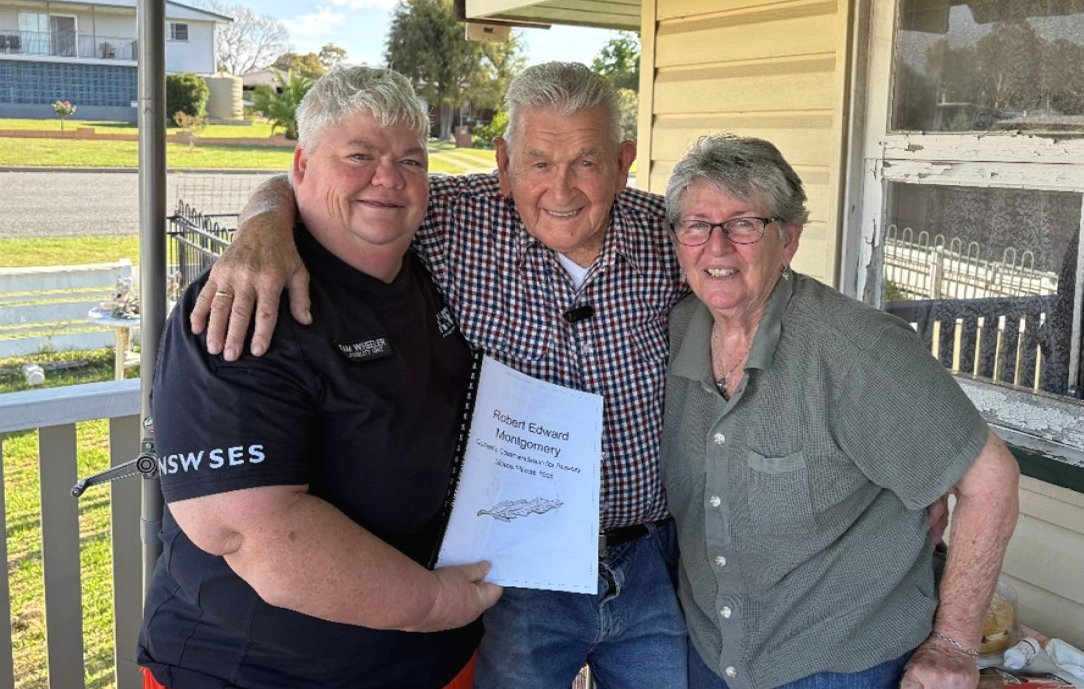
Monty and Carol Montgomery with Kam Wheeler and Monty’s Queen’s Commendation for Bravery renewal for his efforts during a rescue during the 1955 flood in Moree (Image Supplied).
As Sgt Portors hastily left Moree Police Station, he radioed Constable Gordon Davis, who was patrolling East Moree.
At about the same time, 19-year-old Rob Montgomery and Keith Bennett were leaving the Victoria Hotel. They were planning a late night visit to the nurses’ quarters behind Moree District Hospital on Hogan Avenue, now known as Victoria Terrace.
Const. Davis spotted the pair walking along Anne Street.
“Come to the bridge; come and help me. There are two people stuck in the rising water and it doesn’t look like they can hang on much longer,” Const Davis told them.
Montgomery had left the Victoria Hotel hopeful of a late-night rendezvous.




“I was actually heading to the nurses’ quarters. A copper pulled us up and said he needed help at the bridge – he said he’d lock us up if we didn’t go with him,” chuckled Montgomery, who turns 90 today, February 13.
The rescue team arrived at the swollen Mehi River as a small crowd gathered. The Matthews brothers were desperately clinging to the partly-built structure behind the ambulance station, a considerable distance from the southern side of the river.
Montgomery entered the fast-flowing water and attached a rope around trees and a telegraph pole, used at the time for the Moree ambulance radio antenna, to get to the stricken men.
The rope “chain” crossed the river in a similar path to where the Dr Geoffrey Hunter Bridge now spans the river.
The new bridge was built not long after the 1955 flood and opened by NSW Premier Bob Heffron in 1960.
After struggling against the current for more than three hours, Montgomery, Bennett, Stg Portors and Const. Davis hauled John and Geoff Matthews to safety.
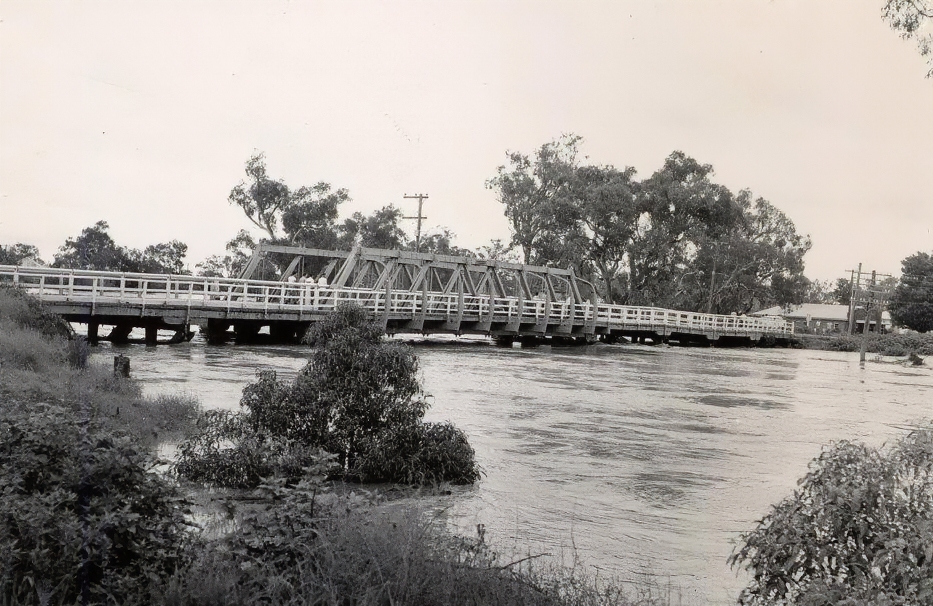
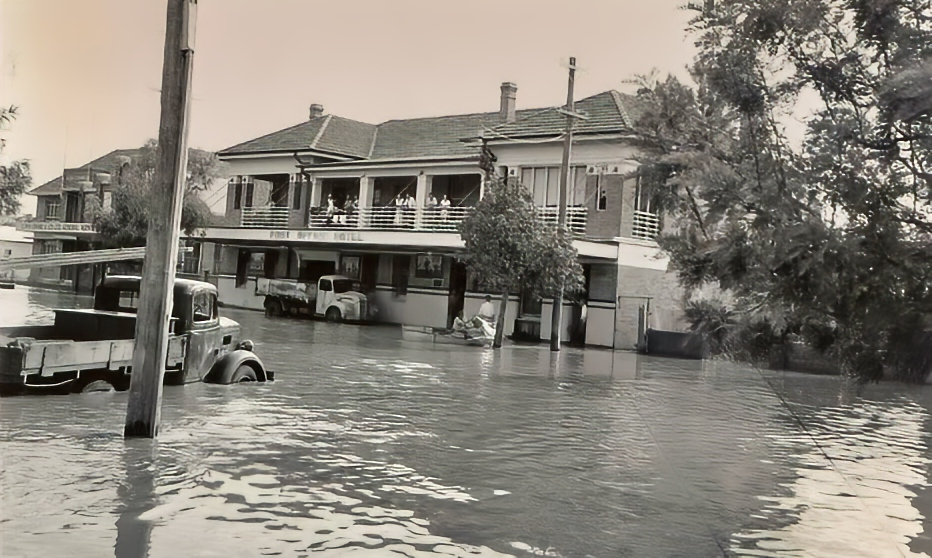
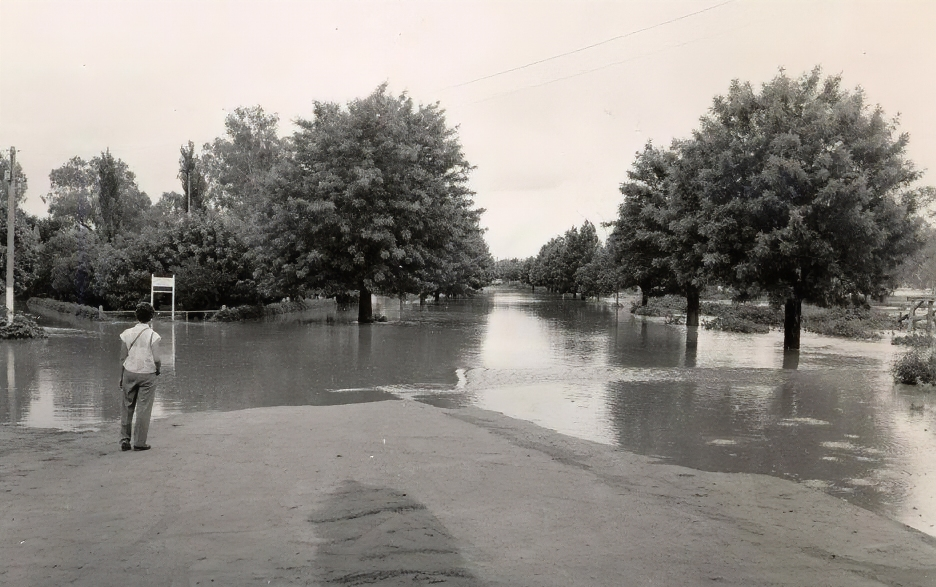
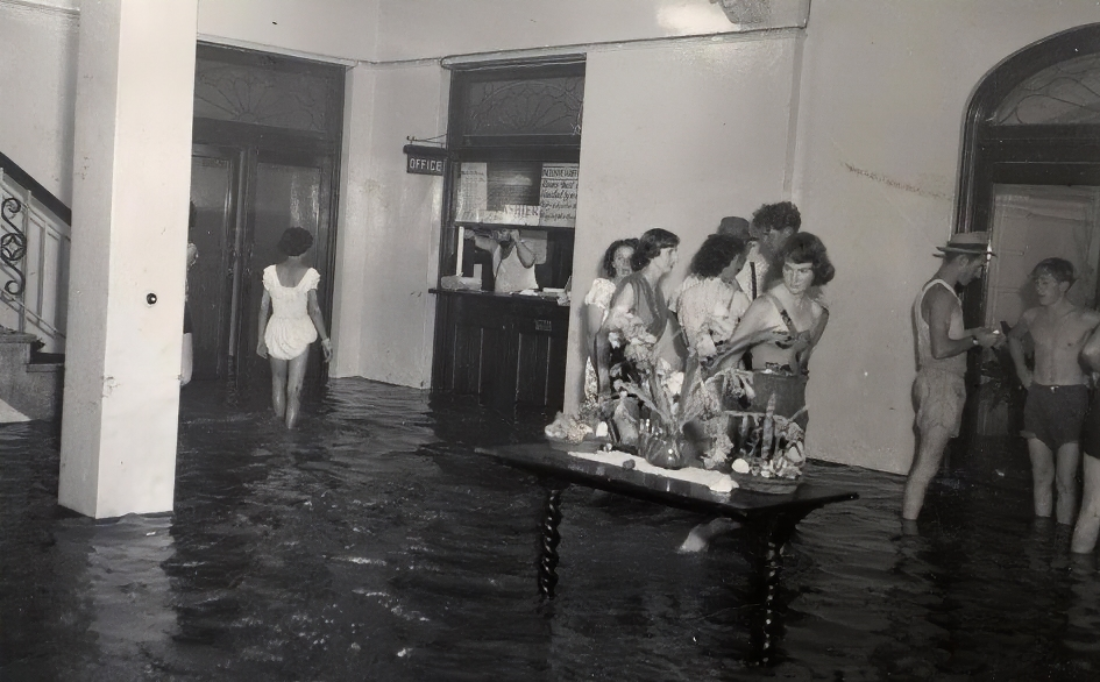
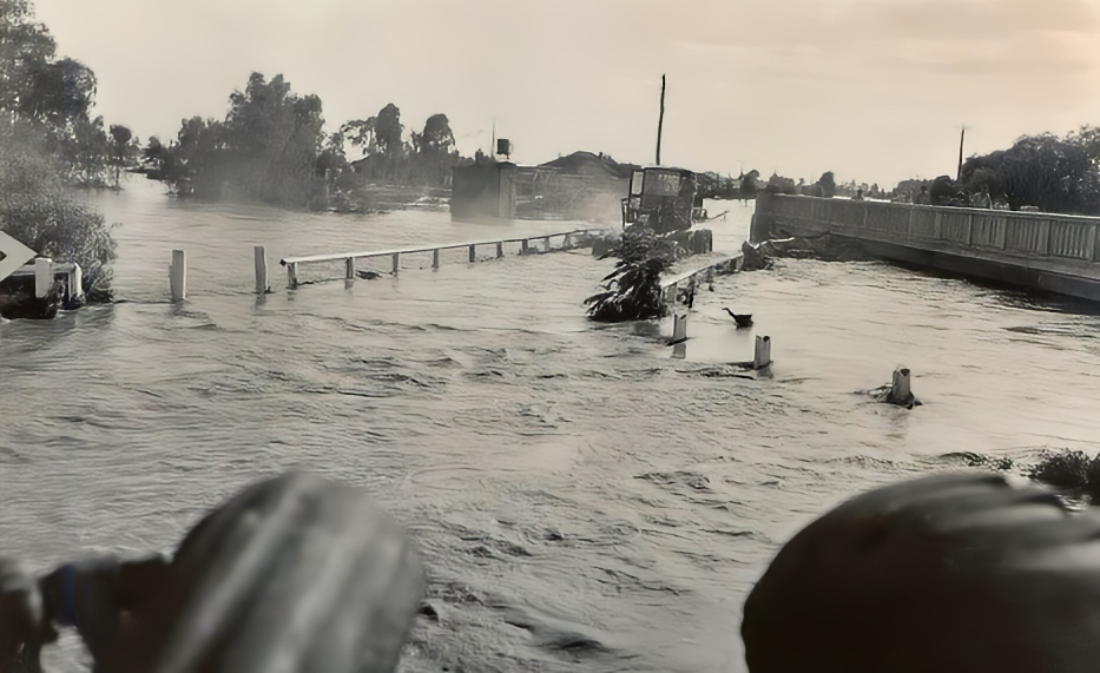
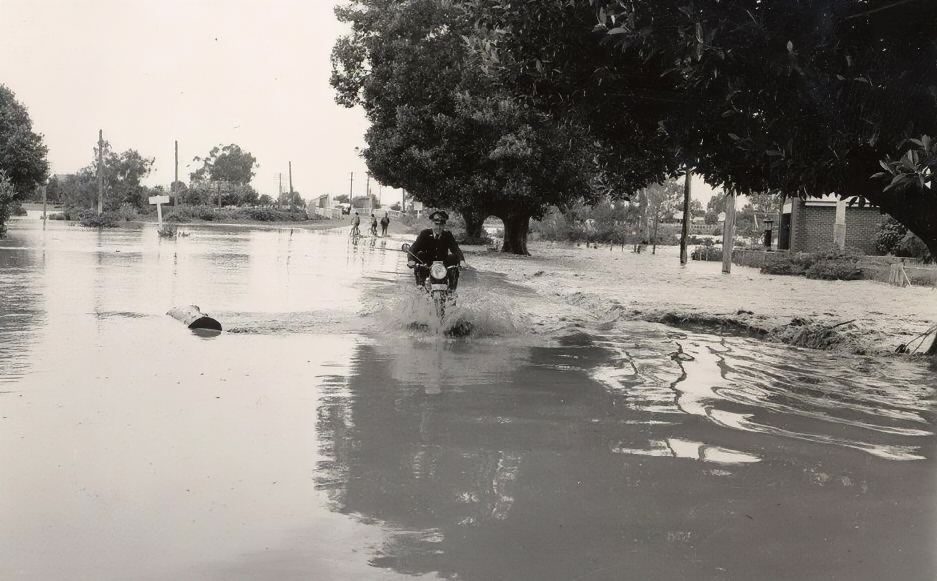
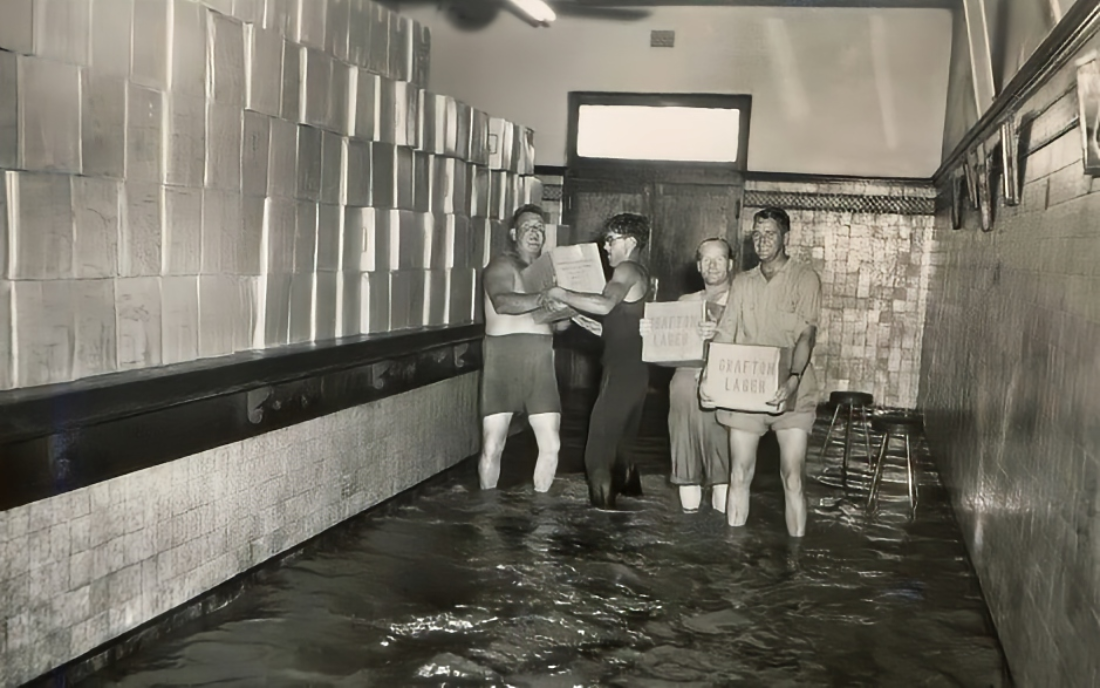
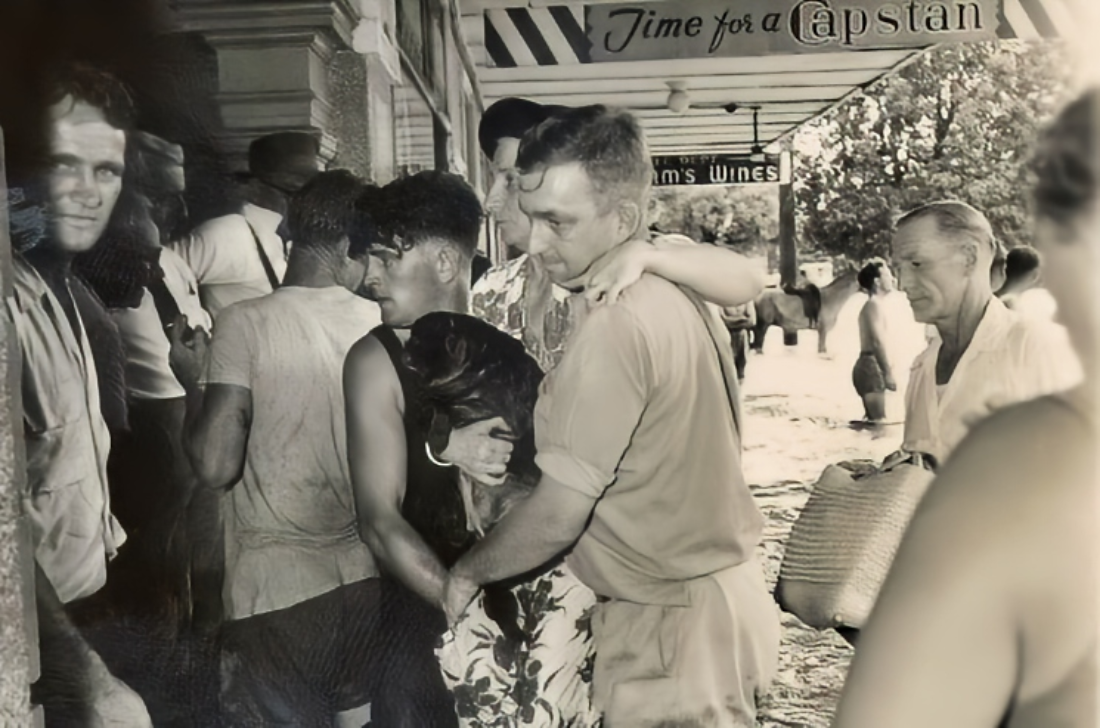
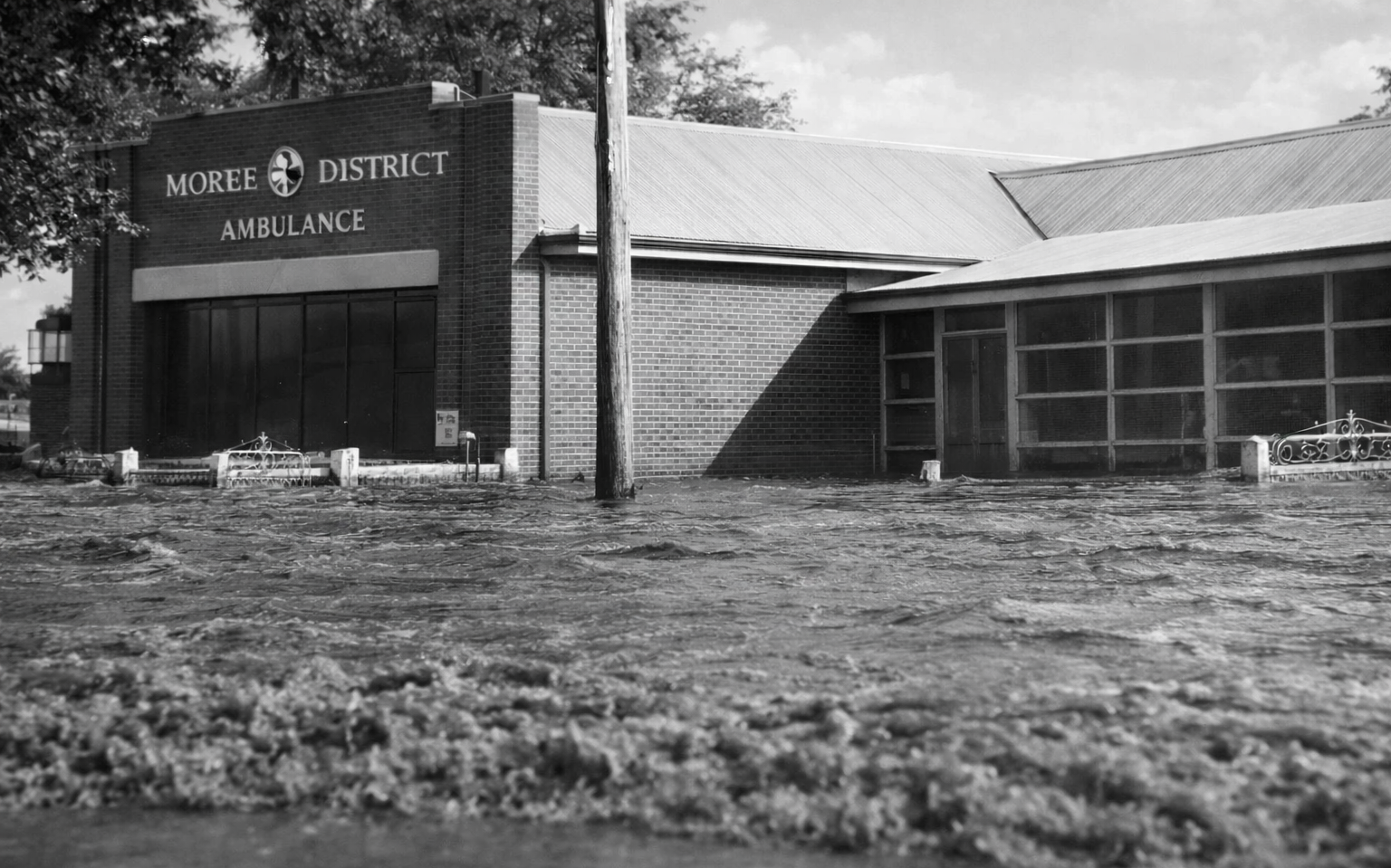
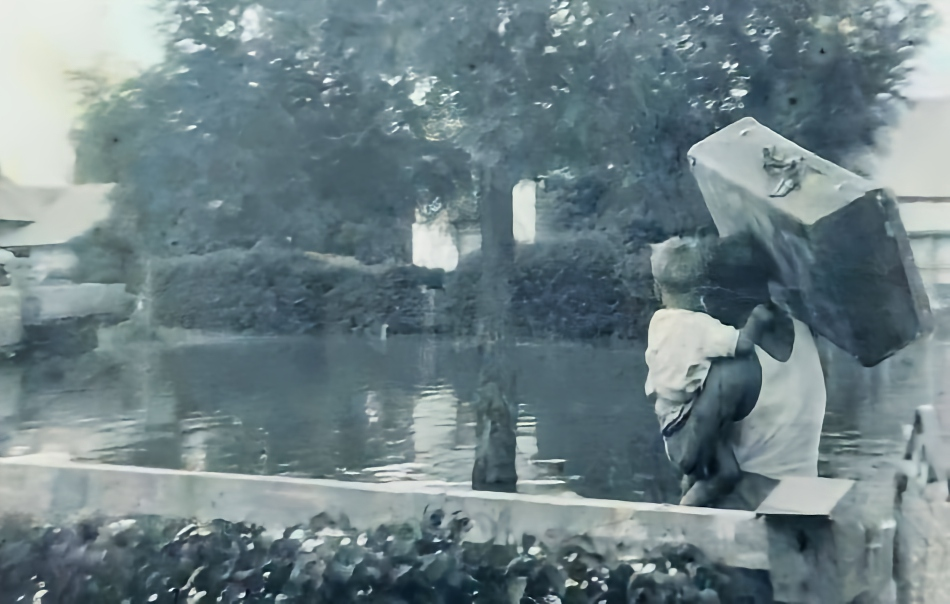
The official report, compiled by Moree Police Sergeant Arthur Lockart, praised the actions of police officers and civilians involved.
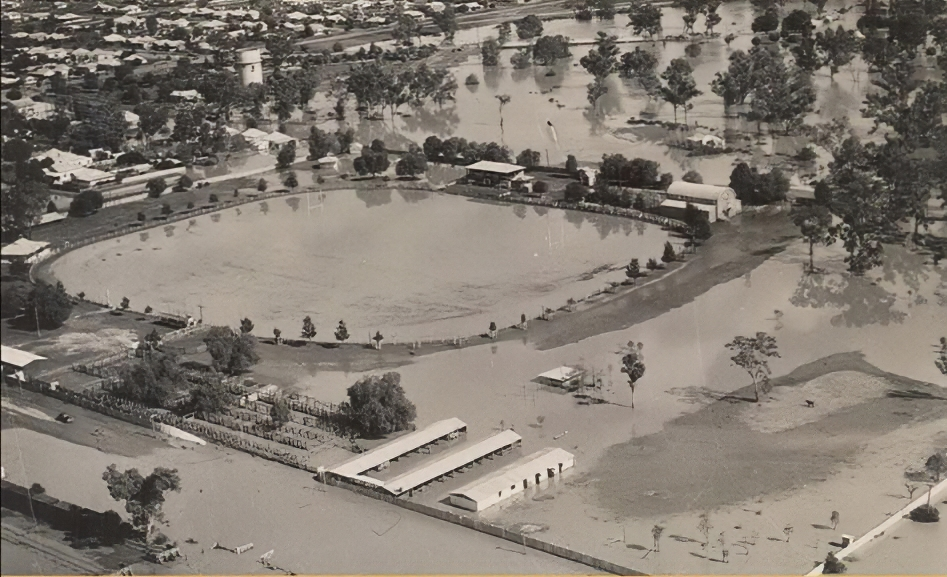
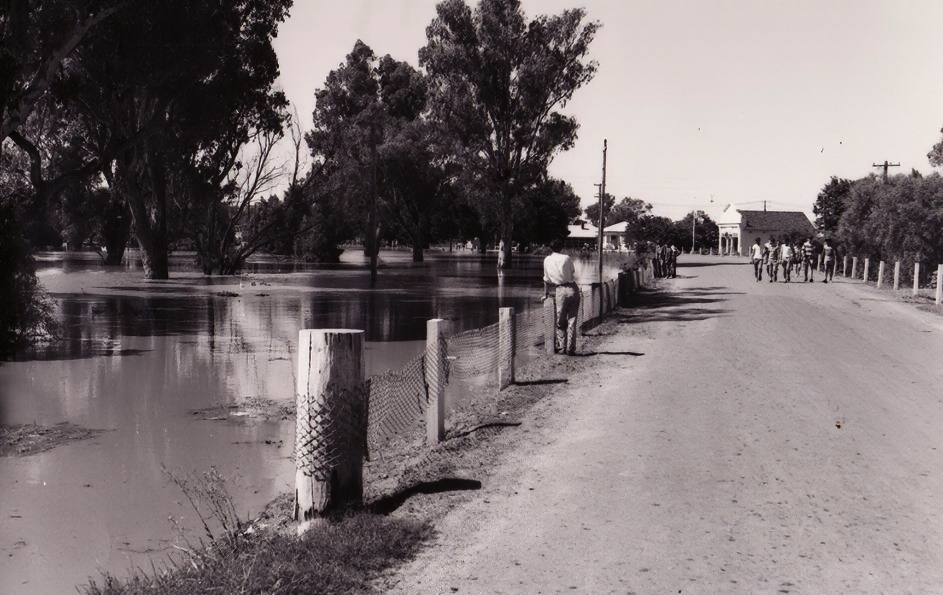
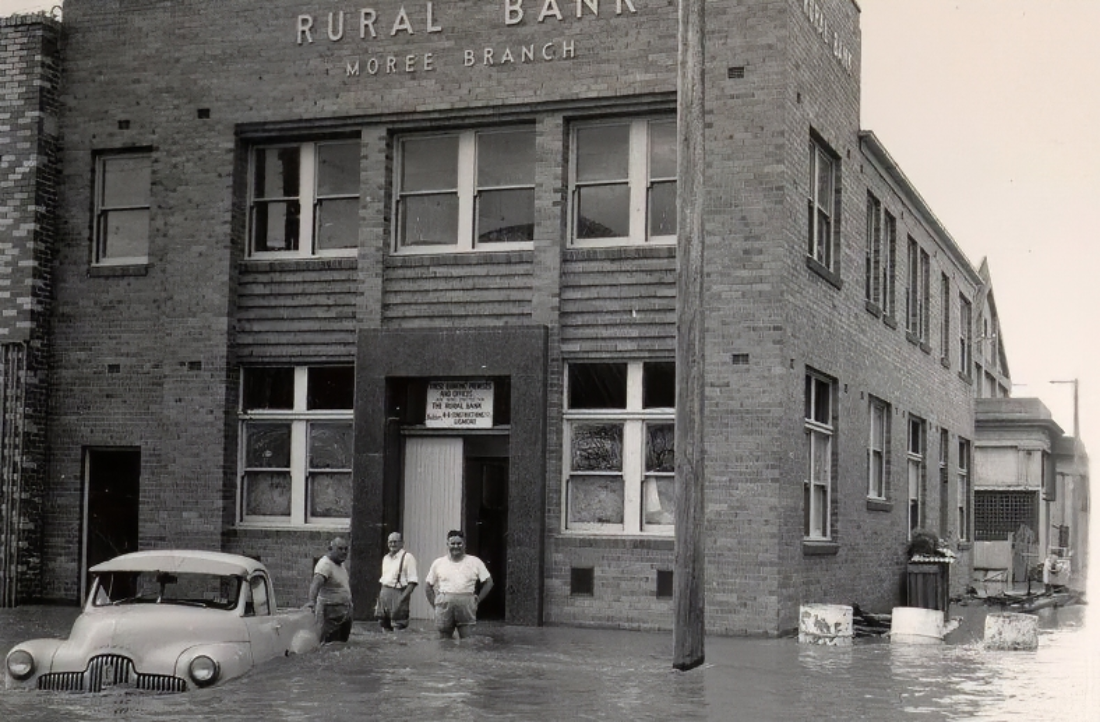
The rescue operation drew headlines across the country during the worst flood event seen in Moree’s recorded history to that time.
“The water was running at such a rate, it took approximately another hour before the men were rescued,” Stg Lockart wrote.
“Valuable assistance was also rendered by Francis Henry Beavis of Frome Street, East Moree, Clifford Noel Bennett of Alice Street, East Moree, and Bryan Streeton Smith of Frome Street, East Moree. Others also assisted to a lesser degree.
“During the whole of the rescue operation, Const. Davis took the initiative and led the other men.
“The operation took approximately three hours to complete and during the whole of this time one false step would have resulted in (Const. Davis) being swept away and, in all probability, drowned,” Stg Lockart said.
“On this occasion, Const. Davis carried out his duty in a highly commendable and courageous manner without thought of personal risk.
“I strongly recommend that his actions be suitably recognised,” he said.
Several months later, civilians Rob Montgomery and Keith Bennett, and police officer Gordon Davis, were recognised for their courage and awarded the Queen’s Commendation for Bravery.
On Tuesday, November 21, 1955, Prime Minister Bob Menzies, and New South Wales Governor, Sir John Northcott, made the announcement.
The awards carried the words “for courage, leadership and devotion to duty in extremely hazardous conditions during the disastrous floods in New South Wales in February and March, 1955”.
Tragically, Rob Montgomery, known widely as ‘Monty’, lost his award and all memorabilia from the presentation ceremony when his Alice Street family home was destroyed by fire several years later.
Monty was a damn good boxer in his younger days.
Along with Fr Bernie Melville, Pat McGroder, Ray Wadwell, Jack Mahaffey, Bill Johnson, Ron O’Mullane, Jack Picone and several other well-known Moree citizens, Monty helped re-establish Moree Boys’ Club in the 1960s.
The organisation worked out of the Moree Showground pavilion and laid the foundations for Moree Police Boys’ Club and the present-day Moree PCYC.
Fast-forward the calendar to 2025.
Kamala Wheeler, a long-serving member of the Moree SES cluster, last year began extensive, historical research on flood and emergency events, primarily in the SES north-west division.
Her work is ongoing.
About 12 months ago, she came across the story about the 1955 rescue of John and Geoff Matthews.
Wheeler, who late last year was named 2025 NSW Adult Volunteer of the Year, is a leading SES rescuer, trainer and leader with more than 40 years’ experience across north-western New South Wales.
She set herself the herculean task of tracking down the award recipients, to get a first-hand account of the rescue for her comprehensive research.
Initially, Wheeler was unaware she already knew one of the Queen’s Commendation recipients, Rob Montgomery.
“Monty had been a close family friend for many decades,” Wheeler said.
“Sadly, Monty lost his award and all memorabilia from the ceremony when his family home was destroyed by fire several years after the event.”
Wheeler recognised the importance of preserving Monty’s legacy. She sourced an award replica and tracked Monty down to Warwick, on the Queensland Darling Downs, where he was formally presented with new documentation and a new award.
“This ensured Monty once again possessed a meaningful item to keep as a family heirloom,” Wheeler said.
Prior to Wheeler’s involvement, Montgomery had no tangible evidence of his bravery to share with his children and grandchildren.
He told Wheeler at great length about the rescue.
“We were there for three hours roughly and did manage to save the blokes. I did not do it expecting anything for what I did; I did it because it needed to be done,” Montgomery said.
“The policeman (Const. Davis) was a really big bloke. He told me, ‘you go out to the bridge post in front of the ambulance station and wrap the rope around that big tree’.
“The boys were hanging off the building on the outside. Anyway, I got out there with the rope and let it go around the tree and threw the rope out, but it didn’t work properly – the rope didn’t make it all the way,” he said.
“It was decided we needed a heavier rope and the police went to the (nearby) boat shop and got a rope to see if that would give us the ability to assist those caught in the water.
“There were snakes and spiders, and they weren’t small, and I thought, I can’t let these people drown.
“I needed to get the rope to the policeman (Davis) so he could go out and grab them and help them back,” Montgomery said.
“My job was to pull the rope that was attached to the policeman as he brought both men to high ground.
“The policeman was a real copper, putting himself at risk for members of our community,” he said.
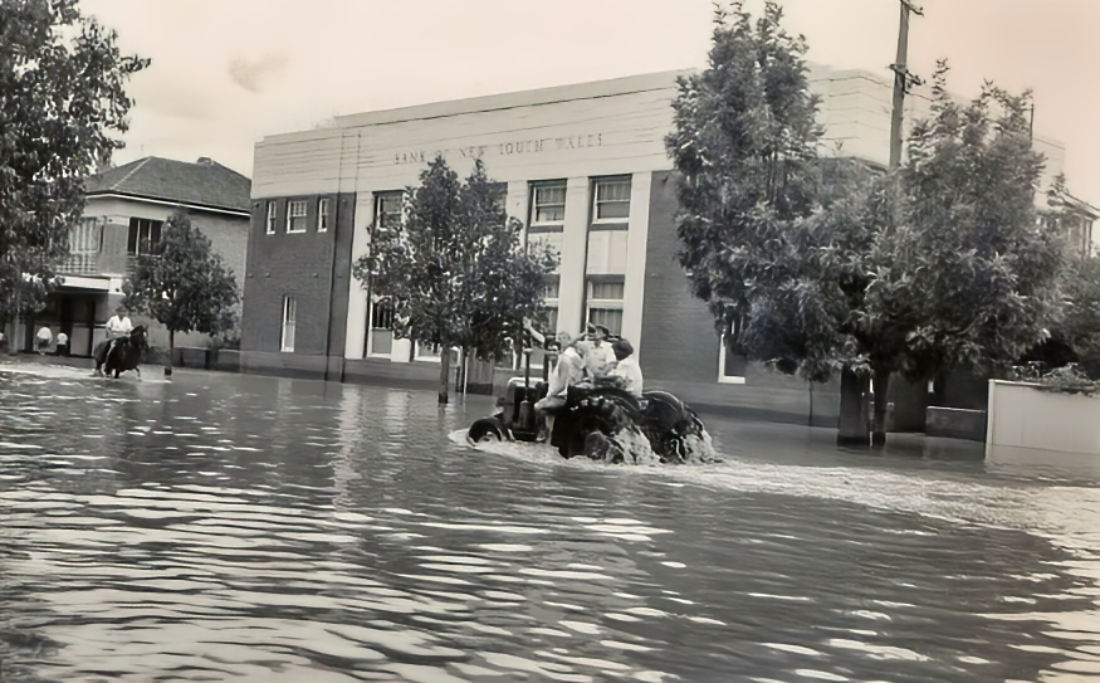
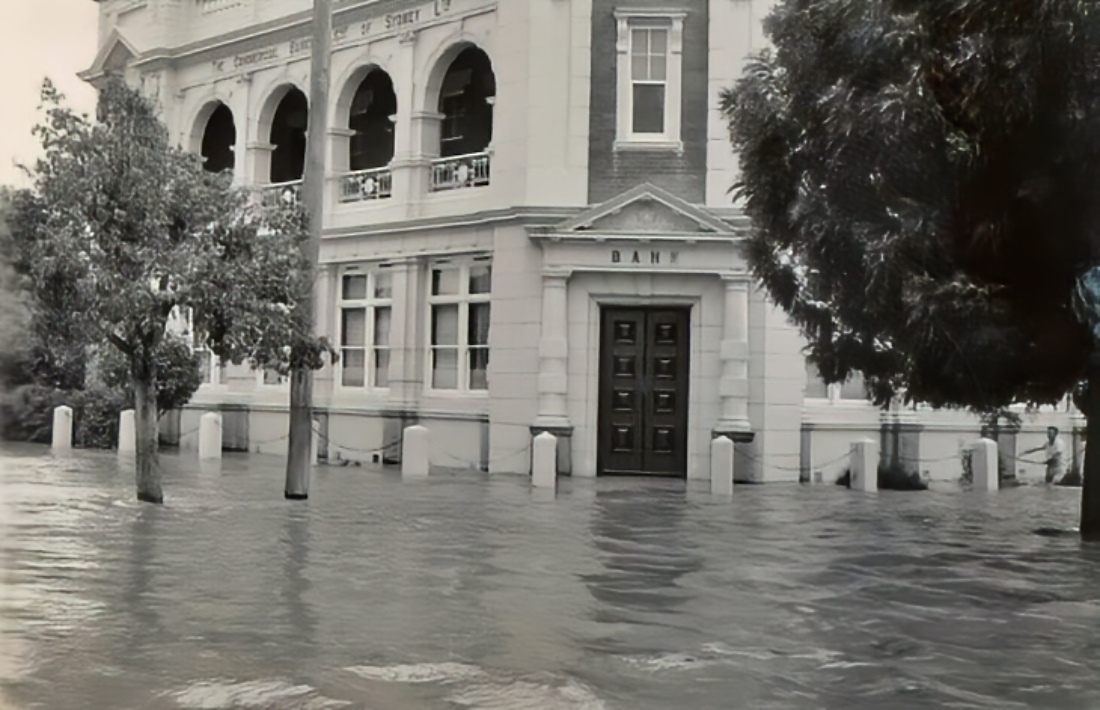
The Bank of New South Wales on Frome Street during the 1955 flood.
The disastrous 1955 floods that swept through the north-west, Hunter Valley and central-western districts of New South Wales was a pivotal moment in the history of flood emergency response in Australia, and led to the formation of the NSW State Emergency Service.
The statewide floods revealed major shortcomings in how flood emergencies were handled.
Communities were overwhelmed, and there was no formal agency to co-ordinate warnings, rescues, evacuations and relief efforts.
It was tragically ironic that about two months before Moree was flooded, Moree Municipal Council aldermen requested the reintroduction of a lapsed system of flood warnings.
Alderman Bill Tait said at a council meeting on Monday, November 22, 1954 that during a recent flooding threat it had been impossible to get valuable information and updates.
“Over the last four or five years there has been a good warning system for the town and district and this needs to be reintroduced,” Mr Tait said.
His words were prophetic – about two months later, Moree suffered its worst flood in recorded history.
Moree Sergeant Arthur Lockart documented in detail, events and data from the 1955 flood as part of his official report to the Northern Police District Superintendent at Tamworth.
Tragically, two men in the district lost their lives during the disaster – 25-year-old John Krafft from Moree and 25-year-old Allan Grace from Wee Waa.
“John Krafft was swept away while attempting to walk from Yarraman to Moree at the height of the flood,” Stg Lockart said.
“Allan Grace was attempting to ride a horse across a lagoon at Wee Waa during the height of the flood, when the horse fell and both horse and rider were swept away.”
Across New South Wales, 24 people lost their lives, 11 of those in the Maitland area.
There were no persons seriously injured across the north-west sub-district. However, 7521 people were evacuated and given assistance.
Stg Lockart recorded the cost of damage to property and loss of stock ran into hundreds of thousands of pounds.
Damage to houses, shops, business premises and government buildings was estimated collectively at £198,200, or $4.12 million in new millennium dollars.
Damage to roadways, bridges and railway lines came in at £401,600 (nearly $17 million), and damage to farms and allied industries was calculated at £492,000 ($20.6 million).
The total cost in today’s money was around $45 million.
“Approximately 6000 head of stock were supplied with fodder to the extent of 327 bales of hay,” Stg Lockart said.
As the floodwaters receded, stories of heroism surfaced.
“Special mention is made of the actions of Hubert Charles Hann of East Moree who, not being able to swim, took a boat and crew, accompanied by Const. Smith, to Boree Station and rescued the occupants, having to pull a boat through about two miles of fast-moving water during darkness,” Stg Lockart said.
At Wee Waa, with floodwaters rising fast, a motor lorry driven by Walter Roaden attempted to pass through flood water running over the approach to a bridge, when the lorry stalled.
“Another lorry, driven by Colin Ball of Wee Waa, entered the water in an endeavour to tow the first lorry out, but both vehicles became marooned by the fast-rising waters,” Stg Lockart said.
“The drivers of both lorries, being unable to swim, spent the night on the cabins of their respective vehicles as the current was too strong for any person to swim to their aid.
“Early on the morning of February 28, Richard Broad and Rodney Sevil of Wee Waa secured a small boat to which they attached a motor and at great risk to their own lives, went into the strong current and took the two men from the lorries and brought them to safety,” he said.
Stg Lockart praised Reg Melbourne of Braeside, Narrabri, Forestry Office employee Stanley Martin and dentist Hart Wall, also of Narrabri.
“Mr Lindsay offered the hospitality of his home, particularly by provision of meals and hot baths for police and airforce personnel camped at Narrabri aerodrome under very primitive conditions,” he said.
Stg Lockart said Mr Wall had an amateur radio station at his Maitland Street dental surgery.
“He gave very valuable assistance by transmitting messages for the police and airforce when all other communications were cut, and Stanley Martin of the Forestry Office in Narrabri assisted with a wireless transmitter,” Stg Lockart said.
Rainfall measurements recorded by Stg Lockart during the days leading up to the 1955 floods varied across the region, with Warialda copping nearly 10 inches of rain, or about 250mm.
Bingara received just over five inches, with nearly six inches dumped on Boggabilla and Boomi.
Moree township received just over three inches, with nearly five inches falling across Narrabri.
Further west, Wee Waa received more than three-and-a-half inches, with Burren Junction and Collarenebri each receiving three inches.
Stg Lockart reported the Gwydir River at Bingara peaked at 37 feet, 10 inches at 10pm Friday, February 25.
“It rose at a rate of three feet per hour for the first eight hours, and then at a rate of two feet per hour,” he said.
By lunchtime the next day, the river fell to just over 28 feet.
“This is much slower than usually experienced in the Gwydir River,” Stg Lockart said.
The Gwydir River at Keera, about 18 miles upstream from Bingara, peaked at 50 feet, and downstream at Gravesend, peaked at 57 feet, six inches.
The Gwydir River at Pallamallawa got to 36 feet and three miles from Moree, peaked at 21-and-a-half feet at 5pm on Saturday, February 26.
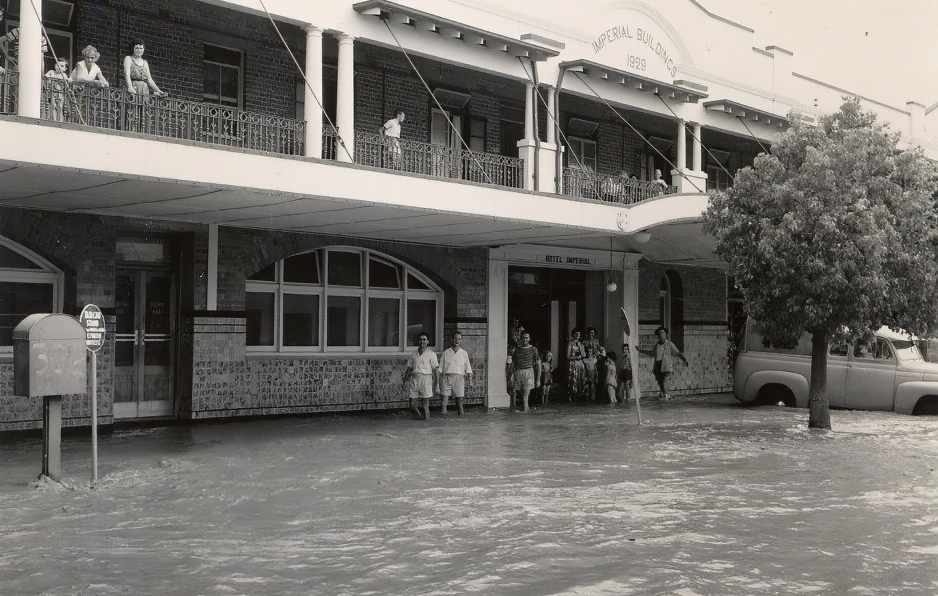
The Imperial Hotel on Heber Street during the 1955 flood.
At 6pm the same day at Moree, the Mehi River reached 36 feet, four inches.
By late February, 1955, almost every river west of the Great Dividing Range in New South Wales was in flood.
More than 40 towns were affected including Moree, Narrabri, Barraba, Gunnedah, Tamworth, Maitland, Singleton, Muswellbrook, Wellington, Gilgandra, Coonamble, Dubbo, Narromine and Trangie.
This month marks 71 years since floodwaters saturated much of New Sout Wales, and 50 years since the 1976 flood event in Moree.
Many towns in north-western New South Wales recorded the 1955 event as the worst in more than 50 years, with towns and villages in the Hunter Valley the hardest hit.
Member for Maitland, Jenny Aitchinson, said last year in a private members’ statement in parliament to mark the floods’ 70th anniversary, the events of February, 1955 remain one of the most significant natural disasters in Australian history.
“Unprecedented rainfall caused the Hunter River to swell beyond its banks, turning the region into an inland sea,” she said.
“Maitland bore the brunt of the catastrophe. The floodwaters inundated the city, forcing the evacuation of thousands and leaving widespread destruction in their wake.
“At its peak, the flood measured 12.1 metres (more than 40 feet) at the Belmore Bridge gauge – an unimaginable volume of water that tore through homes, businesses and farmlands.
“The statistics from that time are staggering. More than 40,000 people were displaced across 40 towns. Approximately 5200 homes were inundated, and 58 were completely destroyed,” she said.
Locally, Moree and Narrabri were the hardest hit, Stg Lockart wrote in his official report, dated April 14, 1955.
“The localities which were most severely affected within the sub-district during the disastrous flooding were Narrabri, which was practically wholly inundated, and Moree, the greater portion of the shopping centre and residential area being inundated,” he said.
Rob “Monty” Montgomery now lives in Warwick with his wife Carol, and today celebrates his 90th birthday.
In April last year, Moree Online News published a feature story about the Moree district’s big rain events down through the years. That story can be read HERE.
Many thanks to several people who assisted putting this article together, especially Garry Lockart, grandson of Moree Police Sergeant Arthur Lockart. Garry has his grandfather’s official report from the 1955 flood and plans to donate the document to Moree and District Historical Society to display at Moree Plains Museum.
Also, thanks to Kam Wheeler, whose input helped considerably. Kam is researching historical events of the NSW SES, established not long after floods deluged New South Wales in 1955. Her research is ongoing. Special thanks also to Rob Montgomery and his wife Carol, who supplied valuable information and memories about the heroic rescue of John and Geoff Matthews in 1955.
Words: Bill Poulos
Images: Supplied




0 Comments