













MOREE’S Sheldyn Briggs has been selected for the 2026 Indigenous Marathon Project squad to compete in the TCS New York City Marathon in November.
Briggs, a proud Gamilaroi woman, was selected following a nationwide search that drew more than 230 applicants from First Nations men and women aged 18 to 30.
“Competing in the New York Marathon means a lot to me,” Briggs said.
“Standing on the start line in New York represents more than just a race. It’s a reminder that if you commit to something and back yourself, you can achieve it.
“It also means representing my mob in a positive way, breaking down stereotypes, breaking down barriers, and hopefully inspiring more of our people to get into running and prioritise their health and wellbeing.





























“You can’t be what you can’t see, and I hope to be influential for our young mob as they grow up and show them what’s possible,” she said.
The Indigenous Marathon Project – the flagship program of the Indigenous Marathon Foundation – is a six-month journey that prepares participants for the famed New York Marathon.
Sheldyn’s selection comes after a Lisfranc injury, involving broken bones or torn ligaments in the midfoot, that kept her out of sport for all of 2025.
“That setback became a turning point for me,” Briggs said.
“It pushed me to rebuild and prove to myself, and my community, that you can come back from anything.
“Running has played a huge role in my physical and mental recovery. It’s taught me discipline, resilience and the power of mindset,” she said.
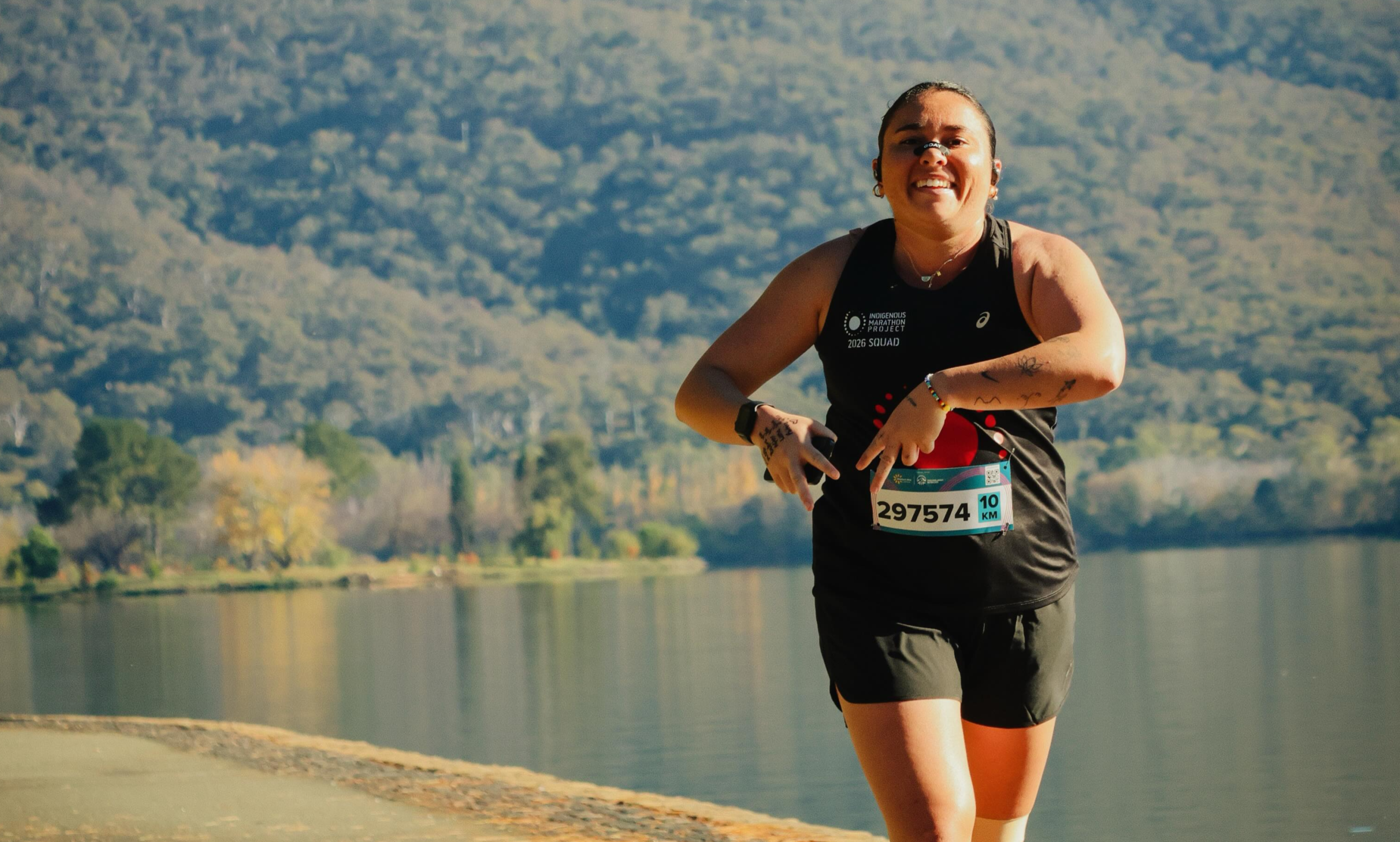
Moree runner Sheldyn Briggs has been selected for the 2026 Indigenous Marathon Project squad to compete in the TCS New York City Marathon in November (Image Supplied).
Alongside marathon training, squad members complete an education program focused on First Nations leadership and health.
For Briggs, a local casual primary and high school teacher, and skilled footy player, the opportunity is about personal growth, leadership and creating community impact, while testing herself physically and mentally after facing setbacks and injuries last year.
Earlier this month, Briggs joined the squad in Canberra for the first of five, in-person workshops leading into the New York marathon, launching her IMP campaign with a 10km run at the Mothers’ Day Classic.
Workshops will also be held on the Gold Coast and Sunshine Coast in July, Alice Springs in September, and New York in November.






Since launching in 2010, the Indigenous Marathon Project has graduated 167 First Nations peoples.
Indigenous Marathon Foundation founder and director, former World Marathon Champion, Robert de Castella, said the year ahead promises to be significant for the squad and the organisation.
“What a year 2026 is shaping up to be for the Indigenous Marathon Foundation and the Indigenous Marathon Project,” de Castella said.
“This year’s squad is just at the starting line of an incredible six-month journey. At the same time, The Long Run documentary – a partnership between Canberra-based production company Good Shout, the Indigenous Marathon Foundation, Nine, and documentary funding partners – will shine a mainstream spotlight on the work we do in creating pathways in health, education and leadership for First Nations communities,” he said.
Briggs, a multi-sport athlete who participated in rugby league and league tag with Moree Boomerangs prior to last year’s injury, said long distance running was a whole new ball game.
“I’ve never been a long distance runner,” she smiled.
“I come from a rugby league background, so I’ve always been more familiar with short distance sprinting and explosive work.
“Long distance running is something completely new to me, and it’s been a big adjustment and learning curve,” Briggs said.
The trip to the United States in November will be Sheldyn’s second to the Big Apple.
“New York has always been on my bucket list, and I was fortunate enough to make that dream come true in 2023,” she said.
“However, I’ve never travelled overseas specifically for a running event before.
“I’m really looking forward to the experience of running through one of my favourite cities, and taking it all in from that perspective,” she said.
About the Indigenous Marathon Foundation
The Indigenous Marathon Foundation is an Australian-based organisation dedicated to improving the health and wellbeing of Aboriginal and/or Torres Strait Islander peoples.
Through life-changing programs, such as the Indigenous Marathon Project, Indigenous Communities, Activity and Nutrition and IMF Running and Walking, IMF works to inspire and support First Nations peoples to reach their full potential, and create ripple effects of change in communities.
IMF is committed to breaking down barriers, providing opportunities and celebrating First Nations achievement.
IMF is a charity, not-for-profit, and registered with the ACNC.
About the New York Marathon
The New York City Marathon is one of the world’s best-known, long-distance running events, first held on September 13, 1970.
Organised by the New York Road Runners, the inaugural event was staged entirely within Central Park in Manhattan with 127 runners.
Only 55 runners completed the course, and the race attracted little public attention.
The race was created by running enthusiasts including Fred Lebow and George Spitz, who wanted to establish a major marathon event in New York.
During the early years the race remained confined to Central Park, but participation steadily increased.
A major turning point came in 1976 during celebrations marking the United States Bicentennial. Organisers expanded the course beyond Central Park so runners would pass through all five boroughs of New York City – Staten Island, Brooklyn, Queens, the Bronx and Manhattan.
The new format transformed the event into a city-wide spectacle and remains the course used today.
The marathon continued to grow during the late 1970s and 1980s, attracting elite international runners and increasing crowds.
Norwegian runner Grete Waitz became one of its greatest champions, winning the women’s race nine times and helping lift the event’s global profile.
The marathon has only ever been cancelled twice – in 2012, due to the landfall of Hurricane Sandy, and 2020, due to the COVID-19 pandemic.
Today, the New York City Marathon attracts tens of thousands of runners and millions of spectators each year, making it one of the most prestigious marathon events in the world.



OMG that is amazing. I am puffed after walking around the block. Well done you champion !