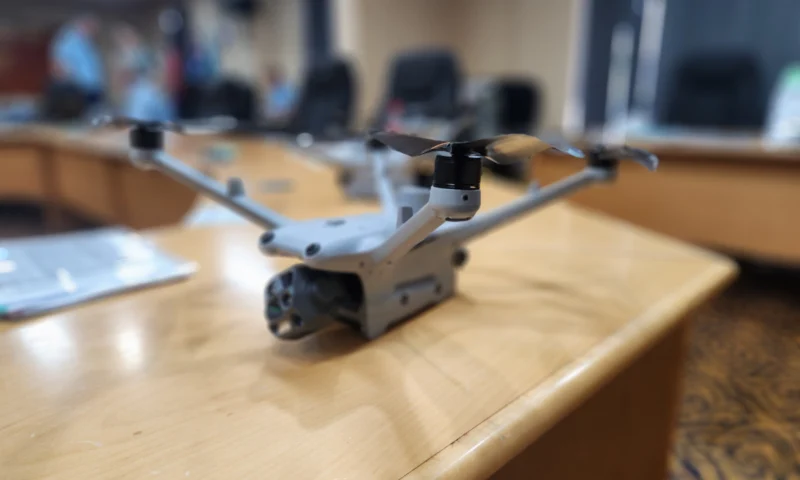
One of the DJI Matrice 4TD drones used by NSW Police in Moree’s POLAIR Remote trial, on display at the community information session on November 11. Photo: Moree Online News.
When someone calls triple zero in Moree, a police drone could be dispatched to the scene before officers arrive.
Its job may be to locate someone, identify a potential danger or give responding police a clearer picture of what they are about to encounter.
But how does that work in practice? Who decides when a drone is launched? What can it see, and what happens to the footage?
These were among the questions Moree Online News took to a NSW Police information session on Wednesday, November 11, after inviting residents to tell us what they wanted to know.
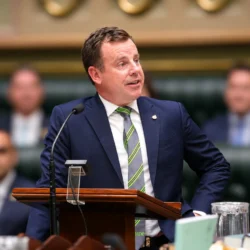
Superintendent Chris Nicholson, Commander of NSW Police Aviation Command, explained how the POLAIR Remote program operates, the incidents in which drones have been used and the rules police say govern their deployment.
The session also heard concerns about surveillance, privacy and whether the technology has delivered the results claimed for it.
What happens when someone calls triple zero?
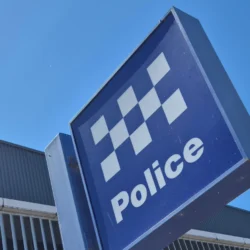
Two police drones are stationed on the roof of Moree Police Station, but their pilots are based at Bankstown Airport in Sydney.
The aircraft are operated remotely, with pilots communicating directly with officers in Moree and keeping watch for other aircraft while flying.
Superintendent Nicholson explained that a drone can be dispatched following an urgent triple-zero call without waiting for local officers to request one. Police on the ground can also ask for drone assistance.
“If a member of the community puts a call into 000 or the police, for the police to attend, if we need to attend a location for something that is urgent, we will deploy the drone to that location to try and get there first to provide the responding officers with the situational awareness they need prior to them arriving.”
Its pilot can relay information about where people are, whether someone has left the area and any dangers that might affect how officers approach.
How can that change a police response?
Superintendent Nicholson described domestic violence incidents in which a person had fled before police arrived.
Finding that person could otherwise involve officers spending considerable time searching the surrounding area.
With a drone already overhead, police may be able to establish where the person has gone and direct officers to that location.
“We can close these matters up and deal with them sometimes in the space of 5 to 10 minutes instead of taking a crew off the ground for an entire day,” he said.
Resolving one incident sooner can allow officers to attend other calls rather than remain committed to a search.
Police also described situations where drones had helped officers assess a potential threat before approaching someone.
In one example, Superintendent Nicholson said a thermal camera helped identify what appeared to be a weapon.
“We were able to provide the cops with that situational awareness of what they were walking into and where the person’s weapon was situated and what it was,” he said.
The drone’s floodlight was also used to improve visibility.
The aircraft are equipped with speakers, allowing police to issue directions to people on the ground.
“Public address system has been again used very, very effectively to tell people to stop running,” Superintendent Nicholson said.
Police said the information can help officers approach potentially dangerous situations with a clearer understanding of what is happening.
Superintendent Nicholson also explained how drones can follow vehicles from the air, allowing police to monitor their movements without necessarily conducting a pursuit on the ground.
He said this could help officers locate vehicles and the people involved, while reducing the time and resources needed for subsequent investigations.
Not every flight involves a crime
Some of the examples discussed at the session involved people who needed assistance rather than arrest.
Superintendent Nicholson described high-risk patients who had left hospital and were subsequently located with drone assistance.
He also spoke about incidents involving people who had travelled several kilometres outside Moree, including towards the Mehi River, and threatened self-harm following domestic violence matters.
Police said drones had helped locate those people and direct officers to them.
“So it isn’t all about locking up crooks,” Superintendent Nicholson said.
According to figures released by NSW Police, the Moree drones have assisted with 14 missing-person reports, locating 133 vehicles and more than 200 arrests since the trial began.
Why is there a drone flying near my house?
One question raised at the session concerned whether drones flying above residential areas were watching people in their homes or backyards.
Superintendent Nicholson explained that a drone’s position does not necessarily indicate what its camera is observing.
The aircraft can view incidents more than a kilometre away, meaning a drone heard or seen above one property may be monitoring an entirely different location.
“So for somebody on the ground who might hear the drone, the reality is that drone has no interest in what’s occurring at that particular location,” he said.
The pilots must monitor the drone’s position, communicate with local officers, keep watch for surrounding air traffic and make radio calls to other aircraft operating near Moree Airport.
Police said most flights are connected to calls for assistance or requests from officers.
Superintendent Nicholson said police sometimes conduct crime-deterrence flights around public places, including shopping areas, the CBD and licensed premises.
These may be based on police intelligence or undertaken while an aircraft is returning from another job.
Police said the drones are not used to deliberately watch or record people’s private activities in homes and backyards.
Police drones generally operate at considerable height, with Superintendent Nicholson explaining that they can fly higher at night to reduce noise.
During the demonstration, he described an aircraft operating at approximately 120 metres, or 400 feet, above the ground.
Inspector Steve Papandrea, the NSW Police Chief Remote Pilot, told Moree Online News that the police drones generally fly at night without their navigation lights illuminated. The aircraft also retain their original grey finish.
Superintendent Nicholson pointed out that private drones also operate around Moree, meaning a low-flying, brightly lit or noisy drone seen near a home is not necessarily a police aircraft.
What happens to the footage?
The question of what police record, and how long that information is retained, was another focus of the session.
Superintendent Nicholson said the drones do not continuously record video throughout every flight.
“We only record when there is a need to collect some form of evidence from a matter they are responding to, or it’s a significant public safety issue,” he said.
Police explained that the cameras are not routinely recording while a drone travels between incidents.
Where recording begins because something appears to involve an offence or a public safety issue, but that assessment turns out to be incorrect, police said the unrelated footage is deleted.
“If we inadvertently record something, so if we start to record something that we think is either going to be criminal or a public safety matter and it turns out not to be, in accordance with the Act, we delete that material immediately,” Superintendent Nicholson said.
Footage retained as evidence enters the NSW Police Force’s existing evidence-management system.
Police said it is governed by the same legal requirements applying to other police video evidence, including body-worn camera recordings and obligations under the State Records Act.
That material may also be disclosed as part of criminal proceedings, including to prosecutors and defence lawyers.
Police confirmed that every flight generates telemetry, including the aircraft’s movements, altitude, speed and position.
“The telemetry of all of those flights is recorded and stored,” Superintendent Nicholson said.
“But that is an aviation regulatory requirement, and we retain that data on behalf of CASA, the regulator.”
Police also explained that the aircraft use limited artificial intelligence to identify objects such as people, vehicles and boats.
“It’s not generative AI,” Superintendent Nicholson said.
What about privacy and surveillance?
The Aboriginal Legal Service NSW/ACT has questioned the consultation undertaken with Aboriginal communities and raised concerns about increased police surveillance.
The Justice and Equity Centre has also called for greater transparency and oversight of the technology.
Other residents expressed support for the program and wanted the technology retained.
Superintendent Nicholson acknowledged that not everyone was comfortable with the drones.
“There are ongoing simmerings throughout the community of concerns around transparency and privacy,” he said.
He said police had received no formal complaints about the program through NSW Police or the Civil Aviation Safety Authority, although concerns had been expressed publicly and during discussions with residents.
Superintendent Nicholson said police intended to release further information, including answers to frequently asked questions.
Has the trial reduced crime?
The POLAIR Remote trial began operating in Moree in January, before its official launch in February.
In August, the NSW Government announced a two-year extension.
But establishing the program’s effect on crime across Moree is a separate question.
Crime figures have shown a decline in some offences, although that trend began before the drones were introduced.
The NSW Bureau of Crime Statistics and Research has cautioned against attributing the reduction to the drones alone.
“The drone is a tool in the toolbox that we use to bring down crime and to improve public safety,” Superintendent Nicholson said.
“We have completed a thorough evaluation of the trial,” he said.
“That evaluation currently sits with government, so I can’t come here today and talk to you about the specifics of the evaluation until government have had time to review it.”
What residents thought
Most residents who attended Wednesday’s session appeared supportive of the drone program, with several expressing a desire to see it continue in Moree.
Questions about privacy and surveillance were also raised, giving police an opportunity to explain how the aircraft are deployed, what they record and the rules governing their use.
For many in the room, the message was clear: they want the drones to remain part of policing in Moree.