


















MOREE Fire Station has a strong team of Fire and Rescue NSW officers – but there is always room for more on-call staff, says on-call captain Blake Cosgrove.
Moree is staffed by a team of permanent firefighters who are backed up by on-call fire-fighters – men and women who hold down regular jobs but are there when needed.
Mr Cosgrove said comprehensive training is provided for all on-call firefighters and covers all aspects of the work involved to keep the Moree community safe.
“There are a few spots open, so we’d love some more on-call staff in Moree,” Mr Cosgrove said.
“Anyone interested can hop online to the fire and rescue website. There’s a link where people can express their interest, or they can drop into the Moree station, collect some information, and have a chat about it all.





















“Night-time availability in Moree is probably our main requirement. Availability during the daytime is great as well, but not an obligation,” he said.
Relief station officer Matt Jeffery said permanent staffing levels in Moree are good.
“The hardest thing is getting part-time staff – on-call staff – during the day, particularly,” Mr Jeffery said.
“There are permanent staff during the day, and for the size of the town, it looks like it’s quite well resourced with two rescue appliances and highly qualified and experienced staff,” he said.
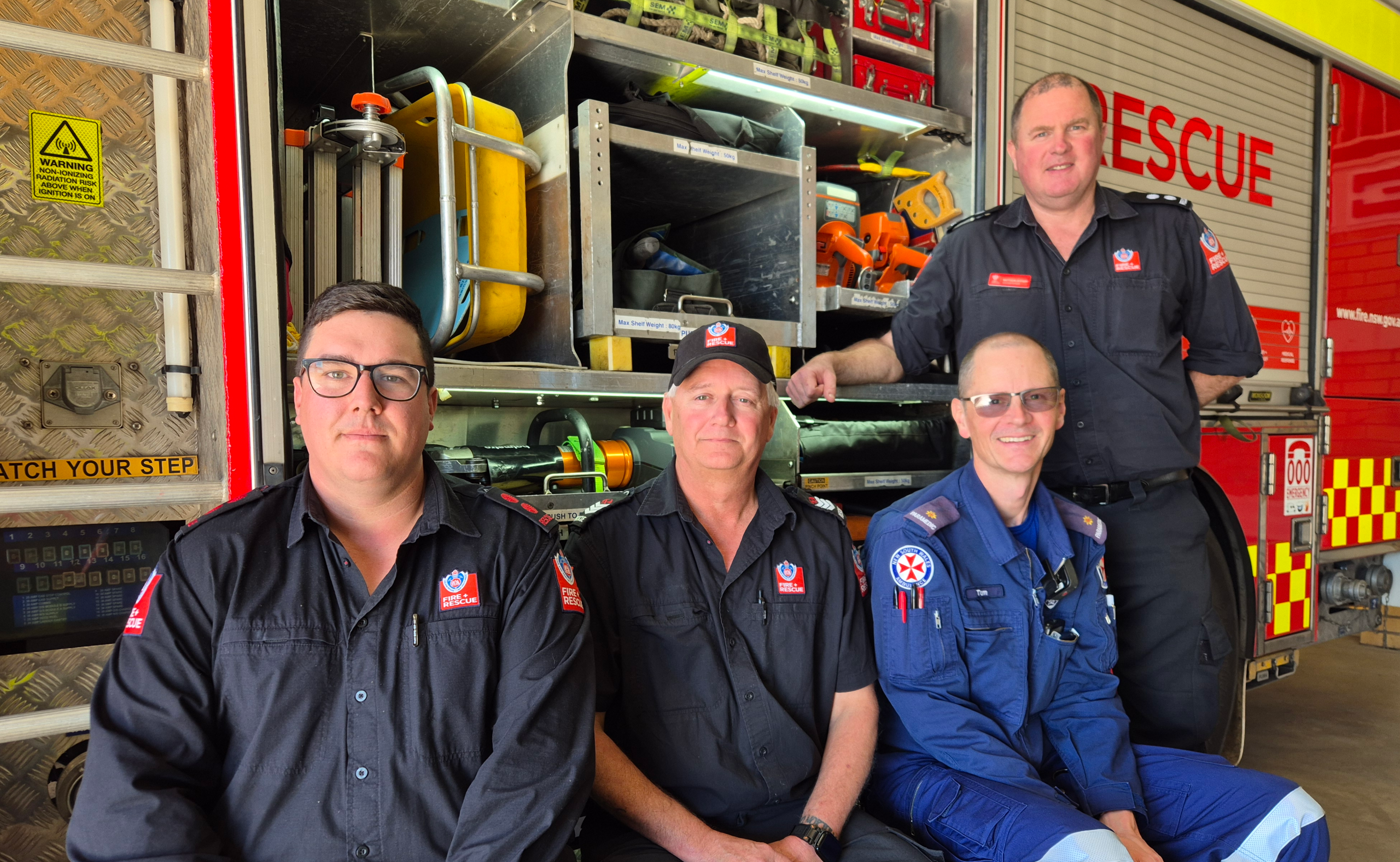
(From left) NSW Fire and Rescue on-call captain Blake Cosgrove, senior firefighter Mark Cahill, Moree Ambulance Station officer Tom Claringbold and NSW Fire and Rescue relief station officer Matt Jeffery at Moree Fire Station last week.
Signing on as on-call staff is a big commitment for people already in full-time employment, Mr Jeffery said.
“It’s hard for people to get away from their primary employment, and a big commitment for on-call staff trying to juggle family life and work life, while attending fire calls,” he said.
On-call firefighters are a highly skilled, ethical and professional team of men and women from all walks of life and support their local community by responding to emergency incidents from their home or workplace.
The work is paid, varied, challenging and rewarding, and often undertaken in confronting and stressful situations, particularly when people are injured or threatened with injury and loss of life. On-call firefighting involves day, night and weekend work, and can be physically, mentally and emotionally demanding.
“In my experience, most on-call crews are a bit of a mix, and it brings all their different life skills together,” Mr Jeffery said.
“It’s a big undertaking by on-call staff, but very rewarding.”




Senior firefighter Mark Cahill began his career as an on-call officer when he was 18 years of age.
“I did that for 10 years and in 2001, I applied to become a permanent firefighter through the general intake,” Mr Cahill said.
Later this year, Mr Cahill will take on the role as Moree station officer.
“I was promoted to the rank of station officer in July and later this year I have to go to Sydney for seven weeks to attend an officers’ promotion program,” he said.
“I started as an on-call officer – back then we were called retained firefighters – and came up through the ranking system that way.”
Interested?
Drop into Moree Fire Station and talk to crew members or go to Fire Up Your Career & Answer The Call.




0 Comments