

















A University of New England PhD researcher has demonstrated how artificial intelligence can dramatically improve electricity price forecasting, potentially reducing the cost-of-living pressure from power bills while making renewable energy work more efficiently.
The research, published recently in the journal Applied Sciences addresses a problem directly affecting every Australian household and business: the volatility of electricity prices in an increasingly renewable-powered grid.
Mark Sinclair, who is pursuing his doctorate in Artificial Intelligence at UNE while working as an AI Engineer at Empower Energy in Sydney, has published research showing that transformer models –the same AI architecture powering ChatGPT – can predict electricity prices far more accurately than current methods, often cutting forecast errors nearly in half.
“The national electricity market still doesn’t provide true forecasts,” Mr Sinclair said.
“They do what we call a linear problem solve based on current bids from generators compared to forecasts of power usage.






























“It’s more of an indication than any form of forecast – like trying to work out what the stock market’s going to do at open based on current bidding.”
This forecasting gap can be costly. When prices are poorly predicted, batteries charge at the wrong times, generators make suboptimal decisions, retailers hedge badly, and grid operators are forced into defensive actions.
“All that inefficiency ultimately gets paid for by consumers,” Mr Sinclair said.
The Australian National Electricity Market is one of the most volatile in the world, partly due to the rapid integration of renewable energy.
On a hot day when demand exceeds forecasts, electricity prices can spike from around 20 cents per kilowatt hour to $20 per kilowatt hour.
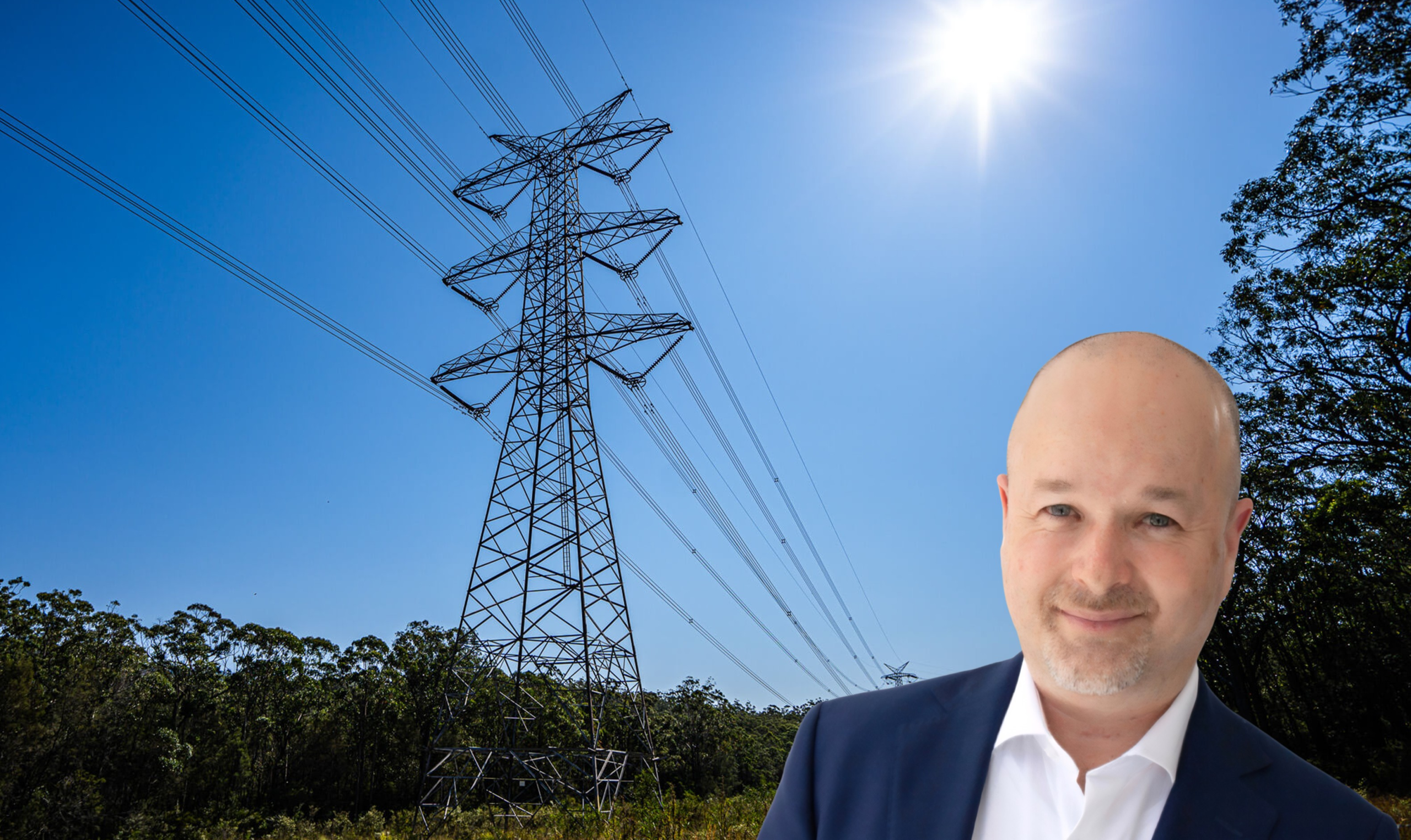
University of New England PhD researcher Mark Sinclair has demonstrated how artificial intelligence can dramatically improve electricity price forecasting.
Current forecasting methods struggle particularly with these volatile periods – exactly when accuracy matters most.
Mr Sinclair’s research tested whether transformer AI models could do better by learning complex patterns across time and combining multiple information sources simultaneously: demand, weather, interconnector flows, and forward-looking market forecasts.
The results provided compelling evidence that he was on the right track.
AI transformer models consistently predicted short-term electricity prices more accurately than official forecasts and other widely used machine-learning models, with relatively strong performance during volatile periods.
“Even a very small improvement in forecast accuracy can have a massive flow-on effect right throughout the whole industry,” Mr Sinclair said.



“It affects everything – from aluminium smelters timing their energy-intensive operations, to retailers managing their margins, to generators knowing when to ramp up production efficiently and burn less fossil fuel.”
For households, the implications are direct.
Better forecasts enable batteries, hot-water systems, EV charging, and other flexible loads to be scheduled proactively rather than defensively.
This reduces waste, smooths out price spikes, and puts downward pressure on electricity prices overall.
The research also supports more efficient renewable energy integration.
“Wind and solar are variable by nature, but when market conditions can be anticipated more accurately, the system doesn’t need to rely as heavily on expensive fossil-fuel back-ups ‘just in case’,” Mr Sinclair said.
Mr Sinclair has made all his code and datasets publicly available.
“I’m not doing this for personal gain. Anyone could take it and use it, and I hope they do,” he said.
Mr Sinclair is now transitioning into his PhD proper, focusing on an even harder problem: predicting when price spikes will occur.
“None of these models handled price spikes really well. That’s going to keep me busy for the next three years,” he said.
“The key message is that smarter forecasting is not a theoretical luxury.
“It’s one of the quiet, structural levers that can meaningfully reduce cost-of-living pressure, improve grid stability, and accelerate the energy transition – without asking households to change how they live.”









0 Comments