



















TAYLOR Oval, the proposed site for a 50-metre swimming pool complex, may have once shared land used for burials at an area known as Pioneer Cemetery.
There is also evidence that at least four people were buried at or near Taylor Oval in the mid- to late-1800s.
Sisters Maud and Fanny Kirkby, daughters of district pioneers Frederick and Charlotte Kirkby, were buried there in 1875.
About 10 years earlier, two Aborigines, believed to be man and wife, were buried near an area known as Moree Cricket Ground.
The graves of the couple were discovered in 1903 and the Kirkby sisters were exhumed in 1943 and moved to Moree Cemetery.

























In the 1870s, when the Kirkby sisters were buried, the Taylor Oval precinct was part of a vast reserve used for parks and public recreation.
The area was dedicated as “Moree Cricket Ground” on December 7, 1892 – also referred to as Moree Oval – and renamed Taylor Oval in 1953.
The western side of the area, now occupied by Moree Public School, was gazetted as a “recreation reserve” and appropriated in 1949, with Moree Infants School operating by 1957.
Endeavour Lane, which now divides the site, was established during this period.
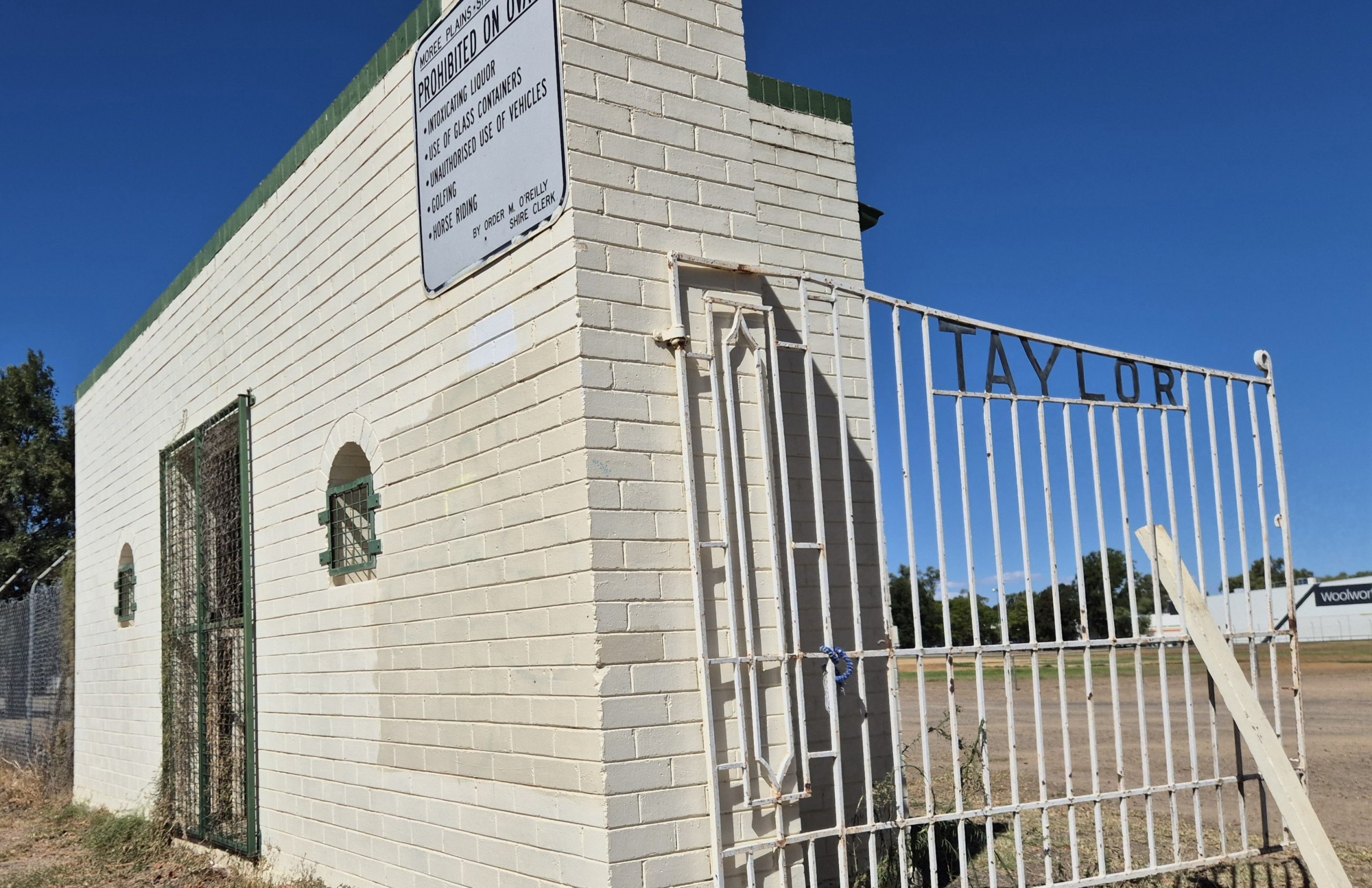
The historic Taylor Oval site has been earmarked for a 50m swimming pool complex.
Aboriginal burials
A brief article in the Moree Gwydir Examiner and General Advertiser, dated Saturday, August 8, 1903, under the heading “Gruesome Discovery”, says: “While two men were excavating soil on the block of land joining the Moree Cricket Ground, they came on a grave containing the remains of two bodies. The grave was about three-feet deep, and the bodies had been covered with an oppossum rug and bark. Enquiries elicited the fact that the remains were those of a blackfellow and his gin who were buried there about 40 years ago. The bones were gathered in a bag and removed for re-interment.”
It is understood the Moree Cricket Ground referred to in the article is in the vicinity to what is now known as Taylor Oval.
Fifty years after the discovery, the ground was named Taylor Oval, in recognition of sports administrator Teddy Taylor and his long association with sporting clubs in Moree.
OzArk report
The belief the site was once used as a cemetery is explored extensively in a cultural heritage and archaeological assessment undertaken by environmental and heritage management company, OzArk, in 2007, with a reference to an area called Pioneer Cemetery.


Several people were interviewed for the OzArk report, compiled by Dr Jodie Benton and Phillip Cameron.
“Information about Indigenous burials in the vicinity of Taylor Oval was forthcoming from a lot of the people interviewed,” the report says.
“The majority of this information appeared to be generated from the recent re-discovery of the 1903 article, although several traditional owners also noted the knowledge to have been passed down to them.”
Kirkby sisters exhumed
There is evidence the Kirkby sisters were buried in an area in the north-western corner of the Taylor Oval site overlapping Endeavour Lane and Albert Street, following their tragic drowning deaths in the Mehi River on February 20, 1875.
A few years ago, in a letter held by Moree and District Historical Society, former Logan’s Furniture employee Kevin Locke recalled the exhumation of the Kirkby sisters.
“I have researched with the help of others the story of the two children who were buried near the corner of Taylor Oval,” Mr Locke penned.
He said the children were buried on ground belonging to the Church of England.
“The remains were removed late in 1943 and taken to the Moree Cemetery, close near the fence to the golf club and not far from the graves of Alex and Ivy Dawson,” Mr Locke said.
“I know this, because I watched this being done, and I asked the late George Avery, who was the undertaker at the time with Logan’s.
“He attended the procedure with a police officer and council staff.”
Mr Locke said the burial area near Taylor Oval originally belonged to the Church of England.
“When I was young I played tennis on the church courts, later the area must have been taken over by the Moree Council as they put wooden play equipment there,” he said.
Mr Locke said this was later removed and replaced by Endeavour Lane to make access easier to the town tennis courts and ladies bowling club.
“The remains of the children were removed to make way for the lane to be built,” Mr Locke said.
There is a small trellis on the grounds of Taylor Oval, to the right of the main entrance, believed to be put there in memory of people buried there, possibly the Kirkby sisters.
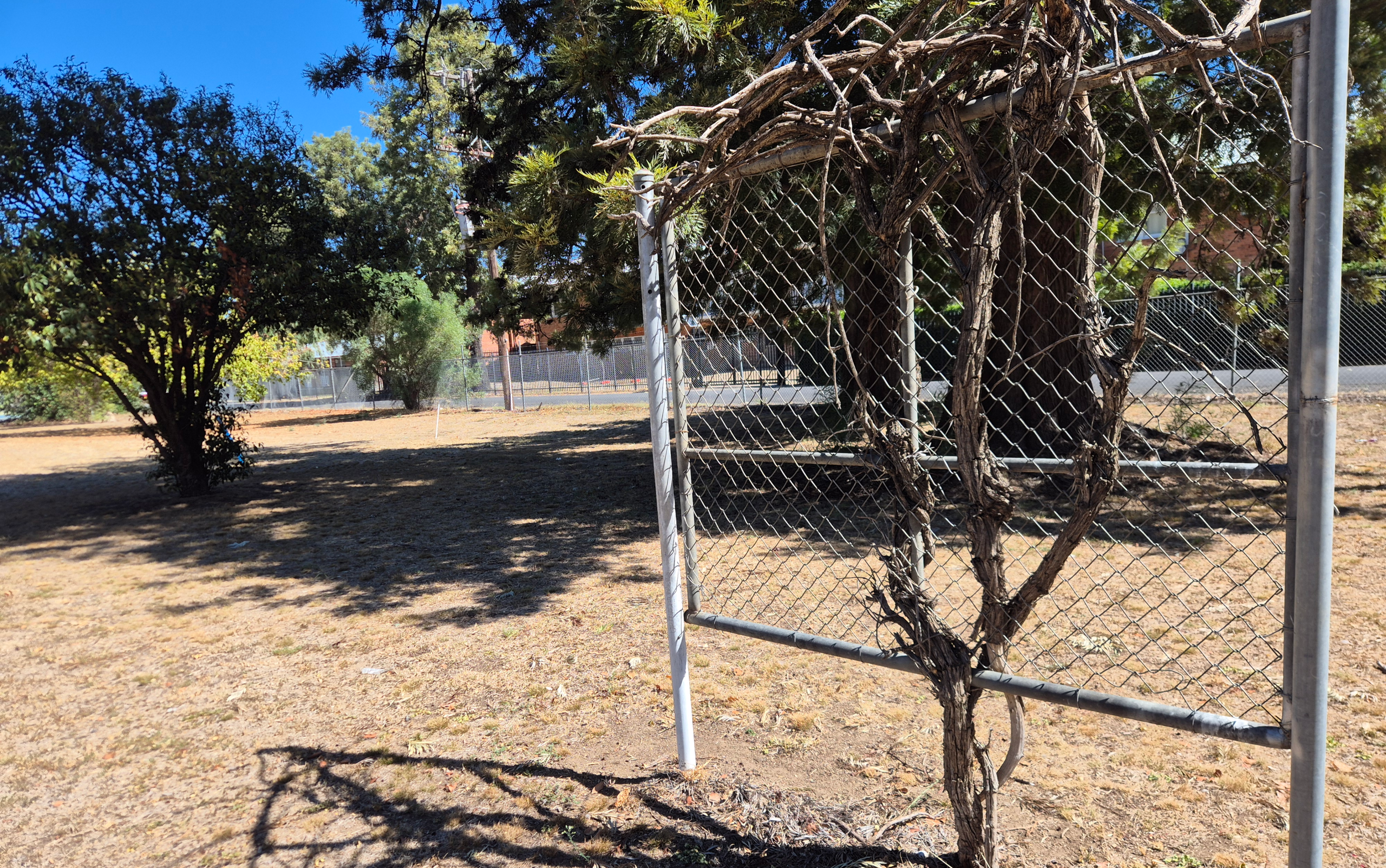
The trellis at Taylor Oval, believed to have been erected in memory of burials at the site.
Tragic drowning
Ten-year-old Fanny and eight-year-old Maud were the daughters of Moree district pioneers Frederick and Charlotte Kirkby.
On Saturday, February 20, 1875, Fanny and Maud were taken to the Mehi River by family servant Margaret Bennett, who told a subsequent coronial inquiry, the children were bathing in the river when she spotted a young boy on the riverbank.
“I requested the children to remain where they were; hunted the boy away and on my return the deceased were not in sight,” she said.
“I called for Fanny once, and no answer. I ran up to Mr Leonard’s place close by, and he came down (to the river). Next I saw Mr (William) Fox with Fanny in his arms and saw two medical men trying to restore them to life,” she said.
William Fox deposed he heard the aforementioned little boy say someone was in the water.
“I immediately ran down and plunged into the waterhole of the river, and succeeded in bringing one of the deceased children to the surface,” he said.
Dr James Granger and Dr Alexander Tulloch attended the scene.
“I tried to restore animation by the usual remedies in such cases, and continued for half an hour without success,” Dr Granger said.
Dr Tulloch also attended.
“On my arrival I found Dr Granger attending one of the children. I then at once paid all attention to the other child. In both cased, to the best of my knowledge, recovery was beyond human aid,” he said.
Newspapers reported the burial of Fanny and Maud Kirkby was the “largest and most orderly” ever seen in Moree.
“The school children, to the number of 26, attended by their teacher, preceded the corpses, then followed parents and relatives, next in procession pedestrians in pairs, vehicles and horsemen bringing up the rear,” the Narrabri Herald reported.
Parents Frederick and Charlotte later donated a large portion of land to Moree Municipal Council as a memorial to their daughters.
The land, between Balo and Frome Streets on the north-western bank of the Mehi River, was named Kirkby Park.
Moree cemeteries
Moree Cemetery on Greenbah Road was formally recognised in the late 1870s.
However, it is believed the area was used as a burial ground earlier than this.
Burials near churches or on church land were common in colonial New South Wales before municipal cemeteries were established.
The Taylor Oval precinct is close to St Andrew’s Presbyterian War Memorial Church and Moree Anglican Church, both on Albert Street.
However, the original St Andrew’s Presbyterian Church in Moree was built in 1886, with Moree All Saints Church of England built in 1889 – more than 10 years after the Kirkby sisters drowned.
The present-day St Andrew’s Presbyterian Church was built when the original building was flattened during a huge hail storm in 1949. The new church was officially opened on November 30, 1957.
All Saints Church of England was replaced by a brick building which was officially opened in 1935.
When first built in the late 1800s, both churches were timber structures.
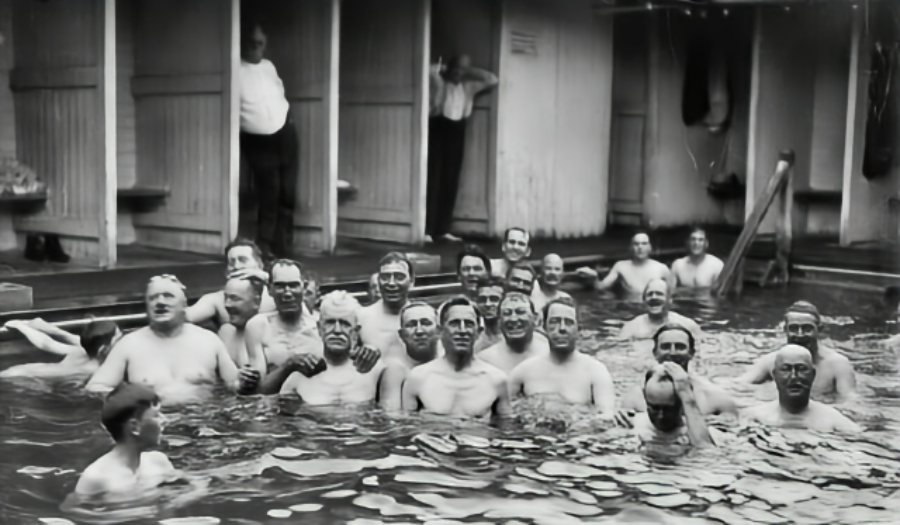
Moree Bore Baths circa 1920s (Image Supplied).
Pioneer Cemetery
OzArk Environmental & Heritage Management was appointed by Woolworths to investigate Taylor Oval and Park Lot 1 (DP1204168).
OzArk’s 95-page report, delivered in 2007, references the Kirkby sisters as well as Pioneer Cemetery. However, the exact location of Pioneer Cemetery in unknown.
“There appears to be an understandably vague (due to time) collective memory within the people interviewed regarding burials around the gates of Taylor Oval. Several people note this factor and although the majority of discussion relates to the burial of the two drowned European children (Kirkbys) and/or the Pioneer Cemetery, some people do not distinguish between these burials and possibly Aboriginal burials,” the report says.
An elderly gentleman interviewed, believed to be in his late 80s or early 90s, whose name was redacted from a copy of the OzArk report obtained by Moree Online News, was a drover and pastoralist on Yarraman Station, north of Moree.
The report says the gentleman is recognised locally as an avid historian.
“It was at times difficult to interview (the gentleman) due to age and health-related issues,” the report says.
“When lucid, he could clearly remember and discuss the topic, however, lucid moments were interjected with other recollections on tangents not directly related to the issue at hand.”
The interview was undertaken by telephone on September 9, 2007.
“He remembers as a boy being told that two bodies had been buried under the Police station and one in an area that later became the main street (Frome Street). He thought that they were European and the one under the main street was the daughter of the other two. These bodies were later exhumed for burial elsewhere,” the report said.
“He was told the Pioneer Cemetery was in the general vicinity of the Moree Cricket Ground, adding that he had no direct knowledge of this as most of the people that had first-hand knowledge were long dead by the time he was a boy.
“The only specifics he could recount were that he believed that some graves may have been on the western (right-hand) side of the oval as you go in the gates where the trees are bigger (in between Taylor Oval and the Primary School).”
The OzArk report said the processes of archaeological, geomorphological and literature review combined with interviewing local Moree citizens generated a reasonable body of information relevant to the question of the use of Taylor Oval as a burial ground.
“In summary, the current study has determined that prehistoric Indigenous burials are unlikely to be found beneath Taylor Oval, although the possibility of them cannot be completely ruled out,” the report says.
In reference to a Woolworths BIG W proposal on the site, the report says “as Taylor Oval has now been registered as an indigenous burial site on the DECC AHIMS (site #10-3-0067) and because the current assessment cannot rule out the possibility of burials, any impacts to Taylor Oval will have to follow a specific and prescribed route”.
Sporting greats
Apart from AHIMS listing, Taylor Oval is also historically significant as a sporting venue.
Don Bradman played cricket at Taylor Oval in 1929 and 31 years later, Moree Rugby League Football Club signed Australian Test coach Clive Churchill for seven weeks to coach the Moree squad with Ernie Gilligan.
The previous year, Churchill coached the Australian Kangaroos, who toured England and France.
In 1960, Moree won the grand-final against Armidale and the following year Churchill was re-signed to what would be his last captain-coach position.
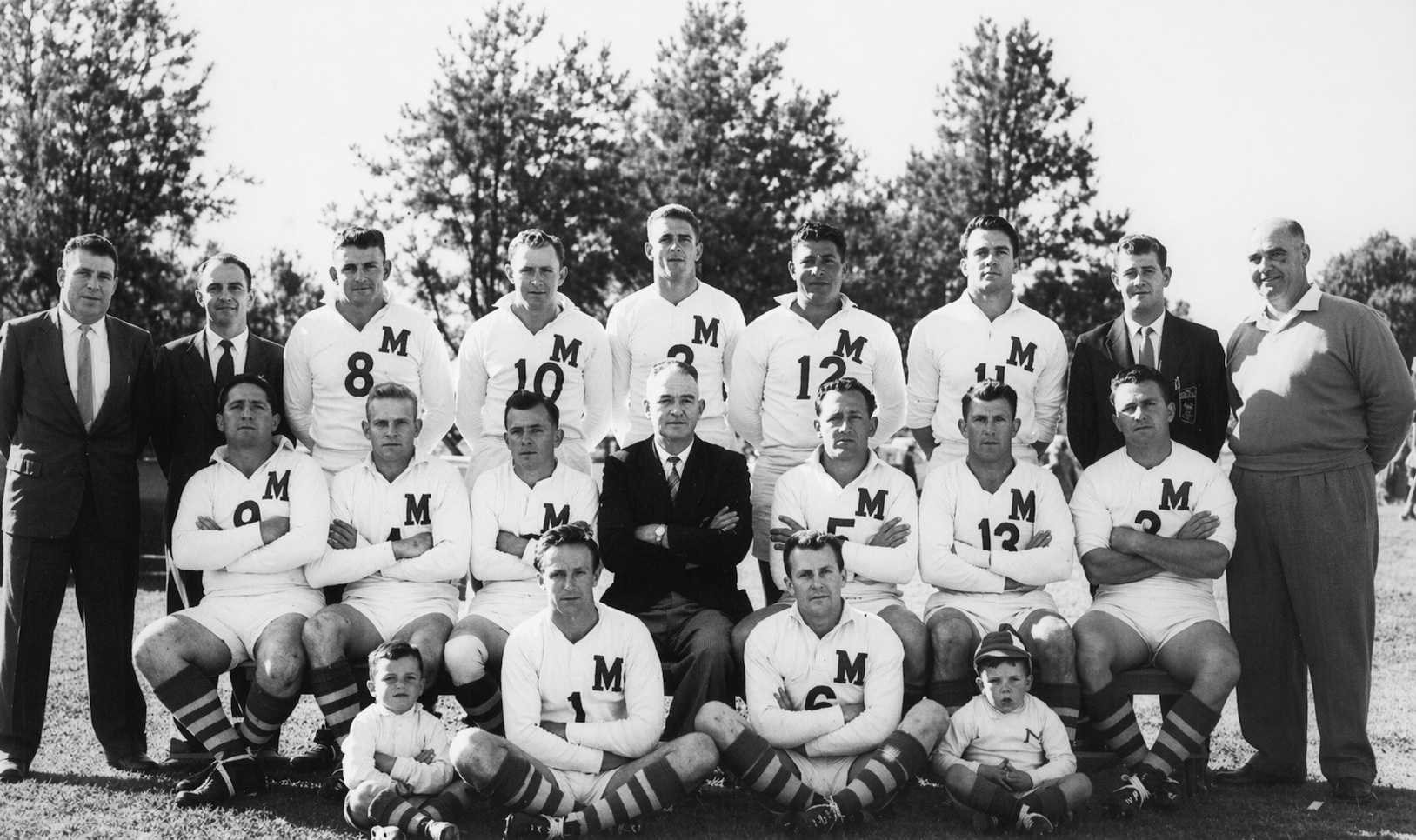
Moree Rugby League Football Club in 1960 (back row from left) selector Keith Jarvis, co-coach Clive Churchill, Reg Mitchell, Don Cameron, Harold Broderick, Ross Jenkins, Arthur Henderson, Rodney O’Mullane, selector Bob Picone with (seated from left), Allan Johnson, Heinz Blume, Rodney Skaines, club president Noel Tolhurst, team captain and co-coach Eric Gilligan, Alf Hardman and Ivan Shearer. Sitting at centre in front are Max Scott (left) and Kevin Bourke, flanked by team mascots Michael Clarke (left) and Phil Hardman. Clive Churchill returned the following year to captain-coach Moree. (Image Supplied).
July, 2025 council meeting report
A July, 2025 report titled 16.4. Taylor Oval Feasibility Report, tabled by Moree Plains Shire Council’s Planning and Development Department says, in part: “There is a current AHIMS listing on the site which was registered in June, 2007 as a burial based on a historical newspaper article from 1903 (no burial was found at that time or since).”
Interestingly, the 1903 newspaper report clearly states two bodies were found. However, Report 16.4 suggests otherwise.
Given the “no burial was found at that time or since” reference is bracketed, Moree Online News believes it is the opinion of council’s Planning and Development Department.
There is no reference to the assumption in OzArk’s 95-page report, published in 2007.
Report 16.4 says NSW Public Works and OzArk both recommended consultation with Heritage NSW to determine their willingness to change the AHIMS listing to ‘not a site’ based on the previous investigations.
Subsequently, Council submitted a request for Heritage NSW to consider the removal of the ‘active’ site listing against Taylor Oval.
March, 2026 council meeting
The Taylor Oval redevelopment proposal was discussed again at the March 19, 2026 council meeting, with Report 23.6. Taylor Oval Aquatic Precinct – update stating Council requested Heritage NSW to amend the AHIMS Site Card.
“Council officers have sought a review of the AHIMS site card status with Heritage NSW,” the report says.
Updated advice from Heritage NSW confirmed Council is required to follow the formal Aboriginal Heritage Impact Permit pathway.
This process includes Aboriginal community consultation in accordance with statutory requirements; preparation of an Aboriginal cultural heritage assessment and excavation methodology; controlled archaeological test excavation; and preparation of a report to inform Heritage NSW and future project design.
“Following a procurement process, Council has now appointed a suitably qualified archaeological consultant to undertake this work,” the report says.
“Community consultation and preparation of the assessment methodology will commence shortly, with archaeological testing expected to occur during the coming months. The purpose of this work is to determine whether Aboriginal cultural material exists within the proposed development area and to provide Heritage NSW with sufficient information to confirm whether the existing AHIMS site listing should be amended.
“The AHIMS site card was originally created in 2007 based on a historical reference to skeletal remains found in the general vicinity of the former Moree Cricket Ground. The source material did not identify a precise location for the remains. Subsequent investigations, including historical research, geophysical survey and targeted trenching, have not identified skeletal remains, in situ cultural material or a defined burial ground within Taylor Oval.
“Based on the investigations undertaken to date, the available evidence indicates a low likelihood of burials within the site. However, the presence or absence of subsurface cultural material cannot be confirmed without controlled archaeological excavation. The proposed excavation will therefore provide certainty regarding the presence or absence of cultural material and establish a pathway for Heritage NSW to consider an amendment to the site listing,” the report says.
April 8, 2026 council media release
Council published a Facebook post on April 8, 2026, later released as a media statement, saying “Council noted updated advice from Heritage NSW regarding the Aboriginal Heritage Information Management System (AHIMS) site listing for Taylor Oval and is now moving forward with a dual track approach, undertaking essential Aboriginal cultural heritage investigations while simultaneously launching a comprehensive master planning process”.
“A key priority for the site involves a formal heritage assessment process in co-ordination with Heritage NSW.
“This process, which is being undertaken by an independent qualified archaeological consultant, includes statutory Aboriginal community consultation, and aims to provide absolute certainty regarding the site’s history and inform future design.”
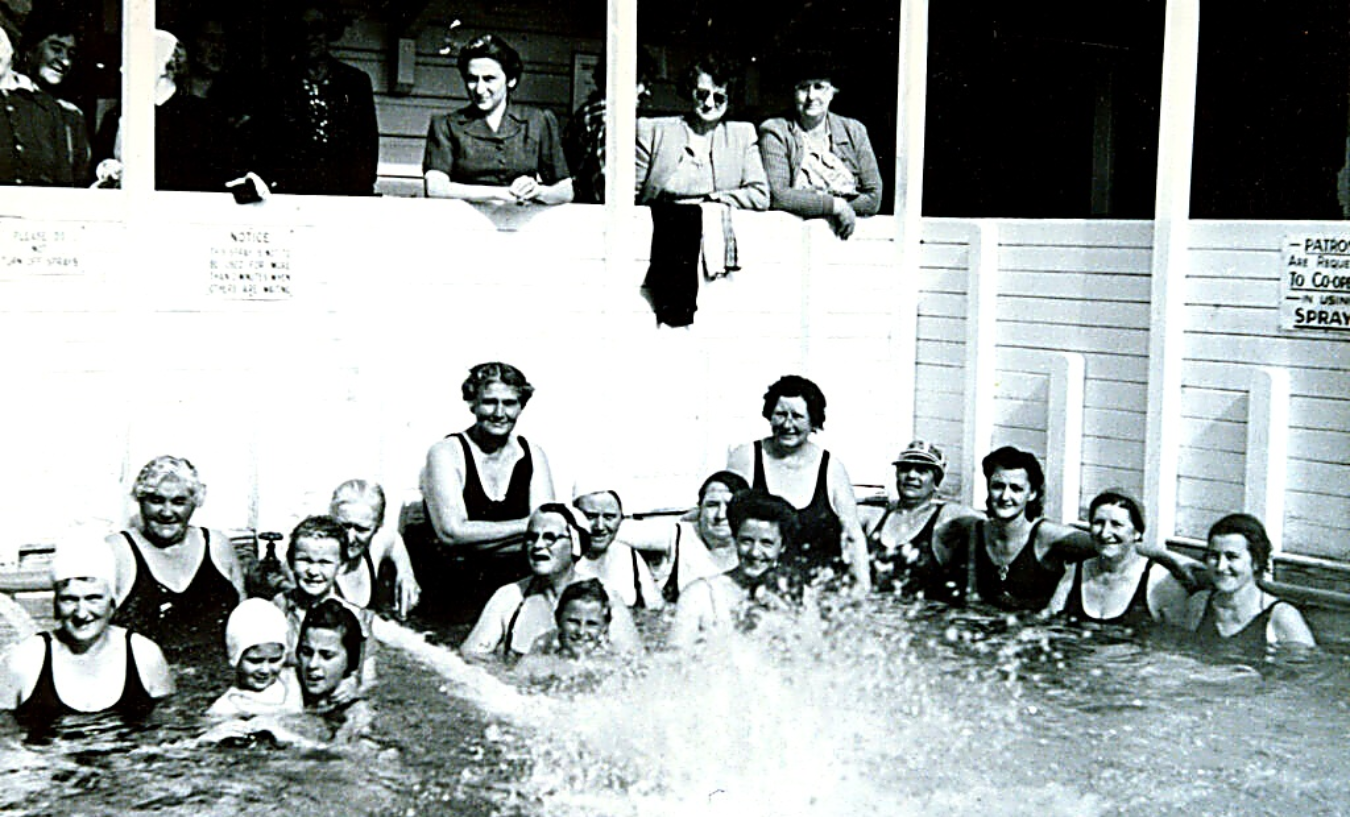
Moree Bore Baths circa 1920s (Image Supplied).
2025 NSW Public Works feasibility report
In March last year, Council engaged NSW Public Works to undertake a feasibility study into the construction of a 50-metre pool facility at Taylor Oval.
NSW Public Works was also engaged to develop three concept-layout options for the facility.
The report concluded: “The feasibility report confirms that Taylor Oval is a suitable location for the proposed new pool given its connectivity to the town centre, its proximity to the existing sporting and community infrastructure and the local schools. It also affirms that construction is feasible, pending the completion of the design and engineering phases, including further detailed site investigations.”
As for the site being protected because of Aboriginal remains found in 1903, the Public Works report says: “Although there is an AHIMS listing for the site, which presents a risk to the proposed development on this site, the risk is considered minimal. This is due to the findings of previous studies and decisions applied to previous claims. On this basis the site is considered worthy of progressing, although further investigations will be required.”
The NSW Public Works report also refers to a 2016 OzArk report: “Taylor Oval and Park Lot 1 (DP1204168) has historical significance related to Moree’s sporting history. There is minimal evidence to suggest it is a burial ground. Furthermore, there is insufficient evidence to support a claim that the site is of ‘particular significance’ under Aboriginal tradition as defined in the Aboriginal and Torres Strait Islander Heritage Protection Act 1984 (ATSIHP).”
Earlier in this article, Moree Online News referred to OzArk’s 2007 report. However, NSW Public Works quotes a 2016 report from OzArk. Moree Online News has to date been unable to source a copy of the 2016 report.
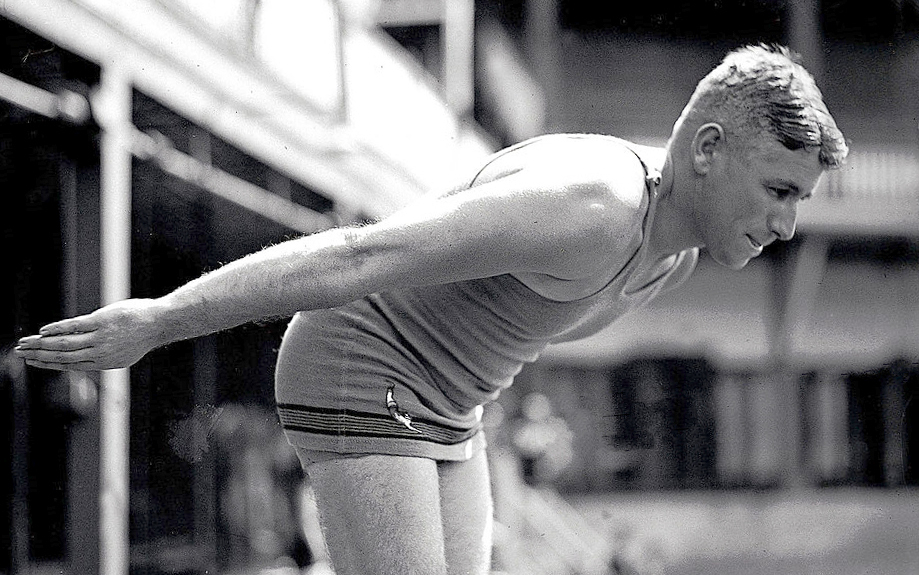
Olympic gold medallist Dick Eve. He managed and helped design a new Olympic pool and grandstand in Moree in 1929 (Image Supplied).
Twelve months down the track
Meanwhile, there has been no real progress made in the past 12 months regarding a 50m pool for Moree at either the MAAC site or Taylor Oval.
Interestingly, in February, 1929 Moree Municipal Council aldermen voted to build an Olympic pool and concrete grandstand at the Moree Bore Baths site.
The pool and grandstand was opened to the public on January 4, 1930 – less than 12 months after construction was approved.
Olympic gold medallist Dick Eve managed and helped design the complex.
The pool and grandstand serviced the Moree community, including Olympic and Commonwealth Games champions, for more than 80 years.
The Moree Plains Shire Council website incorrectly says the original six-lane, 60-yard pool was built in 1913.
A feature article detailing the history of Taylor Oval and Moree Bore Baths – now known as Moree Artesian Aquatic Centre – can be read HERE.
Important Information
Moree Plains Shire Council will hold a council meeting next Thursday, April 16 at 11am, ahead of the 1pm meeting. Moree ratepayers and concerned residents are encouraged to attend. To speak at a Moree Plains Shire Council public forum, members of the public must register by 5pm on the Tuesday immediately before the council meeting is scheduled. Generally, inquiries and registrations are handled by the Executive Office. To register as a speaker or for more information, email [email protected] or [email protected]. Alternatively, call 6757 3222.
Words and Images: Bill Poulos






0 Comments