























THE University of New England has officially opened its new wing of clinical nursing laboratories on the Armidale campus.
This marks a significant milestone in the University’s contribution to addressing the critical healthcare workforce shortage across regional Australia.
The purpose-built facility represents a tangible investment in the next generation of healthcare professionals. Designed to deliver real-life clinical experiences in a simulated environment, the labs were fast-tracked to accommodate the high demand for the newly re-introduced Master of Nursing Practice (Preregistration) program, which has already attracted a strong cohort of local and international students.
UNE Vice-Chancellor and CEO, Professor Chris Moran, said the investment in the new labs is a direct reflection of the University’s 2026-2035 Strategic Plan, which emphasises the need for UNE to be more involve in regional health workforce development.
“This expansion of our facilities in Armidale signals confidence in our discipline and commitment to our students,” Professor Moran said.



































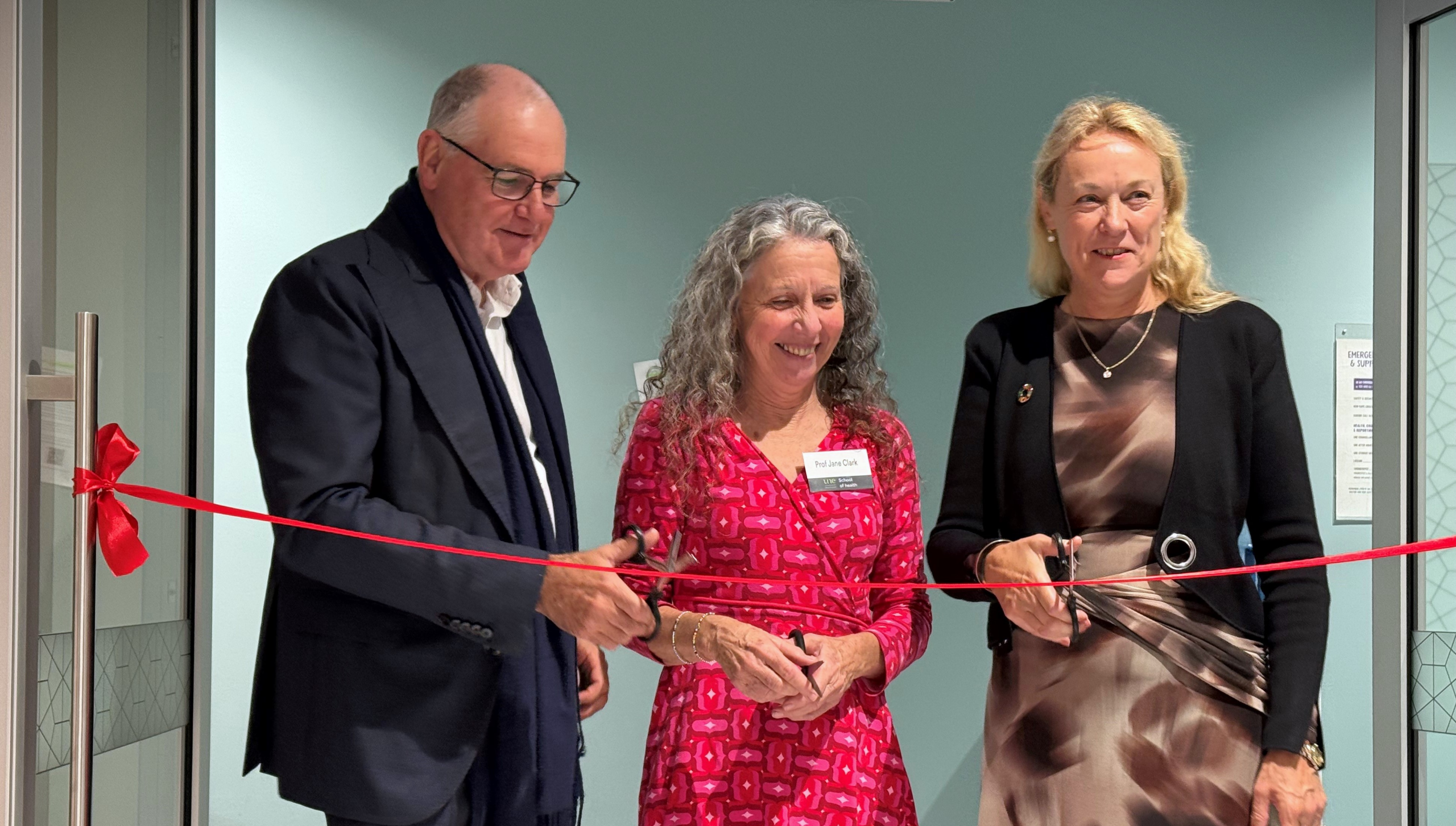
(from left) Vice-Chancellor Professor Chris Moran, acting Executive Dean of Medicine and Health Professor Jane Clark and Chancellor Sarah Pearson officially open UNE’s new wing of clinical nursing laboratories on the Armidale campus.
“UNE has a responsibility to play a role in easing the systemic pressures in rural communities, and that starts with building the capacity to train more nurses right here in the regions.”
“These labs ensure UNE remains at the cutting edge. We are delivering a modern nursing education, ensuring our graduates enter the workforce not just with a degree, but with the practical confidence required for contemporary nursing practice.”
UNE Chancellor, Dr Sarah Pearson highlighted the social equity dimension of the project, noting that the global shortage of nurses – predicted to reach 7.6 million by 2030 – is felt most acutely in the bush.
“Rural and remote Australia constitutes a vital frontline, yet we continue to struggle to attract and retain healthcare professionals. This isn’t just a workforce problem; it’s a social equity issue,” Dr Pearson said.
“When a student from Tamworth, Moree, or Glen Innes enters these labs, they can visualise themselves as a nurse with a future in their own region. These facilities signal that we value their service and are invested in their success.”
Professor in Nursing, Rikki Jones, said the labs will facilitate space to grow and develop curriculum that meets both industry and student needs.
“The new spaces ensure we are able to delivery modern nursing education in a simulated real-life environment. These additional labs will give us the flexibility to be more innovative in what we deliver in a simulated clinical real-life setting,” Professor Jones said.
“We know that students who train rurally are more likely to remain and work in the regions. Many of our international students also go on to spend some of their working lives in a regional area.
“Our nursing discipline academics, lab managers and clinicians, together with the Work Integrated Learning team and professional staff, supporting the Nursing Discipline have worked tirelessly to ensure these spaces met our accreditation bodies standards and were shaped by what our staff and students need. This was a massive team accomplishment that goes beyond just the build of the labs.”















0 Comments