






















THE development of picnic racing across the district during the early part of the 20th century was an important chapter of an incredible era of country racing in the New South Wales north and north-west.
There is evidence of sporadic, charity-driven race meetings as far back as the mid-1800s but picnic racing across the black-soil plains came of age in the early-1900s when annual meetings began at Moree, Mallawa and Talmoi.
These meetings co-existed with other venues, including Spring Plain and Bullarah.
One of the most influential owners, breeders and racing administrators of the era was Brian Hurtle Crowley, who would later be knighted by Queen Elizabeth for his services to the Australian racing industry.
Crowley completed his education at Scots College in Sydney in 1910 and six years later enlisted in the Australian Imperial Force.



































He served on the Western Front as a gunner with the 7th Field Artillery Brigade and at Passchendaele, Belgium, while acting as telephonist to the forward observing officer during an attack, set a ‘splendid example of courage and determination’, ensuring vital messages were transmitted.
Crowley was awarded the Military Medal and later underwent officer training in England, where he was commissioned in 1919 and promoted to lieutenant.
He married Dorothy Sweet in 1922 and, in 1926, they returned to the family property Oreel, at Merrywinebone, west of Moree.
Crowley bred thoroughbreds and ran more than 15,000 merino sheep on the property, and in 1954 established the Oreel Pastoral Company.
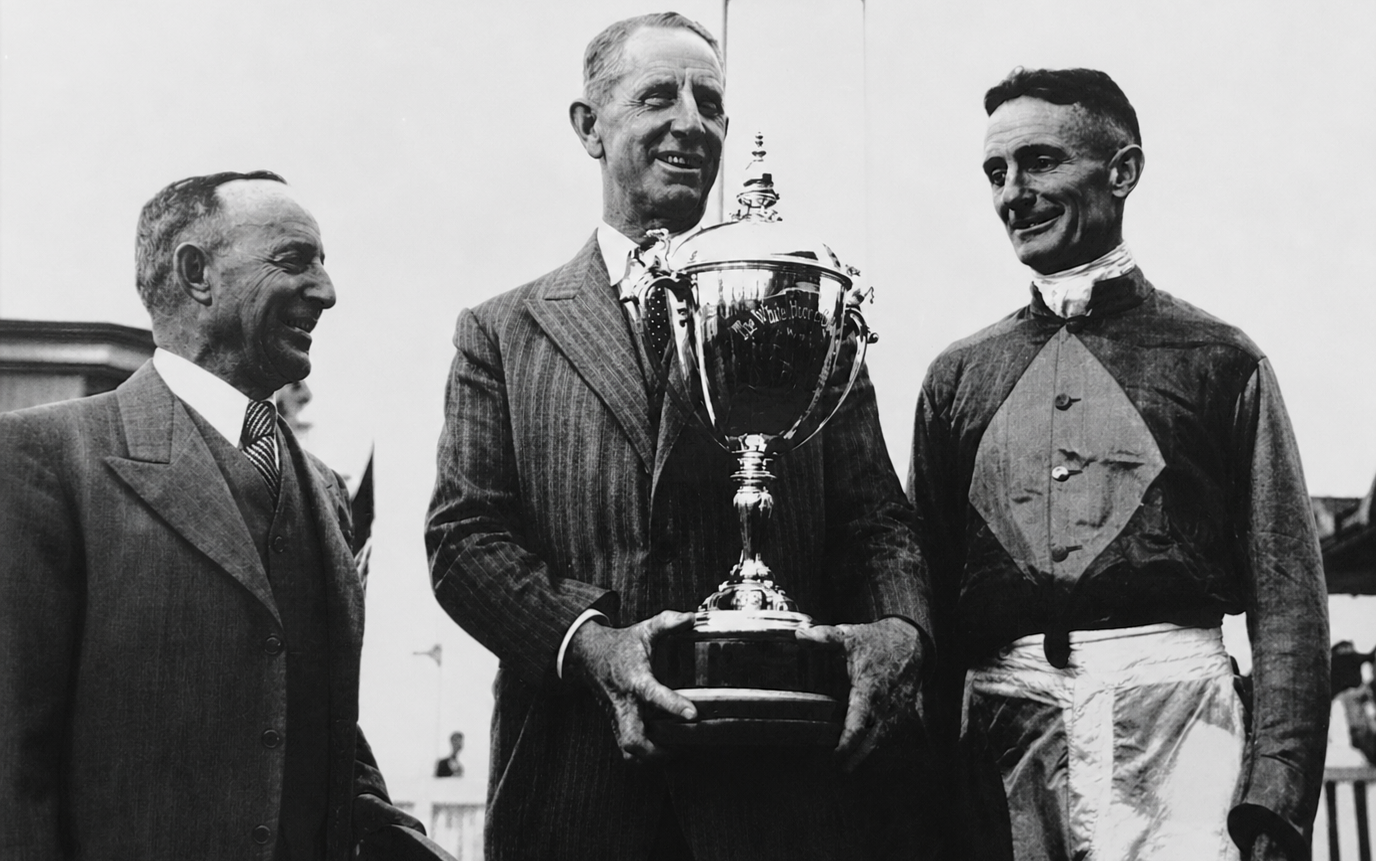
Brian Crowley accepting Pluck’s Corinthian Handicap trophy in 1953 with (left) trainer Fil Allotta and jockey Henry Thompson, who flew up from Melbourne to ride the horse.
Early days
Crowley was interested in racing from an early age and won his share of pony races on chestnut mare Ellinga while schooling in Sydney.
He joined the Australian Jockey Club in 1921 when he was 25 and was elected to the committee in 1944.
Crowley bred, owned and trained a succession of quality gallopers during the early days of picnic racing, including Thalaba and Blue Blood, winner of the Corinthian Cup at Rosehill in 1937, beating Canegrass and West Hock.
Blue Blood, a winner of 25 races, was Crowley’s first city winner as an owner-trainer.
As an outright owner, Crowley again won the Corinthian Cup in 1953 with three-year-old gelding Pluck, trained at Randwick by Fil Allotta.





As a trainer in the early days, Crowley always favoured a small team, never having more than three horses in work at a time.
Small numbers didn’t affect results, however.
It was quality, not quantity that enabled Crowley to clean-sweep just about every major race on the north-western picnic circuit during the 1920s and 1930s.
Crowley owned and trained horses chiefly bred from his station sire Rovigno, and won more than 200 races across the district.
In 1921 he trained 12 horses to win more than 50 races.
Winners in the early days included Plonker, Furlough, Charlesworth and Cullunga Loch and one year at a two-day meeting at Walgett, Crowley started three horses to win six of the 10 races programmed.
Leucid, Graham, Cicereen, Battery, Placid, Domestic, Mark Well and Dungama carried Crowley’s dark blue and orange colours to victory on many country racetracks across New South Wales, including Mallawa and Talmoi – rounds two and three of bush racing’s Golden Triangle.
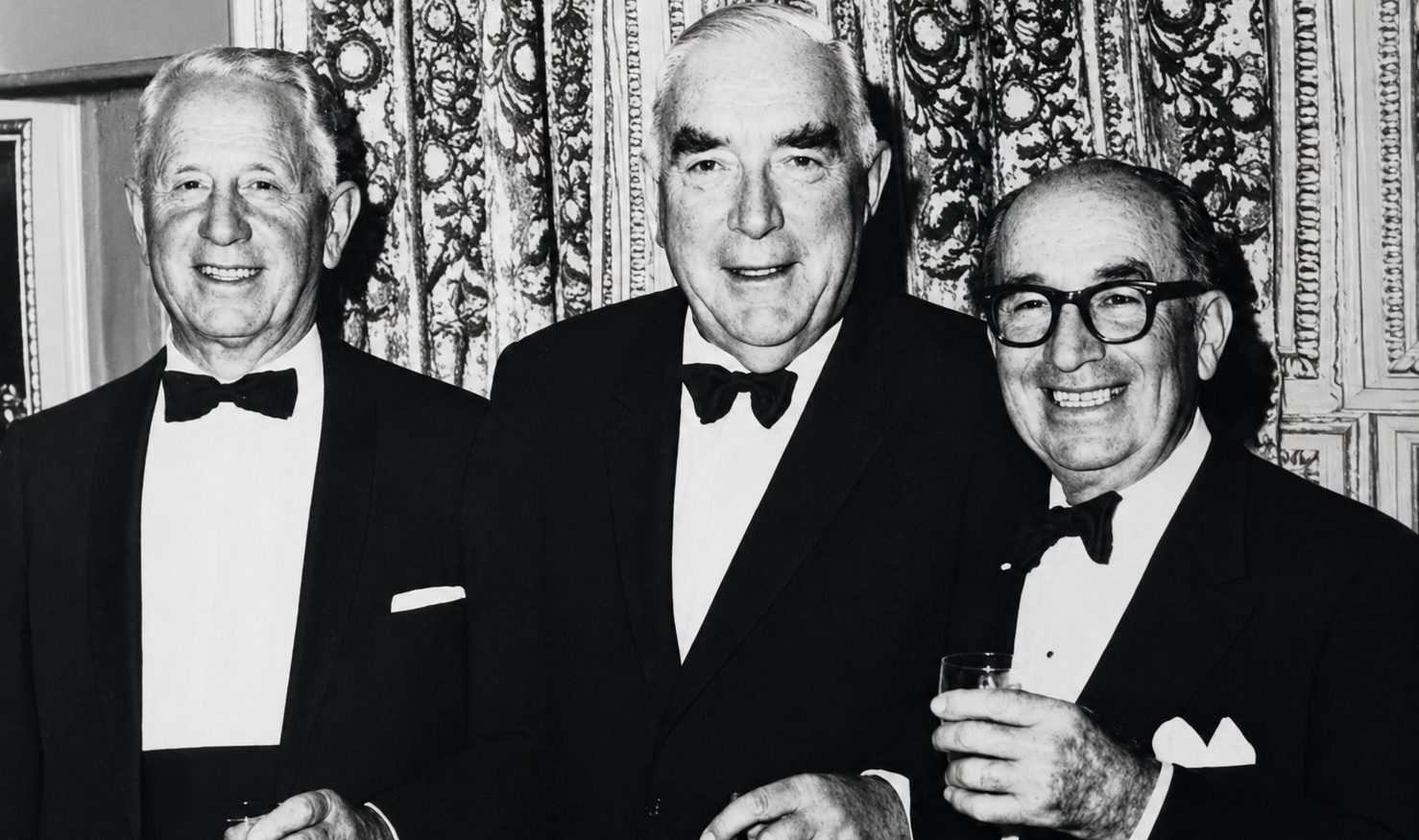
Brian Crowley (left) with Robert Menzies (centre) and Lionel Israel at the NSW Bloodhorse Breeders’ Association annual dinner.
City winners
In later years, horses the calibre of Flight, full-brothers Skyline and Sky High, Hilarious, High Spirits, Rhythmic, Brilliant Light, Aerial, Reveille, brothers Carnival and Gay Song, Brigade, Ballad, Dancing Lady, Deerfoot, Court Jester and Blue and Gold would win on city tracks for Crowley.
Many of these wins were in black-type and Group races.
Fittingly, three-year-old filly Reveille won the 1964 Flight Stakes, a race named in honour of Crowley’s champion racemare.
Reveille, trained by Jack Green, also won the One Thousand Guineas in Melbourne and the WFA Warwick Stakes in Sydney.
Wiry old giant
Those who knew Brian Crowley christened him the ‘wiry old giant of the racing world’.
After launching his training career on the picnic circuit at Moree, Mallawa, Talmoi and Spring Plain, he endeared himself to the racing public across Australia as both a ground-breaking administrator and a genuine lover and owner of thoroughbred horses.
He emerged from the back-blocks of remote north-western New South Wales to become a forward-thinking forefather of the modern-day Australian racing industry.
Crowley became Australian Jockey Club vice-chairman in 1961 and was elevated to chairman the following year – a position he held until 1974.
Racing underwent tremendous change during Crowley’s chairmanship.
He lobbied for – and witnessed – the introduction and growth of the New South Wales TAB and for three years from 1964 was the first AJC representative to sit on the TAB board.
Crowley was also an envoy at numerous Asian racing conferences.
He represented Australia at the third Asian Racing Conference held in Sydney in 1963, the fourth conference in Manila and the seventh in New Zealand, and also chaired numerous Australian principal race clubs’ conferences.
Flight, Skyline and Sky High
Racing in New South Wales in the 1960s flourished under Crowley’s chairmanship.
He pushed – sometimes shoved – for higher prize money for owners and better amenities for race-goers, and got them both.
The construction of a $3 million grandstand at Royal Randwick as racing galloped into the 1970s was a tribute to his administration.
But is it not just as a racing administrator that Crowley is fondly remembered for by the rank-and-file.
He was also one of the most popular owners to ever walk on to a racecourse.
It was an honour largely attributed to not one, but three champions that carried his colours – incredible mare Flight and full-brothers Skyline and Sky High, Golden Slipper winners in 1958 and 1960 respectively.
Skyline and Sky High were also Derby winners in their respective three-year-old seasons.
Flight, the highest stakes earner in Australian racing history when she retired, produced Flight’s Daughter, the dam of Skyline and Sky High.
Flight, a dual Cox Plate winner in 1945 and 1946, endeared herself to the Australian racing public and retired from the track with 24 wins and 28 placings from 65 starts.
She was widely known as the Garbo of the Australian turf, a reference to international star, Greta Garbo.
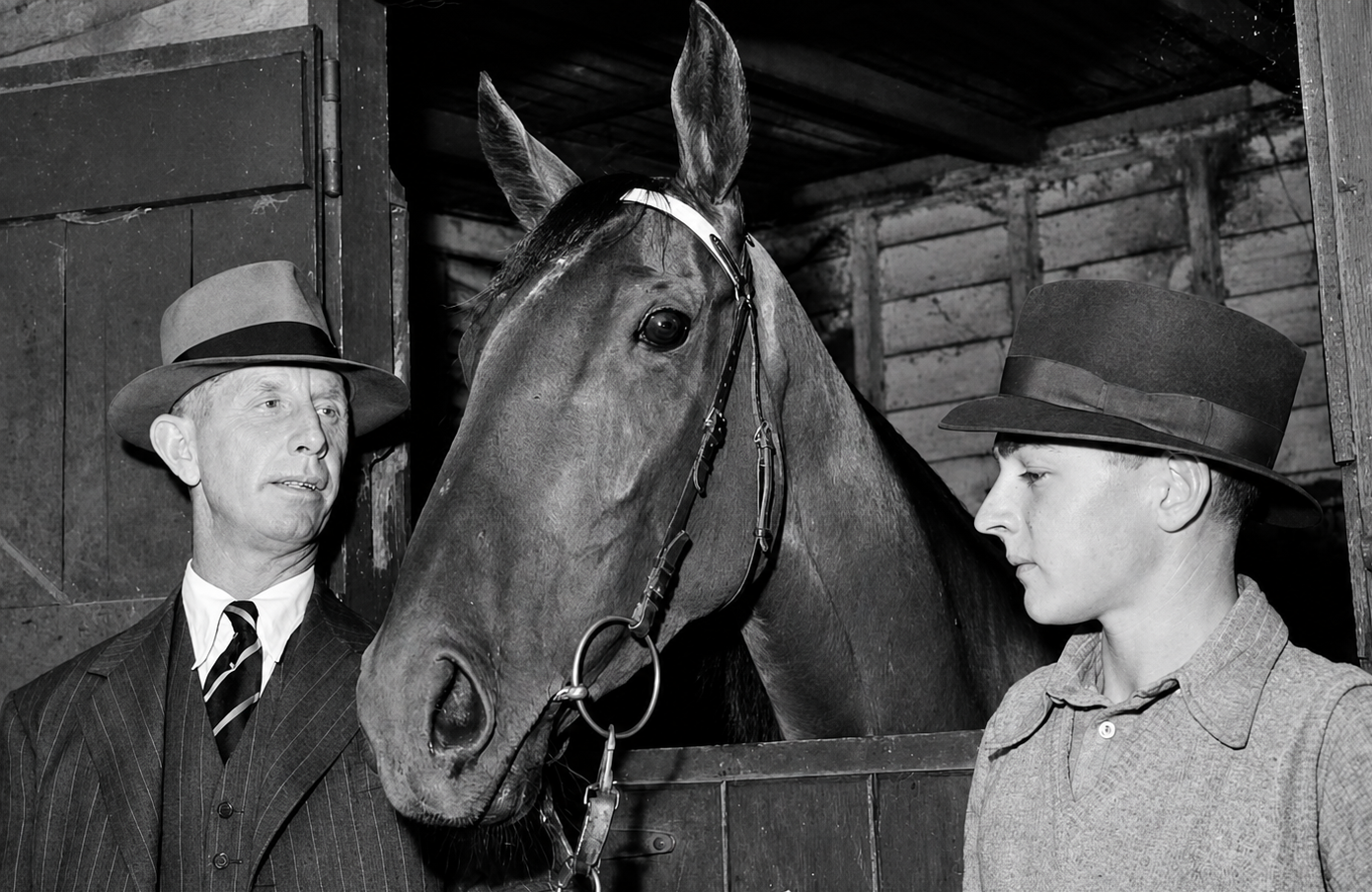
Brian Crowley (left) with champion mare Flight and the mare’s stable lad (Image: State Library of NSW).
Knighthood for services to racing
Crowley was knighted by Queen Elizabeth in 1969 for his services to racing and, in 1974, at 78, he tendered his resignation as AJC chairman.
“Time has persuaded me to give it away. I have been there long enough,” he said at the time.
In 1979 Sir Brian was elected a life member of the Australian Jockey Club and is still considered by many as one of the greatest administrators to ever oversee the vast Australian thoroughbred racing industry.
Sir Brian passed away in 1982, leaving a timeless legacy that will never fade.
He was still a regular race-goer until shortly before his death, and had several horses in work at Randwick with trainer Albert McKenna.
Sir James Carr, who succeeded Sir Brian as AJC chairman, described his predecessor as the most outstanding racing administrator he had known.
Sir Brian’s passing left an enormous void in Australian racing and his memory lives on with the annual running at Royal Randwick of the Sir Brian Crowley Stakes, won over the years by such notable three-year-olds as Ubetido (1980), Sculptor (1983), Let’s Get Physical (1985), Paris Opera (1989), Gold Brose (1993), Shovhog (1998), Legally Bay (2003), Northern Meteor (2008), Diplomatico (2018), The Bopper (2020), Mazu (2021) and Amazing Eagle in 2024.
A few days after Sir Brian’s death, jockeys at Royal Randwick wore black crepe armbands as a mark of respect for the man that created enormous change in the industry after humble beginnings on the north-western picnic circuit.
It was only fitting that the filly, White Ivy, won the opening race on the card at Randwick – Sir Brian bred and raced the filly’s sire, Blue and Gold.
It was as if the wiry old giant of the racing world had planned it that way.
The Triangle
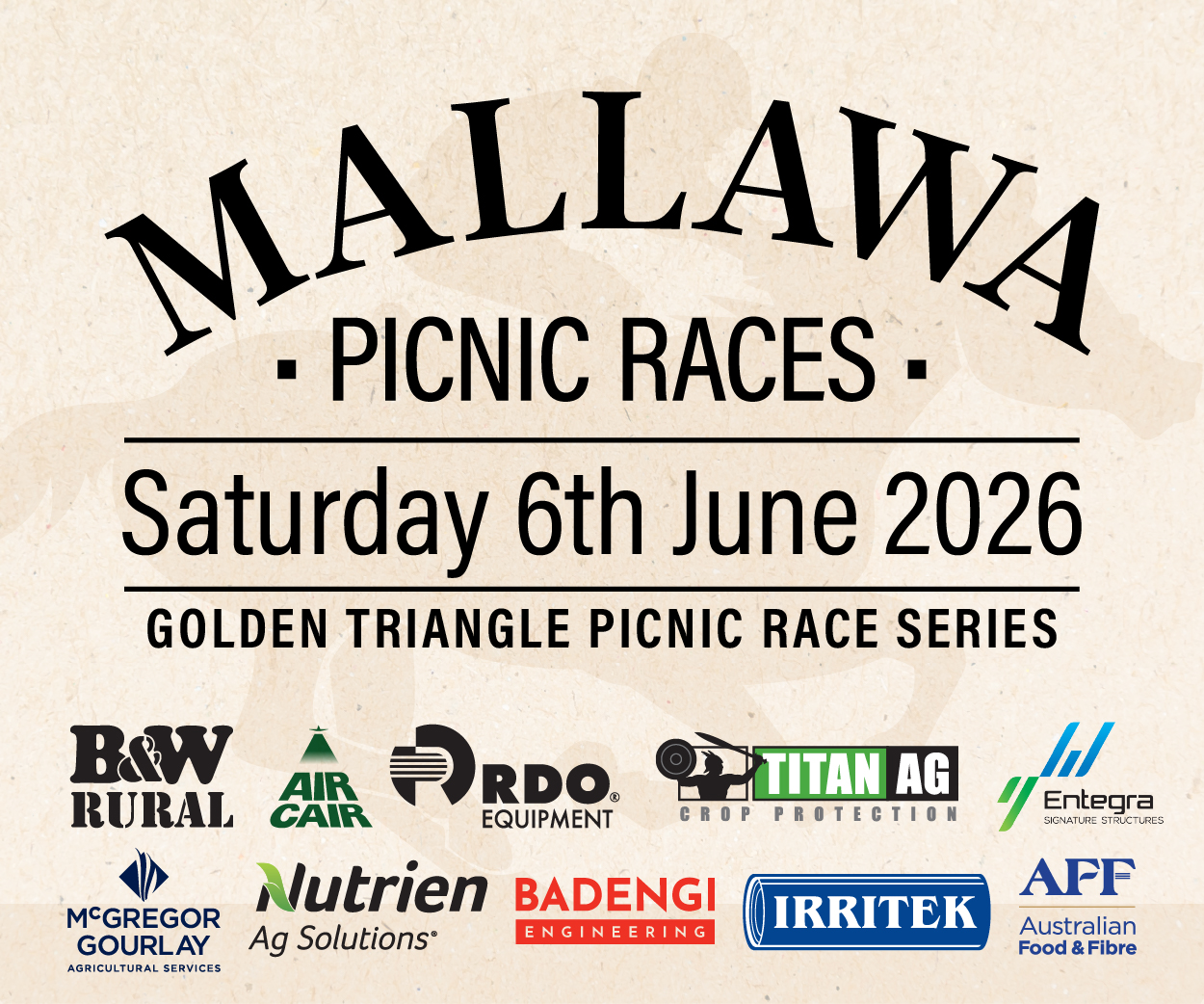
Bush racing’s Golden Triangle continues at Mallawa tomorrow with six races, including the 1400m B&W Rural-Titan Ag Mallawa Cup and 1000m RDO Mallawa Bracelet
The track has dried out nicely after 35mm of rain fell on the course proper last week, with an official “good” track rating.
There will be a marquee luncheon as well as the famous Moree Lions Club barbecue and live music after the races are run and won.
A coffee van will be on-site throughout the day, with wood-fired pizzas available during the night function.
Online tickets to the popular meeting are available HERE.
Buses to Mallawa will also operate to and from the Royal Hotel in Moree from around 11am.
Acceptances for the meeting will be declared at 9am today.
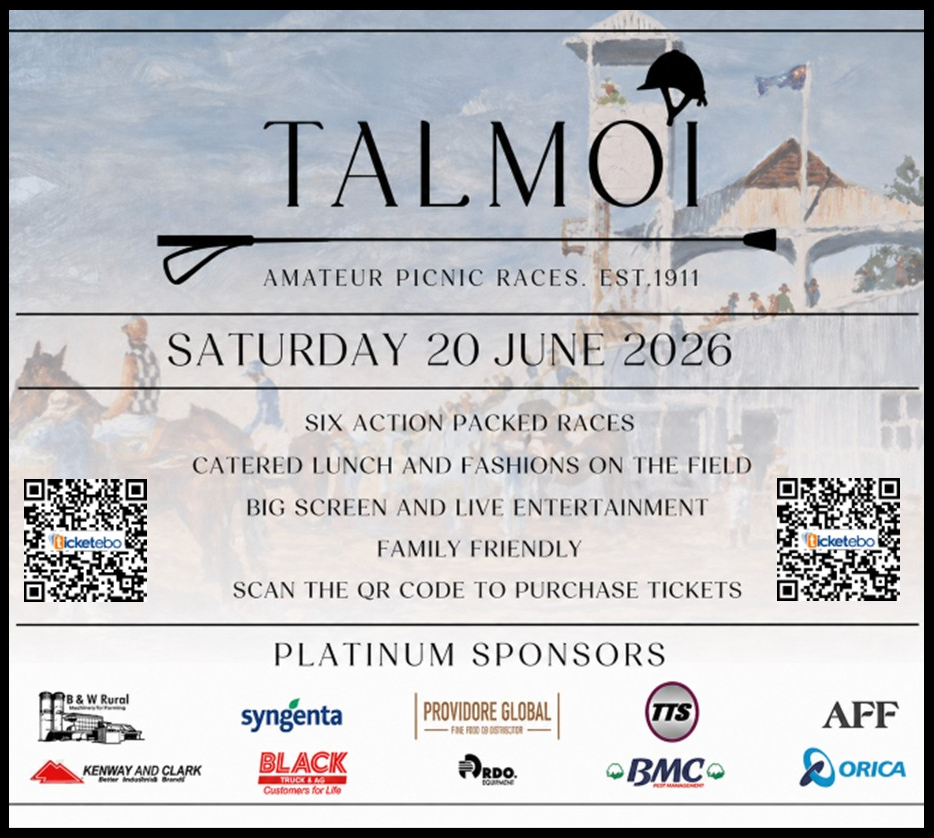
Talmoi Picnic Race Club rounds out the Golden Triangle with six races on Saturday, June 20.
Bush Racing’s Golden Triangle
Mallawa: Saturday, June 6. Updates at Mallawa Facebook Page
Online tickets for Mallawa: Mallawa Picnic Races TIX
Talmoi: Saturday, June 20. Updates at Talmoi Facebook Page
Online tickets for Talmoi: Talmoi Picnic Races TIX




0 Comments