THERE’S always more to the story – and the story about installing a Heritage NSW Blue Plaque in Moree to memorialise the 1965 Freedom Ride is not only about what happened on the steps of Moree Bore Baths 61 years ago.
There’s more to the story – much more. There always is.
When a bus-load of Sydney University students, led by Charlie Perkins, arrived in Moree on February 19, 1965, the world changed forever.
The events that unfolded at Moree Bore Baths were a defining moment in the Australian Indigenous civil rights movement, and led to a landslide referendum two years later, when more than 90 per cent of Australians voted ‘yes’ to give Indigenous Australians full rights as citizens.
The Freedom Ride attracted widespread media attention, bringing the injustices faced by Aboriginal people to the forefront of the public consciousness.
While Freedom Riders met with other confrontations during their journey, notably at Kempsey and Bowraville, the events at Moree came to symbolise the 1965 tour that changed the collective minds of millions of Australians.
At Moree, the university students gathered a number of Aboriginal children and attempted to gain entry to the pool.
This led to three hours of heated negotiations, primarily with Moree mayor Bill Lloyd.
During this time, a large and hostile crowd gathered. Fights broke out, people were knocked over, and punches and eggs were thrown at the Freedom Riders and their supporters.
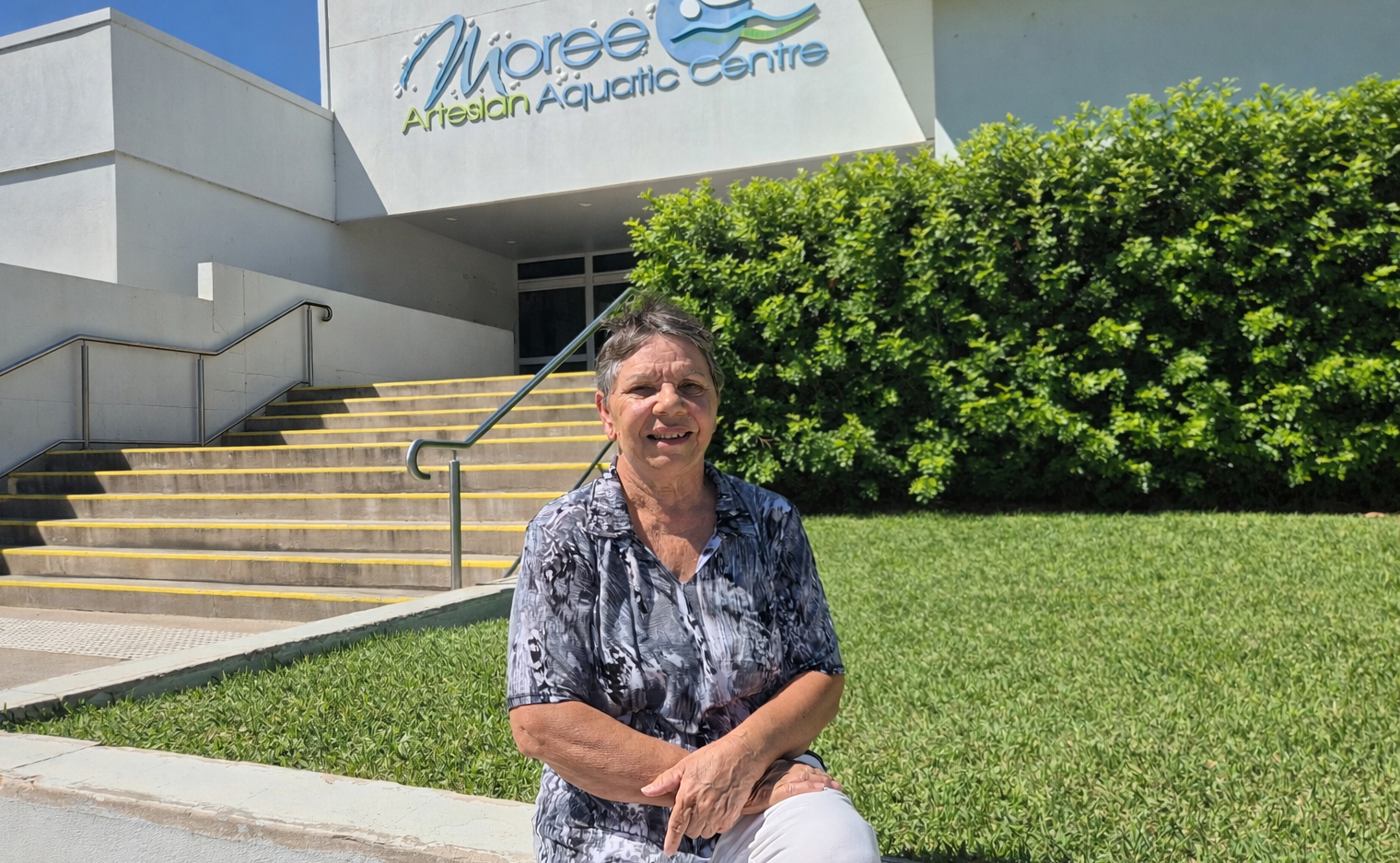
Dianne Creighton at Moree Artesian Aquatic Centre, formerly known as Moree Bore Baths.
Several arrests were made.
The students had travelled through regional New South Wales, starting in Wellington, Gulargambone and Walgett on a journey of discovery.
Their journey also took them through Moree, Boggabilla, Tenterfield, Grafton, Lismore, Bowraville and Kempsey.
What set Moree apart was a by-law enacted by Moree Municipal Council 10 years earlier that prevented Aboriginal people from entering Moree Bore Baths and Moree War Memorial Hall.
But it wasn’t only the pool and town hall where Aborigines weren’t welcome.
The council-owned-and-managed facilities were covered by the 1955 by-law, but for Aborigines living on the fringes of Moree, there were many other places they weren’t welcome.
Many Moree pubs and clubs, and some retail shops, cafes and eateries did not allow Aborigines on their premises, while others did.
Moree Aboriginal custodian and historian, 72-year-old Dianne Creighton, says a Blue Plaque in Moree will stand as a reminder of the apartheid-like conditions that existed more than 60 years ago.
Dianne is one of 12 children to Tom and Val Cain, one of Moree’s most respected and well-known families.
“Basically, we could come to town to get our supplies, and then get out,” Dianne said.
“Mum and dad knew their place. They didn’t challenge anything because of the fear of what could happen, like being thrown off the reserve.
“There were 12 of us kids and dad had to feed us and keep a roof over our heads, so rattling the cage and challenging anything was not on.
“Also, we could’ve been taken – what is known today as the Stolen Generation. We didn’t know anything about that. It was a well-kept secret. But if parents challenged anything to do with the State Government protection and welfare Act that we came under, mum and dad would be in trouble,” Dianne said.
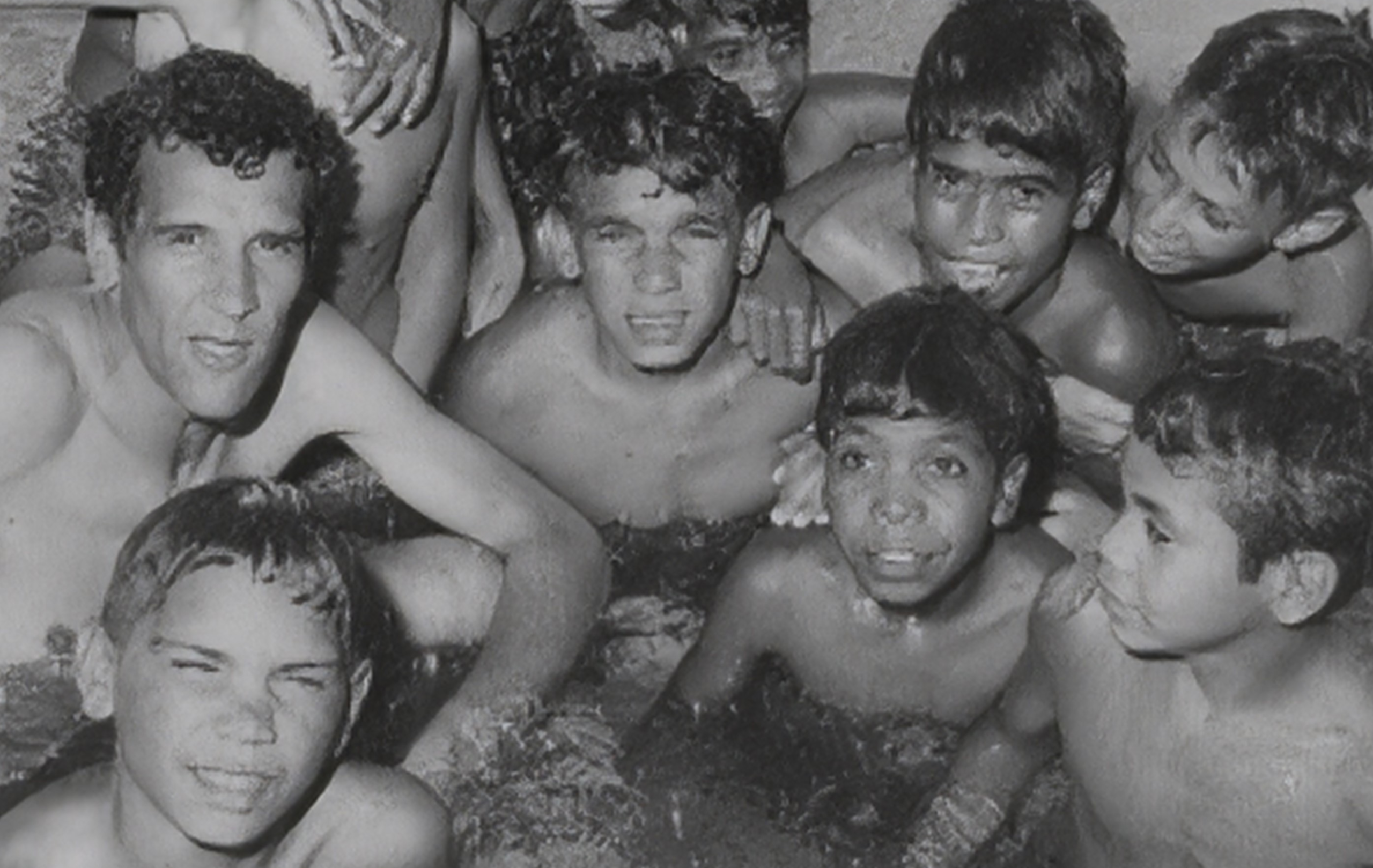
An iconic image of Charlie Perkins and Moree children enjoying a swim at Moree Bore Baths in 1965 (Image courtesy of Mitchell Library, State Library of New South Wales).
“My parents couldn’t move either way. There was that threat all the time.
“And it’s that fear. Mum and dad lived with that fear all their lives until the 1965 Freedom Ride, and two years later when the referendum actually gave us freedom.
“That’s what the Freedom Ride was all about – the students challenging the conscious of racist people in Australia towards First Nations people,” Dianne said.
While many business owners in Moree refused to serve Aboriginal people, there were several that did. Some opened their doors wide, some left them ajar.
“We couldn’t try on clothes. We couldn’t try on shoes. We couldn’t use public toilets. It was an apartheid system because of the 1955 by-law, the ordinance act that council introduced,” Dianne said.
“We had to put up with the racism to come to town just to buy the basic necessities, like food, and clothing and shoes.
“Thank goodness for people like old Pop Haddad, a travelling merchant, and Manuel and Gipsey Poulos, who had a local cafe. We keep them alive in our stories, as well as others who didn’t discriminate against us.
“Pop Haddad had a big, red truck and used to come over from Bundarra to the reserve. He travelled around all the bush towns.
“He had fruit and vegetables at the back of the truck as well as linen and drapery, and kids, women’s and men’s clothing all on one side,” she said.
“He would let the mothers take the clothes into the house for the kids to try on, and lift the kids up to the side of the truck to try on shoes.”
Dianne said having so many children in one family had its upside, despite the appalling conditions in which they lived.
“Thank goodness for mail-order catalogues – David Jones and Winns, where you could look at pictures and guess your size.
“That’s what we had to do. In town, we could buy clothes and shoes, but we weren’t allowed to try them on.
“I was one of nine girls, so if the dresses were too big, they’d go to the next girl up and if they were too small, they’d go to the next girl down,” Dianne chuckled.
The mail-order catalogues were cash on delivery.
“You ordered things, went to the post office, asked for your mail, and paid for your parcels,” Dianne said.
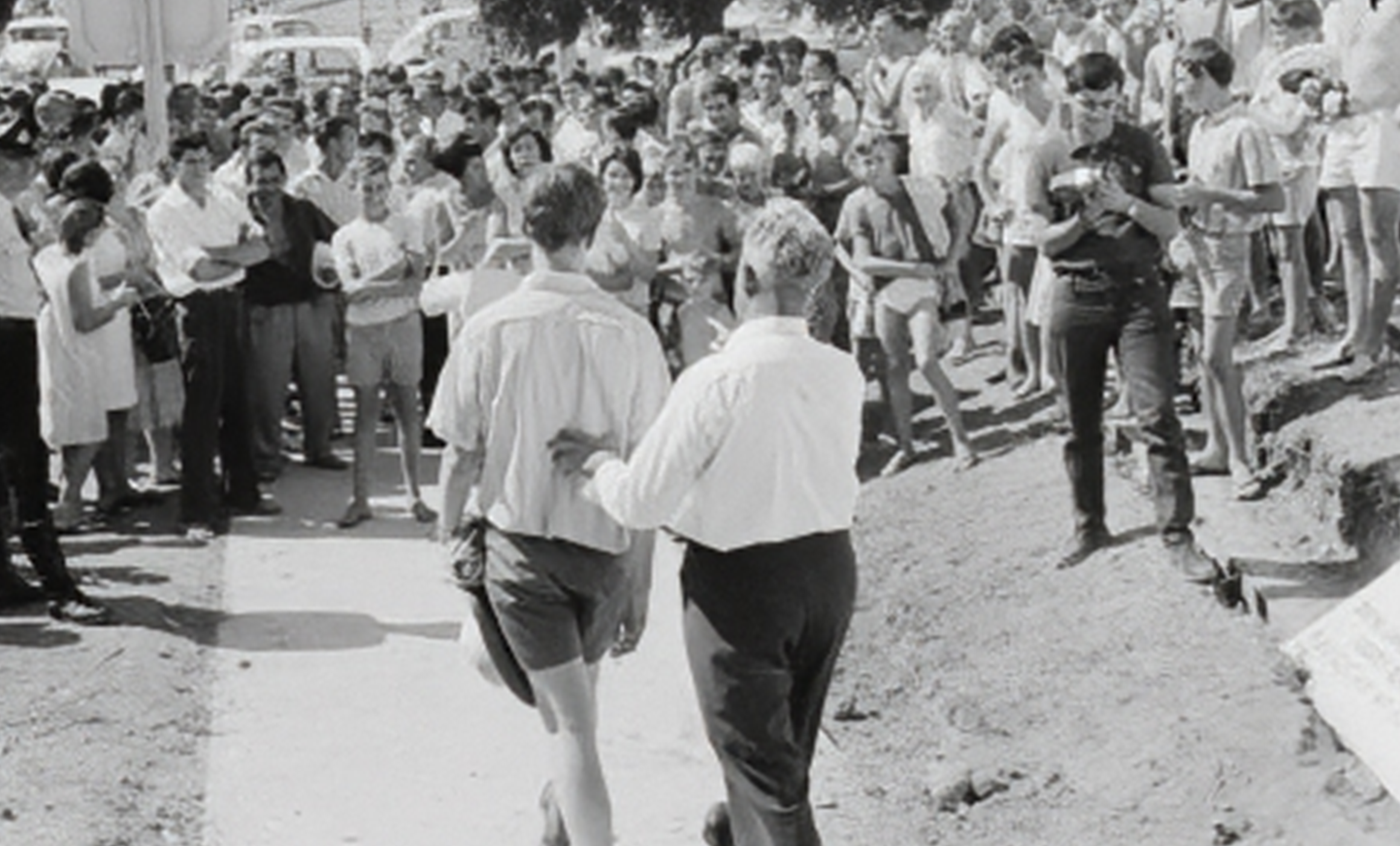
Moree mayor Bill Lloyd escorts a university student from Moree Bore Baths in 1965 during the Freedom Ride (Image courtesy of Mitchell Library, State Library of New South Wales).
Weekly trips to town
As a child, Dianne would jump on her pushbike and pedal from Bottom Camp at Mehi Crescent to east Moree near the railway station.
“Every Sunday, I’d ride past the pool to go to Peter Notarias’s fruit shop and paper shop to get the Sunday paper for dad,” Dianne said.
“Then I’d go over the line to the Railway Store on Morton Street. I’d ride past the pool and see all these people and families going in.
“Not once did I ride home and say to mum, ‘I’m getting my swimmers and my towel and riding back because there’s a big pool up there’.
“I didn’t get to go to the Moree pool until I started high school in 1967, when there was a swimming carnival and the whole school went.
“That was the first time I saw the inside of the pool. I was 13 years old and in First Form,” she said.
As racially divided as Moree was in the 1960s, local Aborigines had plenty of supporters from the white community, including brothers Bob and Col Brown.
Bob Brown, a local retailer, was a Moree councillor when the Freedom Ride left Sydney University in February, 1965.
“I worked for Bob in his shop when I left school, and looked after his two girls when I was in high school,” Dianne said.
“Bob was on the council and he was actually the one who got on to Charlie Perkins and the students and told them about what was happening in Moree.
“I once asked Bob what happened, what really went down, and he told me the whole story. He said he and his brother, Col, were concerned about how Moree locals were treating Aboriginal people and said things had to change,” she said.
“And when you actually have a good look back, it really wasn’t the councillors or the government, it was the residents and rate-payers in the town.
“It was all about controlling a race of people, ostracising a race of people, and putting them out on the fringes of society and forgetting about them,” Dianne said.
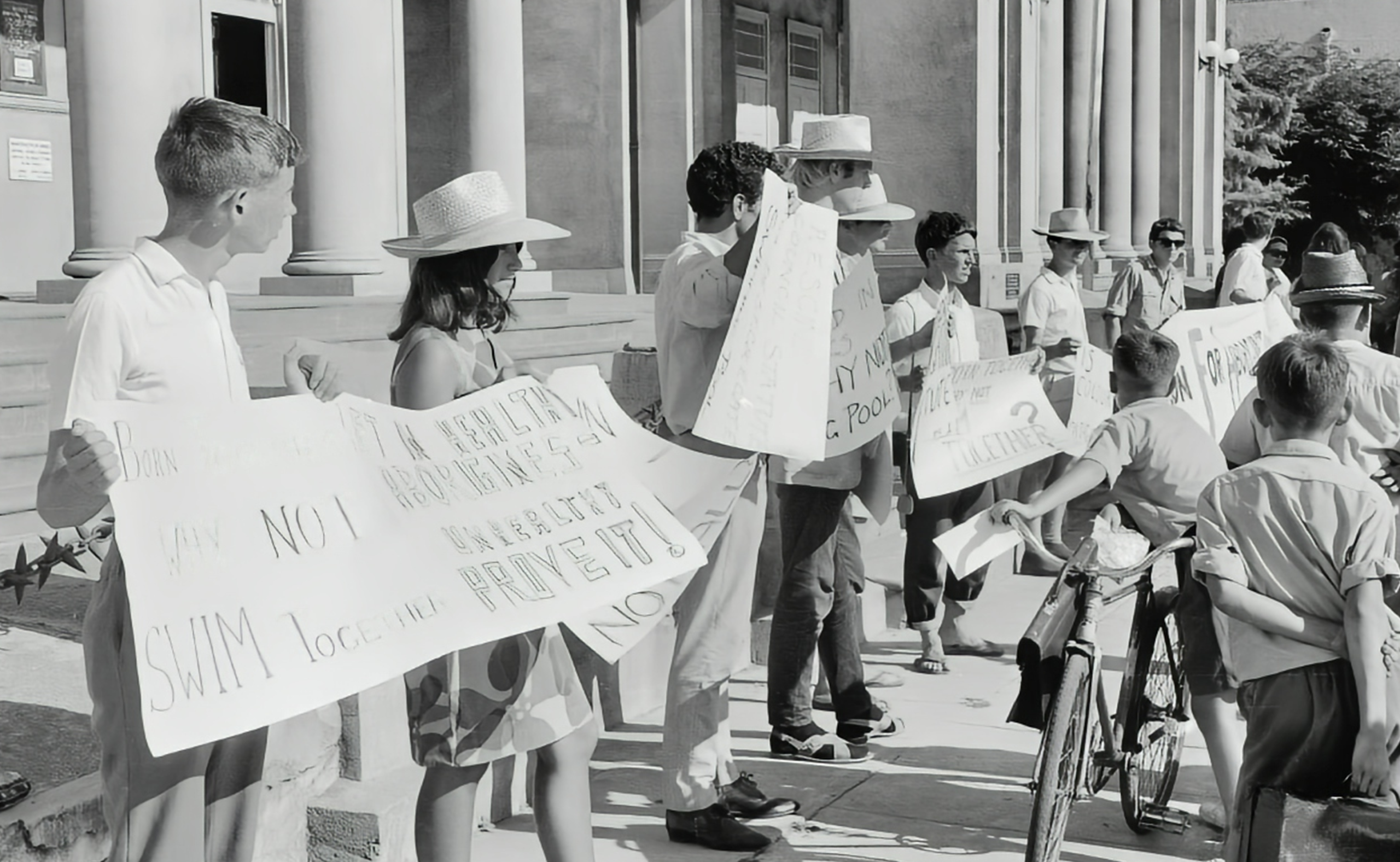
Freedom Riders protest on the steps of Moree War Memorial Hall (Image credit National Film and Sound Archive of Australia).
Blue Plaque for Moree
A recent meeting in Moree, where staff from Heritage NSW consulted with local Elders, has brought the installation of a Blue Plaque a step closer.
Communities across New South Wales were last year asked which towns and locations should be commemorated with a plaque to create a Freedom Ride Blue Plaque Trail.
Local residents and Elders didn’t hesitate nominating Moree.
Suggestions for a suitable location include Moree Artesian Aquatic Centre on Anne Street and Moree War Memorial Hall on Balo Street, where the Moree Municipal Council chambers were once located.
“There should be a Blue Plaque in Moree, definitely, that’s a given,” Dianne said.
“The real action from the Freedom Ride happened at the foot of the steps of the town hall.
“Everything was signed off in that building about the discrimination against Aboriginal people in Moree – the 1955 by-law was passed there and repealed in the same building, 10 years later.
“If those walls and steps could speak, they’d have a story to tell – more than I can tell and more than other people can tell.
“I believe the Heritage NSW Blue Plaque Trail is a good and effective initiative, and will serve as a popular method to educate the public, boost local history awareness and add historical value to Moree’s buildings.
“A Blue Plaque will help transform one of our chosen locations into a living textbook that will continue to educate local residents and visitors to Moree about this significant event that happened 61 years ago,” Dianne said.
The Blue Plaque will also feature a modern learning component using a QR code to give users an interactive experience about the Freedom Ride’s unforgettable fight for freedom, justice and human equality.
“This story is part of Moree’s history and should be truly preserved and never forgotten,” Dianne said.
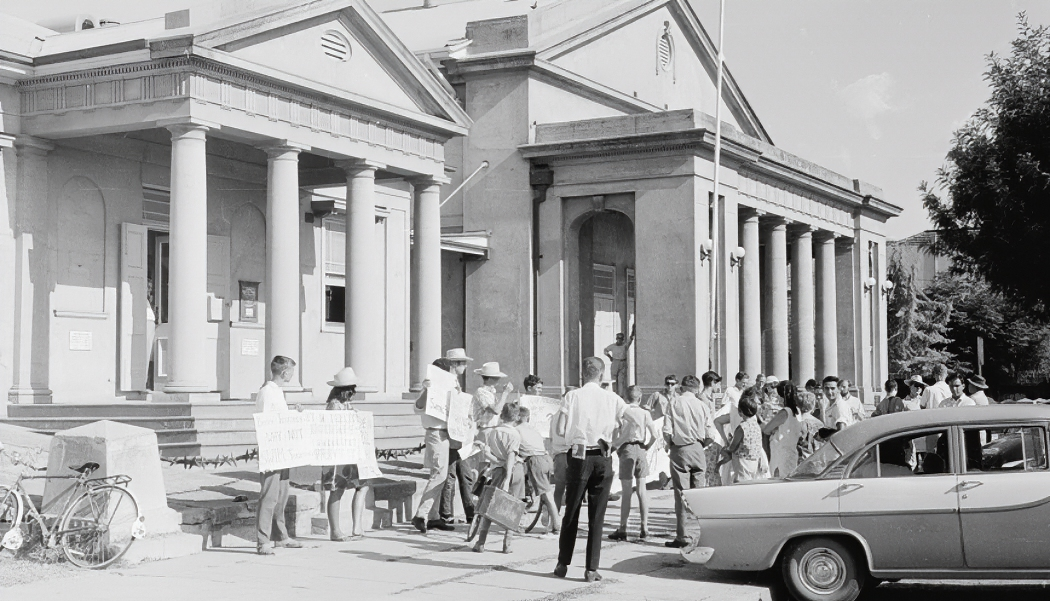
Protesters at Moree War Memorial Hall during the 1965 Freedom Ride (Image courtesy of Mitchell Library, State Library of New South Wales).
Good intentions
Dianne said equality and justice for First Nations people was a long time coming.
On March 5, 1861, in Royal Instructions issued at Osborne House on the Isle of Wight to the incoming Governor of New South Wales, Sir John Young, Queen Victoria directed the governor to “do the utmost in his power to promote religion and education among New South Wales Aborigines”.
Queen Victoria instructed the incoming Governor to “do by all lawful means prevent and restrain all ‘violence and injustice’ which may in any manner be practiced or attempted against Aborigines, and take such measures as may appear to be necessary to further their conversion to the Christian faith and their advancement in civilisation”.
Throughout Australia’s history, the road has often been paved with good intentions, but not much else.
“From the first settlement of the colony, the interests of my people have always received attention from the Government and others with good intentions,” Dianne said.
“But constant evasion of all efforts or other regular pursuits, prevented many of the attempts for that purpose of societal inclusion succeeding.
“We had to wait until the 1965 Freedom Ride and the 1967 national referendum to finally get justice and equality,” she said.
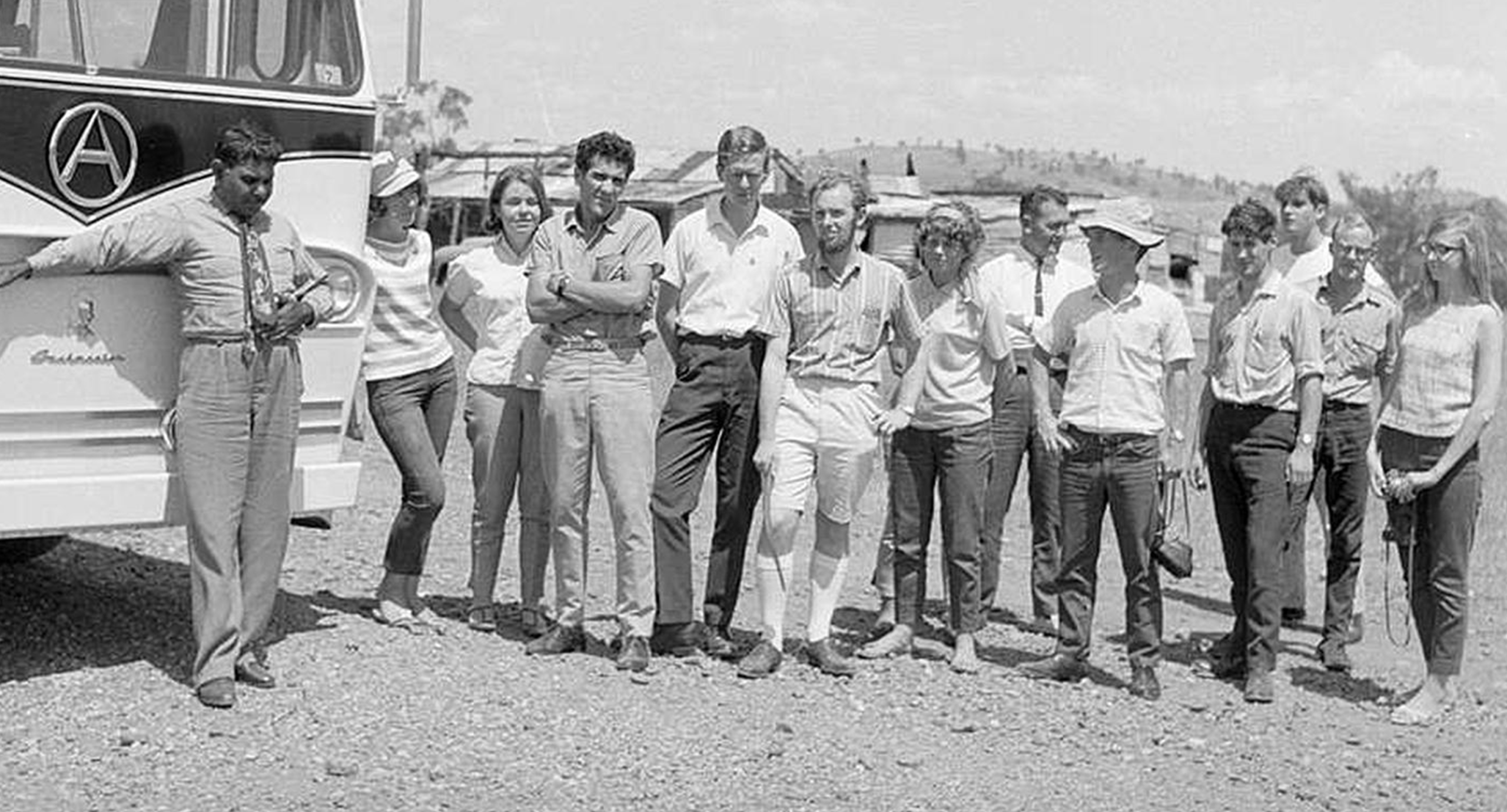
Student Action for Aborigines, led by Charles Perkins (Image credit National Film and Sound Archive of Australia).
The winds of change
Dianne looks back at the tumultuous, race-divided times she grew up with in Moree in the 1960s and the racism Aborigines suffered. Somehow, she still manages to smile.
“We just lived with it, until Charlie Perkins and his friends turned up and began opening the eyes and minds of a lot of people,” Dianne said.
“I remember the bus coming across the ramp at the mission. I now call the Freedom Ride, the winds of change.
“At the time, we didn’t know these students were going to change anything, and I don’t think they knew they were going to change anything.
“To them, it was a trip around the bush to look at things and ask the survey questions they had.
“To me, personally, it was the winds of change, and set me on the path to self-determination.
“Two years later, after the referendum, I was free. We were regarded equal, and didn’t I grab that and run hell for leather with it.
“I never looked back,” she smiled.
Words and Image: Bill Poulos
Historical Images: Mitchell Library, State Library of New South Wales and National Film and Sound Archive of Australia