




















MOREE Plains today awoke to the news Inland Rail is facing major budget cuts to sections north of Parkes.
Moree Plains mayor Susannah Pearse said this is concerning for residents and businesses that know the real benefit of moving produce from road to rail.
“These people have been huge supporters of the project,” Cr Pearse said.
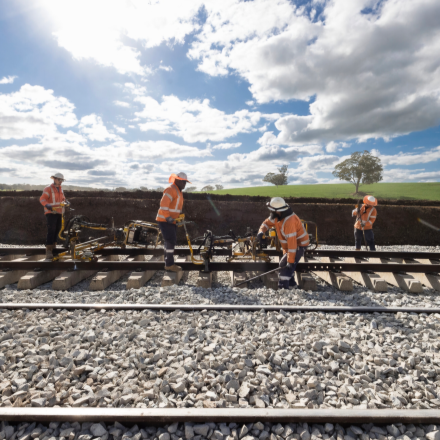
“We currently have one 23km section awaiting completion. This section connects the two already constructed sections and provides the critical infrastructure to link our grain and fibre handling facilities to port.”
Cr Pearse said council had a productive meeting with Inland Rail executives in the last two weeks, with the news the section recently received all state and federal government approvals.































With design work underway, Australian Government funding was the last remaining hurdle.
“Our Prime Minister is always saying that they are a government that aims to leave no-one behind,” Cr Pearse said.
“A decision to not proceed with the 23km remaining section in the Moree Plains would not only leave our businesses and people behind, but also $1 billion of agricultural production per year.
“It makes sense to move freight from road to rail. And when this 23km section is completed, our Shire can move our produce by rail, on higher grade track, to the port of Newcastle.
We do not need the full Inland Rail to derive and deliver economic benefit,” she said.
“We are hoping the Albanese Government has not turned its back on our remaining section and will be anxiously waiting the further detail in next week’s budget.”
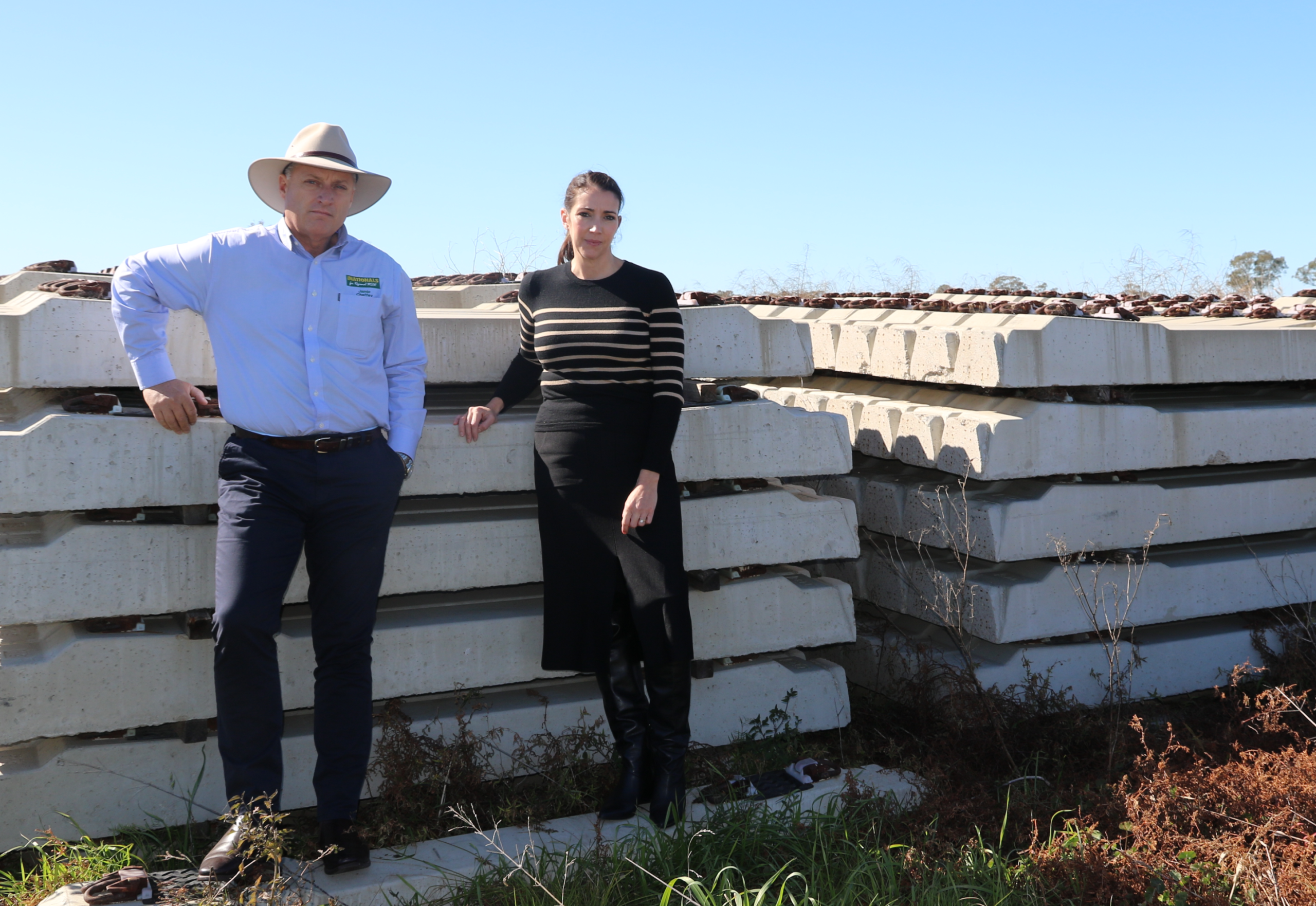
Member for Parkes Jamie Chaffey with Moree Plains Shire Council mayor Susannah Pearse at the to-be-completed Phase 2 of the Inland Rail Narrabri to North Star section.
Cr Pearse has been in contact with Member for Parkes, Jamie Chaffey, and asked for his support in ensuring the Australian Government understands the value of the Moree Plains and its need for this remaining section to be completed.
“In terms of the budget, we won’t really know what is in and what is out until its formal release next week,” Cr Pearse said.
“It’s an anxious wait until then, but we remain hopeful.”
Meanwhile, NSW Farmers’ president Xavier Martin says the Albanese Government needs to provide answers after scrapping the multi-billion dollar freight project.



“NSW Farmers’ policy supported Inland Rail because moving freight more efficiently matters to farm businesses, regional communities, and the prosperity of the nation,” Mr Martin said.
“But governments can’t ask rural and regional communities to carry the burden of disruptive construction, then just change direction without accountability.
“If Inland Rail is being ‘refocused’, then fairness for landholders, clarity for affected businesses, and genuine freight capacity upgrades must be the non-negotiables.”
On Wednesday, Transport Minister Catherine King announced the Inland Rail project would stop at Parkes – seemingly unaware of already-constructed sections to Narromine, and between Narromine and North Star.
Mr Martin said the decision left questions for farmers and communities along the northern part of the corridor who were still facing significant challenges in getting produce to market.
“Certainty matters, and if the funding is stopping at Parkes then the government must be upfront about what happens next, because real people and real businesses have already paid a price,” Mr Martin said.
“We need the Minister to tell us what this means north of Parkes, for those easements already acquired, and the already-constructed assets that are now stranded.
“How does the government plan to genuinely invest in the future of rural and regional businesses without this major linkage, and will they work with the states to deliver this funding into improving the existing regional rail freight network, rather than a wasteful redistribution of taxpayers’ money?”
Mr Martin said the priority must be reinvesting funds back into the regional network and not diverting off into other projects.
“What regional Australia cannot afford is an even more expensive high-speed passenger rail project that does nothing for freight, nothing for farm productivity, and nothing for the communities already affected by Inland Rail,” Mr Martin said.
“A Newcastle to Sydney very fast train has been reported as costing between $90 billion and $114 billion, that’s way more expensive than Inland Rail.
“The federal government must not shortchange practical freight upgrades that keep regional businesses competitive for the nation’s future,” he said.






0 Comments