




















IN August, 1981, the great horse Kingston Town was at unbackable odds to win the 1200m Premiere Stakes at Rosehill.
The King, first-up since winning the Cox Plate the previous year, was expected to make a romp of it for legendary trainer Tommy Smith.
Big-betting bookie Bruce Picone was fielding ‘the board’ at Moree, and betting on the six-furlong feature was lacklustre.
Punters couldn’t afford the short odds about Kingston Town and absolutely no-one was willing to back a horse to beat the champ.
About five minutes before the jump a little old lady clutching a small, well-worn purse made her way through the betting ring ruck.






































She approached Bruce’s stand and waited patiently.
“Can I help you, madam,” Bruce asked.
“Mr Picone, could I please have fifty cents each-way Kingston Town,” she politely queried.
Bruce looked down from his stand and smiled warmly.
“I’m very sorry madam, but I can’t take that sort of bet.”
The little old lady nodded sympathetically.
“I understand, Mr Picone . . . how about you take half and I’ll get the rest on somewhere else.”
This is just one of the many stories squarely placing a member of the famous Picone bookmaking dynasty as a central character, and with the passing of Bruce in 2013 they are stories and anecdotes that are now part of bush-racing folklore.
Bruce’s death at the age of 83 closed an important chapter of the Australian turf – a chapter stretching more than half a century and countless pages.
He was revered in betting rings across the eastern seaboard, particularly at tracks on the New South Wales north and north-west circuit, where his gentle manner and softly-spoken but ever-so-sharp wit was a magnet for punters.
He never shied away from some of Australia’s biggest gamblers and was consistently the largest ‘hold’ at the rich Grafton Cup Carnival during the 1970s and 1980s.






Away from racing, Bruce established a vast farming and cattle empire in northern New South Wales and outback Queensland, but it was a day at the track with a stumpy black crayon in one hand and a wad of blank betting tickets in the other he cherished most.
“There is something about the racing crowd; you enjoy it wherever you go,” he said on the eve of the 2004 Moree Cup meeting.
“I’ve often been asked by people why I haven’t retired, but I tell them this is as good as retirement. It’s the one thing that I will always do – I love the racing and I love the people.”
Bruce, who often advised punters that he only gave ‘overs’ to policemen and priests, was the last surviving member of bookmaking’s Big Four, a familial betting behemoth that changed the face of bush racing – and betting – when founded by patriarch Jack Picone in the late 1940s.
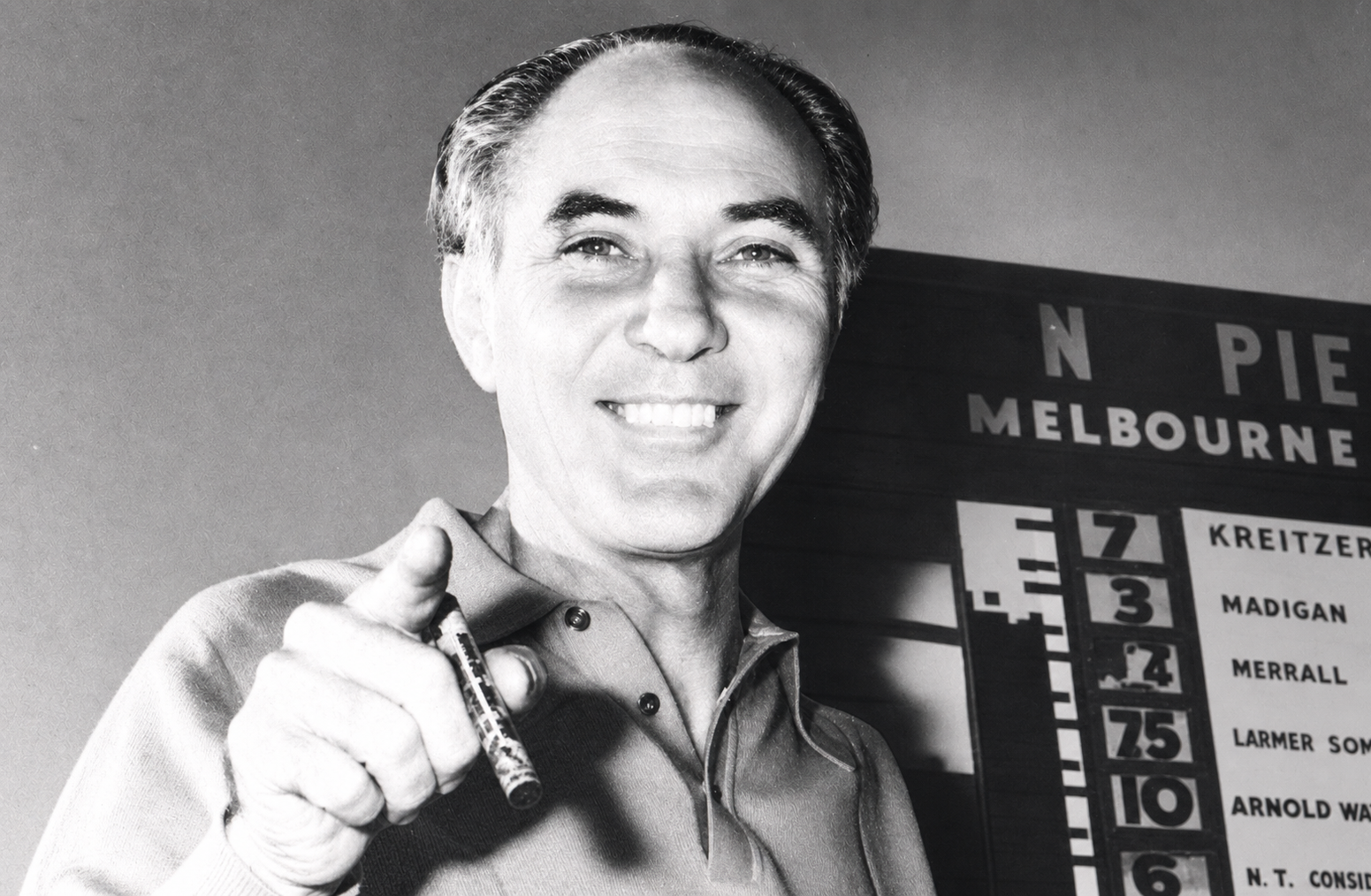
John Picone on his bookmaking stand at a race meeting in the early 1970s.
Jack and his wife Madge arrived in Moree in 1925 to operate a café, purchased by Jack’s parents Dominic and Marie, who were so impressed by the town’s artesian waters they decided to relocate from Geelong in Victoria to the black-soil plains in north-western New South Wales.
Jack, an electrician by trade, and Madge ran the cafe for the next 20 years.
They turned to bookmaking just after correct weight was given on World War II.
“I’ve always had a hankering for racing – bookmaking’s a family weakness,” Jack once said.
Sons John and Bob set up stands shortly afterwards and Bruce – an exceptional swimmer who competed at State and national levels – scribbled his first ticket at Glen Innes races in 1952.
The Big Four had arrived.
Bruce later told legendary bush scribe Bill Weate he was coached through the Glen Innes meeting by older brother, John.
“There were no betting boards in those days, so I asked John what I should do,” Bruce said.
John, who began his working life as a teacher before becoming an odds-maker, pointed across the betting ring to fellow bookmaker Sammy Wyatt and said: “If he calls out two-to-one, you call out three-to-one.”
It was a rule-of-thumb that entrenched the Big Four firmly in the racing game, where an inestimable amount of money would be turned over during the next 50 years.
Jack, chairman of the Moree District Hospital board for eight years and instrumental in the development of the Moree and District Citizens’ Youth Club, won and lost fortunes during the racing game’s boom times.
And, during the good times as well as the bad, he was always there to lend a hand.
It is not known just how huge Jack’s generosity was and how far it extended over the decades, but it’s easily comparable to the huge amounts he wagered during his lifetime.
There were vast amounts donated to Moree and district charities and hospitals as well as private loans to help friends and acquaintances get through tough times.
Anecdotes about the way Jack did things are plentiful.
A former bank teller remembered how Jack would always do his banking after the bank doors had closed for the day – and how he’d ‘sub’ the institution some cash when it ran short.
“Old Jack never did his banking during business hours; he always came in the back door after we had closed in the afternoon,” she said.
“Occasionally, if we ran out of money – which was not unusual if we misjudged our cash order – we would ring Jack and borrow from him until our cash order came in.”
Another story relates how he staked another well-known Moree identity enough money to buy a house.
The loan was interest-free – in a roundabout sort of way.
While staying at the Picone house, the borrower accidently burned a hole in a mattress, courtesy of a dropped roll-your-own cigarette.
The upshot was that, yes, he could have the money to buy his first home – as long as he bought Jack a new mattress.
Well-known public speaker and Hospitality Doctor, Max Hitchins remembers the helping hand extended by Jack in the early 1960s.
“In 1962, when our dad died of cancer, my brother and I were pitched into running the heavily, heavily, heavily in-debt family hotel in Moree – The Imperial,” Max recalled.
“Soothsayers predicted disaster would descend, bankruptcy was bound to happen and failure would be fatal – but they did not take into account that we had the ‘Picone Angel’ on our shoulders.
“Jack Picone went to our accountant, Leo Smith, and said, ‘I understand the Hitchins boys are in financial trouble. How can I help them?’
“Leo explained that we desperately needed £20,000 to pay death duties so Jack wrote out a cheque for that amount (nearly $600,000 in new millennium dollars) and said, ‘tell them to give it back whenever they can’.
“There was no interest and no written agreement or documents . . . Jack was an amazing man from an amazing family,” Max said.
John Picone’s passing in 1977 from a heart attack brought on by a severe asthma attack closed the leger on an incredible life.
He was 51 and considered by many as the sharpest mind to ever set foot on a racetrack.
Former NSW Bookmakers’ Co-operative chairman Ian Buxton said in 2002, John was “an exceptional bookmaker”.
“He had so much racecourse sense and an uncanny feel,” Buxton said.
“He was simply an outstanding bookmaker and a great gambler. He’d have a punt whereas Bruce was like their father – Bruce would put the prices up and defy you.
“I don’t know that any family was ever any bigger or had as many joints (bookmaking outlets) as the Picones,” he said.
At the 1968 Wagga Gold Cup meeting, John Picone went head-to-head with the Hong Kong Tiger, Frank Duvall.
At the time, Duvall was the most fearless – and feared – punter in Australia.
Son Chris Picone said he remembers seeing the betting sheets for the Wagga carnival.
“In the Wagga Cup, Duvall backed his own horse, What Fun, in four separate bets – one bet alone was $12,000 to $8000 (6-4) and the last bet was $3000 to $2000,” Chris said.
“Duvall lost $200,000 on the first day (of the carnival) and when What Fun won the cup the next day he won it all back, plus $5000.”
John’s brother Bob went on to become one of the most respected paddock bookmakers in Sydney.
He was a regular at all the metropolitan meetings for more than 30 years before cancer claimed him in 1998.
He and wife Sheila also invested in the hotel industry and at one stage owned a newsagency.
But it was bookmaking that coursed through Bob’s veins – a legacy passed down to his sons, Geoffrey and Michael.
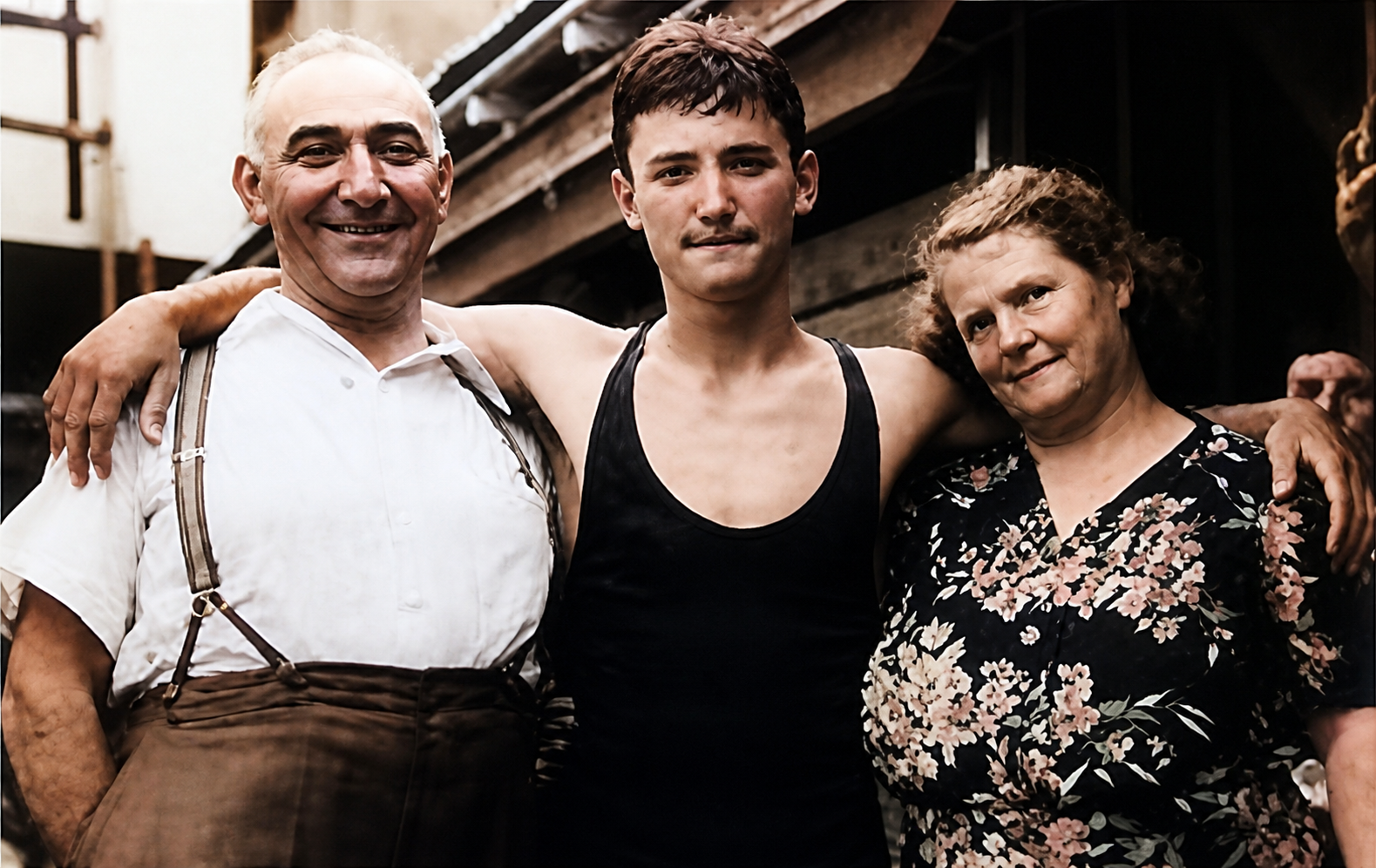
Fifteen-year-old Bruce Picone with parents Jack and Madge after winning the Australian junior 110 yards freestyle swimming championship at Manly Baths in 1945.
Away from the racetrack, the Picone brothers were just as adept on the sporting field and in the swimming pool as they were in the betting ring.
As a 15-year-old in 1945, Bruce beat Vernon Oliver and Garrick Agnew in the Australian junior 110 yards freestyle swimming championship at Manly Baths.
The win, legend says, pulled off a huge betting plunge after Bruce had been comfortably beaten by Agnew in the heats a few days earlier.
Bruce, a winner of three State titles in just his first season of competitive swimming, drew away in the final to win by three yards in 65-and-a-half seconds.
His time was more than three seconds faster than Agnew’s heat win, giving strength to the theory Bruce had a ‘soft’ trial.
“If Bruce had longer to train, he would’ve threatened Bob Newbiggen’s Australian record set in 1937,” swim coach Harry Hay said at the time.
“Bruce is a very intelligent swimmer and has trained for only seven days, but has amazed me with his time in such rough water.
“The water was very rough and choppy, and conditions were against fast times. With proper coaching, I’d have him breaking 63 seconds for the 110 yard freestyle,” he said.
Bob played first-grade for Moree Magpies Football Club before becoming a selector and awarded life membership of Moree Rugby League Club. Brother John played in the First XIII at Armidale’s De La Salle College, and later for Quirindi.
The 1960s and 1970s were boom bookmaking times.
There was no such thing as online gambling. Back then, the net was something you took fishing.
Bookmakers across Australia held hundreds of thousands of dollars at the track, and just as much away from it during an era when illegal SP betting was rife, but a staple of the Australian gambling psyche.
It was socially acceptable, especially in the bush, to phone the local SP bookie and place a bet.
The Big Four was always there to accommodate punters and history suggests the Picone kingdom was founded when Jack’s wife, Madge, started taking over-the-counter penny bets from café customers during the 1930s and 1940s.
Part of the Picone legend also has it that all not that long ago, a telephone technician was called to the stately family home in Moree to repair a damaged landline.
The home’s extensive telephone system that ran hot all those years ago had long been disabled.
After inspecting the street junction wiring, the technician returned to the front door somewhat confused.
“I can’t figure this out,” he said to John Picone’s son, Terry.
“According to the wiring out on the street there used to be 60 telephone lines going in to this residence. Exactly what type of business was in this house,” he asked.
Terry smiled.
“I’m not exactly sure, but they tell me it was big in its day,” he winked.
Nominations for Moree picnic races on Saturday, May 23 – round one of bush racing’s Golden Triangle – close at 9am tomorrow, May 18.
Bush Racing’s Golden Triangle
Moree: Saturday, May 23
Online tickets for Moree: Moree Picnic Races TIX
Moree updates: MPRC Facebook Page
Mallawa: Saturday, June 6. Updates at Mallawa Facebook Page
Online tickets for Mallawa: Mallawa Picnic Races TIX
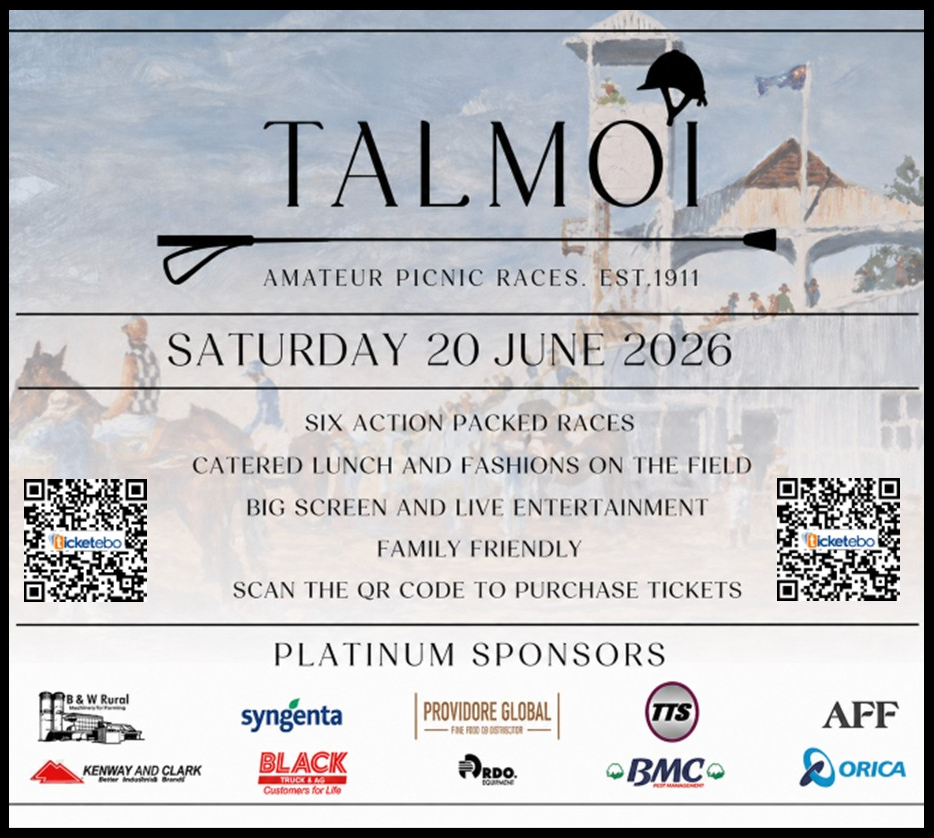
Talmoi: Saturday, June 20. Updates at Talmoi Facebook Page



Great story. I started working for John Picone in March 1966. I travelled everywhere from Werris Creek with Neville Albert Henry Mitchell to wprk for John Picone when I was 15 yro. I only just retired from racing with Grafton Trainer John Shelton after 60 years of being involved in racing.