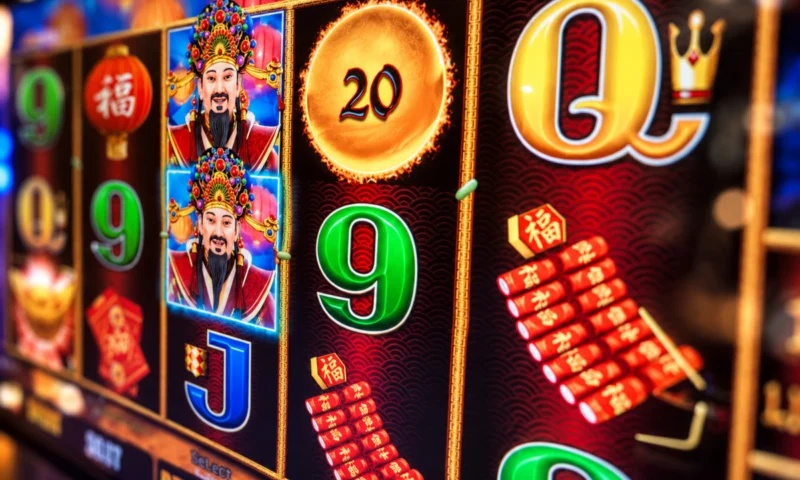
A pocker machine screen. Photo: Moree Online News
Moree Plains Shire has 184 poker machines across six clubs and hotels, but official figures do not reveal how much money people are losing on them locally.
The NSW Government reports millions of dollars in poker machine profits across the region. However, Moree Plains is grouped with neighbouring shires in the published financial reports, making it impossible to determine how much of that money comes from local venues.
For Thomas O’Donnell, team leader of GambleAware Hunter and New England, delivered by Centacare NENW, the figures are only part of the picture.
“I’m more concerned around the effects on people and on families than actually on the numbers,” Mr O’Donnell said.
His comments come during GambleAware Week, which runs from October 19 to 25 and encourages people to talk openly about gambling harm without shame or judgement.
Mr O’Donnell said the warning signs could appear in everyday life, with people falling behind on bills, accumulating debt or spending their pay packets on gambling.
“When they start selling personal items is a telltale sign that something might not be right,” he said.
The damage can extend beyond financial hardship. People may hide their gambling losses from partners, particularly when money needed for the household has been spent.
“What I see a lot of is that break of trust between a couple,” Mr O’Donnell said.
While those personal consequences can be difficult to measure, the latest government figures provide some indication of the amount of money involved in gambling across the region.
Liquor & Gaming NSW figures show clubs in the combined Moree Plains and Walgett reporting area recorded more than $4.61 million in gaming machine net profit during the three months to May 31, 2026.
Hotels in a separate reporting area covering Moree Plains, Gwydir and Uralla recorded another $2.47 million during the three months to June 30.
Because the figures cover different areas and reporting periods, they cannot be used to calculate how much money was lost in Moree Plains alone.
Under NSW Government reporting rules, financial results are combined with neighbouring areas when fewer than five clubs or hotels operate gaming machines in a local government area. Moree Plains has three clubs and three hotels with poker machines, so its financial results are not published separately.
The latest published figures show 184 machines across those six venues.
The wider Moree Plains and Walgett area also has a relatively high concentration of club poker machines compared with the rest of NSW.
Across the two shires, there are about 1.7 club poker machines for every 100 residents, compared with 0.8 across NSW. That is more than twice the statewide average relative to population. The comparison covers both shires and does not include machines in hotels.
While the figures show the scale of poker machine gambling in the region, Mr O’Donnell said gambling harm was not limited to poker machines or to the person placing the bets.
People who lose money gambling can find themselves chasing those losses, believing another bet might help them recover what they have spent. Family members may notice changes in behaviour, missing money or growing secrecy before the person gambling recognises there is a problem.
Mr O’Donnell said starting a conversation could be difficult, particularly when someone felt ashamed or was not ready to acknowledge their gambling.
Rather than making accusations, he encouraged people to begin by asking how someone was coping and whether anything was troubling them. If their gambling appeared to be increasing, they could gently explain what they had noticed and ask whether the person had considered speaking to someone.
Not everyone would be ready to seek help immediately, but Mr O’Donnell said family members could contact the service for advice and support themselves.
“We’re not just working with the person that might be gambling. We are working with the whole family,” he said.
GambleAware Hunter and New England provides free, confidential counselling, financial counselling and support from peer workers with lived experience of gambling harm. Support is available face to face, over the phone or online.
Mr O’Donnell said overcoming gambling problems was not always straightforward. People could make progress before experiencing setbacks, and the service worked with them at their own pace.
“We recognise that taking that step is huge and we take it at the pace of the person that’s contacting us,” he said.
GambleAware Week also comes amid renewed calls for changes to poker machine operations across NSW.
Wesley Mission is campaigning for machines to be switched off between midnight and 10am, citing survey findings that 72 per cent of NSW adults support the proposal.
While debate continues over gambling reform and poker machine operating hours, Mr O’Donnell’s message is that people do not have to wait until gambling has caused serious harm before asking for help.
GambleAware Hunter and New England, delivered by Centacare NENW, can be contacted on 1800 497 065. Free counselling and referrals are also available through the statewide GambleAware service on 1800 858 858.
More information is available at gambleaware.nsw.gov.au.