

















MEMBER for Northern Tablelands Brendan Moylan on Thursday delivered a petition to state parliament rejecting the new transmission line corridor from Walcha to Bayswater.
He presented the petition on behalf of more than 22,000 signees and communities across Northern Tablelands and Upper Hunter.
“Not only did Premier Chris Minns refuse to speak, but he didn’t even show up, and his government chose not to participate,” Mr Moylan said.
Mr Moylan said the Premier has refused to meet with community groups from Walcha and Upper Hunter since the Labor Government moved the transmission line corridor last year.
Mr Moylan said hundreds of people travelled up to seven hours to be heard from the government.
































“Like the Minns Labor Government, this proposed transmission route is a complete mess and has lost all social license,” Mr Moylan said.
He said in parliament on Thursday, the petition is not merely a collection of signatures.
“It is the collective voice of farming families, rural communities and hardworking Australians who have said loudly and clearly that enough is enough,” Mr Moylan said.
“For generations, the people of the Upper Hunter and New England have fed this State and this nation. We have endured droughts, floods, fires and market shocks. We have done so with resilience, determination and an unwavering commitment to the land. Yet now there is a new threat, not from nature but from government.”
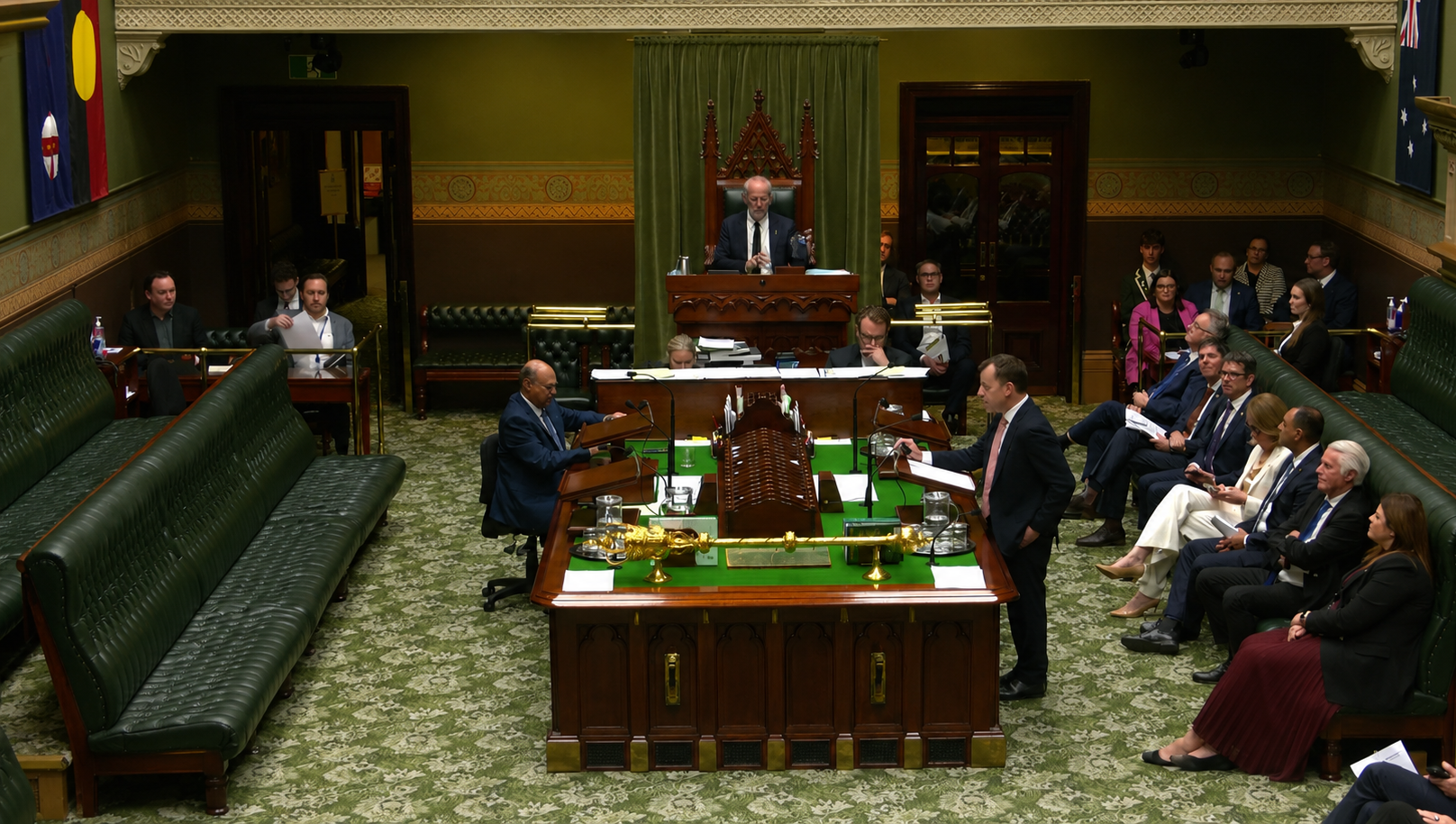
Premier Chris Minns and Labor ministers chose not to participate in debate when Member for Northern Tablelands Brendan Moylan delivered a petition to state parliament on Thursday rejecting the new transmission line corridor from Walcha to Bayswater.
Mr Moylan said EnergyCo in October last year announced a new transmission corridor from Bayswater through to the Upper Hunter and into New England.
“It was a decision made in Sydney boardrooms and in ministerial offices,” Mr Moylan said.
“The people who are affected were told it was necessary. They were told to simply accept the destruction of productive farmland, the fragmentation of rural communities and the industrialisation of landscapes that have sustained farming families for generations.
“They reject that proposition, as does the Opposition. The proposed route cuts through more than 100 privately-owned farms and some of the very best agricultural land in New South Wales.
“It cuts through airstrips, woolsheds, holding paddocks and stockyards. It traverses sensitive environmental areas and threatens species habitats, including koalas and quolls.
“The proposed path makes aerial firefighting almost impossible, in a region that knows all too well the devastation of bushfire,” he said.







“Most remarkably of all, the Government previously considered the route and rejected it as unviable.
“I ask the Government this: If the route was wrong in 2024, what miracle has occurred that suddenly makes it right today. The answer is simple: No miracle has occurred. The only thing that has changed is the desperation of a Labor government that has no respect for regional New South Wales,” Mr Moylan said.
He said EnergyCo has failed to secure a social licence.
“It has failed to earn trust. It has failed to bring the communities with it. Instead of partnership, it has delivered division. Instead of consultation, it has delivered hostility and conflict – and the Labor Government has simply stood by and watched. It has allowed this to happen,” Mr Moylan said.
“What we are witnessing in the Upper Hunter and New England is the consequence of an energy policy driven by ideology, not practicality. The policy expects regional communities to bear the burden while the cities reap the benefits.”
Member for Bathurst Paul Toole thanked Mr Moylan.
“To present a petition with 22,000 signatures and then pack the gallery here today shows how much of a concern this is for his communities,” Mr Toole said.
“I have been in this House for a number of years, and to have no Government members turn up to speak on this petition is nothing short of gutless.
“Members opposite mock our regional communities when we talk about renewable projects. They have been mocking us for the past couple of years. They have been talking about how regional communities are ‘nimbys’, and regional communities should just put up with it and be treated like the State’s dumping ground while they get all of the benefits. It is completely unacceptable,” he said.





0 Comments