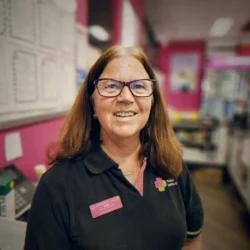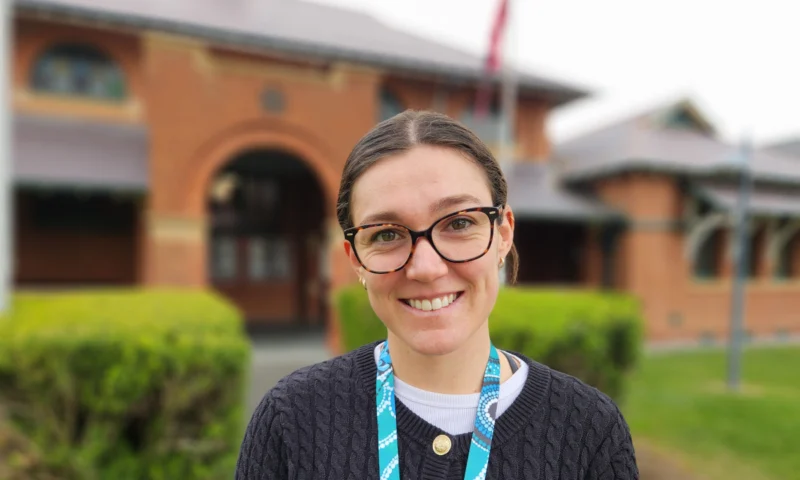
Nicola Simmons, a justice advocate with Justice Advocacy Service, outside the Moree courthouse. Photo: Moree Online News.
Court can be a confusing and confronting place, particularly for someone who has difficulty understanding what is happening around them.
In Moree, Justice Advocacy Service is looking for volunteers willing to stand alongside people with cognitive impairment as they navigate the justice system, helping them understand what is happening and ensuring they have support through the process.
No legal background or qualifications are needed.
Volunteers can support young people and adults who are defendants, victims or witnesses at different stages of the justice process, from the police station through to court and sentencing.
Nicola Simmons, a justice advocate with Justice Advocacy Service, works with volunteers in Moree and said their role was to support clients during legal meetings and in the courtroom.
Ms Simmons said the legal system used complicated terms and language that could sometimes be confusing. Volunteers supported clients through those interactions and exchanges, with the aim of helping the individual understand what was being communicated.
Volunteers do not provide legal advice. Their role is to support the person and help them understand the processes and information they encounter.
Ms Simmons said an already difficult environment could become considerably more challenging for someone with additional vulnerabilities.
“Court is a very vulnerable place,” she said.
“Someone who’s already got vulnerabilities, it makes it so much more concerning sometimes, and we’re kind of there just to advocate for their rights.”
Justice Advocacy Service volunteer program coordinator Lara Mansfield said the organisation supported people with a broad range of cognitive impairments, including intellectual disability, brain injury, autism, dementia and brain damage associated with drug or alcohol use.
Alongside the assistance provided by volunteers, Justice Advocacy Service staff can help connect clients with other services, including housing, drug and alcohol services, mental health support and the National Disability Insurance Scheme.
Ms Mansfield said the service often worked with people who had complex needs and experienced repeated contact with the justice system. By connecting them with appropriate services and support, the organisation aims to help break that cycle.
For Ms Simmons, having more volunteers in Moree would mean more people could receive support at the courthouse while allowing her to spend more time on referrals and other work behind the scenes.
“It would be amazing,” she said.
“It would also give an opportunity for more supports to happen in the courthouse. So more people get the service.”
Volunteers are trained before taking on the role, with Ms Mansfield overseeing a comprehensive training program.
Ms Simmons said new volunteers would also undertake buddy and shadow shifts with her in Moree, giving them the opportunity to learn how to identify an individual person’s needs before progressing towards individual shifts.
Ms Mansfield said the organisation was looking for people who were non-judgemental and comfortable communicating with a range of people.
Volunteers may also need to communicate with solicitors and others at court, but previous experience with the law or legal system is not required.
In Moree, the minimum commitment is generally one day a month, although volunteers who want to help more frequently can do so.
Volunteers need to be available during weekday business hours. A court day begins at 9am and, depending on the matters before the court, may continue until 5pm.
For eligible Centrelink clients, volunteering with Justice Advocacy Service can also count towards mutual obligation requirements.
Ms Mansfield said volunteers could find themselves supporting people who had little or no other support around them.
She described it as a challenging but rewarding role in which volunteers could make a difference in people’s lives.
People interested in finding out more about volunteering with Justice Advocacy Service can contact volunteer program coordinator Lara Mansfield on 0438 843 129 or email [email protected].
People with cognitive impairment who need support through the justice system can contact Justice Advocacy Service on 1300 665 908.