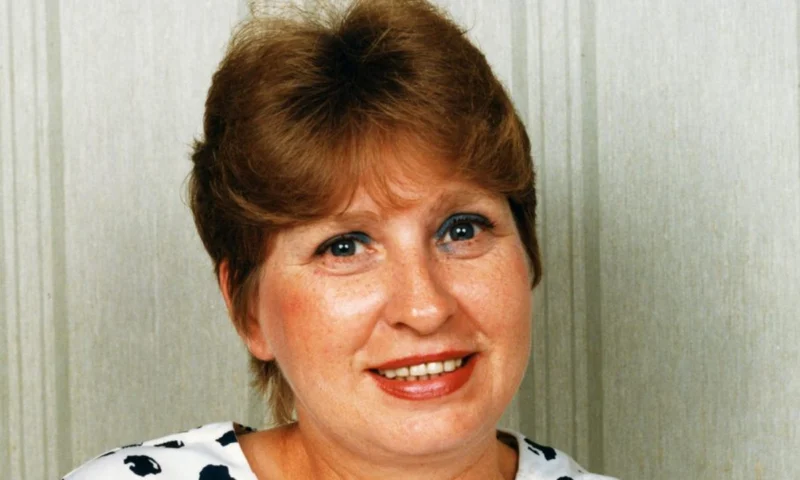
Justice Mary Gaudron, circa 1992. Source: Picturing Democracy – Centre of Democracy
It was 1951 and former High Court justice and federal Labor leader H.V. “Doc” Evatt had come to Moree. He was campaigning against a proposed change to the Australian Constitution concerning communists and communism.
Among those listening was an eight-year-old girl with a question for one of the country’s leading lawyers. Mary Gaudron wanted to know what the Constitution was. She asked Evatt, and not long afterwards a copy of the Constitution arrived for her from Canberra.
Thirty-six years later, that same girl from Moree was appointed to the High Court of Australia. She was the first woman in the court’s history, beginning a new chapter in a legal career that would span more than four decades.
Her journey began in East Moree’s railway community. Born Mary Genevieve Gaudron on January 5, 1943, she was the eldest child of Edward and Grace “Bonnie” Gaudron, who had married at St Henry’s Catholic Church in East Moree the previous year. Her father worked for the NSW railways. Mary grew up with two younger sisters and a brother, while another brother died in infancy.
Gaudron also grew up in a town where Aboriginal and non-Aboriginal people were treated very differently. It was something she remembered clearly many years later.
She recalled that Aboriginal people were not allowed on the bus travelling from East to West Moree or into the municipal swimming pool. At the picture theatre they were confined to roped-off front rows. Aboriginal children generally did not attend school with other children, and she also recalled separate treatment of Aboriginal people at the local hospital.
Looking back, Gaudron borrowed George Orwell’s words to describe what she had seen. Some people, she said, were “more equal than others”.
Those childhood experiences should not be used to explain the decisions Gaudron would make as a judge decades later. But her own words show that she understood inequality from an early age. Questions about equality, discrimination and equal justice would later become an important part of her work.
From Moree to university
Gaudron attended St Francis Xavier primary school in Moree before winning a bursary to board at St Ursula’s College in Armidale. She decided early that she wanted to become a barrister. When she sought advice from a local solicitor, however, she was reportedly told that girls did not do law and that she should consider working at the telephone exchange instead.
She went on to win a Commonwealth scholarship to study at the University of Sydney. A £50 prize from Moree and Bullaroo Council also helped as she prepared to leave home. Gaudron later remembered arriving at university with “high hopes and a shiny new briefcase”.
She excelled, graduating with first-class honours in law and winning the University Medal.
Her personal life was changing too. Gaudron married Ben Nurse and became a mother to their daughter Danielle while completing her law studies. Their second daughter, Julienne, followed.
Academic success did not make it easy for a woman to enter the legal profession in the 1960s. Gaudron later recalled that female law students seeking positions with Sydney firms were openly told the firms did not employ women as articled clerks.
After Gaudron was admitted to the NSW Bar in 1968, she faced another barrier when trying to obtain chambers. Barrister Michael McHugh, who would later become a High Court justice, tried to sell her his room. Other members of the floor refused to allow the sale, even though there was no other buyer.
Gaudron’s early years at the Bar included sharing chambers with barrister Andrew Cunningham in rooms previously owned by Judge Telfer. Cunningham’s widow, Heather Cunningham, told Moree Online News that Gaudron and her husband remained close friends until his death in 2001.
Gaudron also shared chambers with pioneering woman barrister Janet Coombs, and her career soon gathered pace. By 1970 she was appearing alone before the High Court, where she successfully represented the appellant in O’Shaughnessy v Mirror Newspapers.
Equal pay and maternity leave
By the early 1970s, Gaudron was involved in a major fight over the wages paid to Australian women.
She appeared for the Commonwealth in the landmark national Equal Pay Case, arguing for equal pay for work of equal value. The principle went further than the narrower idea that women should receive the same pay only when doing the same work as men.
Gaudron became the first woman to represent the Commonwealth in a national wage case. In 1972, she also became the first woman appointed to the NSW Bar Council.
In April 1974, aged 31, Gaudron was appointed deputy president of the Australian Conciliation and Arbitration Commission. She was raising two young daughters while taking on one of the most senior roles in Australia’s industrial relations system.
Gaudron later married John Fogarty and they had a son, Patrick.
While at the Commission, she took part in another landmark case for Australian women. The 1979 Maternity Leave Case established a standard that gave eligible workers up to 52 weeks of unpaid maternity leave and protected their employment when they returned. Gaudron later described the decision as one of the highlights of her career.
The High Court
In February 1981, Gaudron became Solicitor-General for NSW. She was the first woman to hold a state Solicitor-General’s office in Australia and soon afterwards became NSW’s first female Queen’s Counsel.
As Solicitor-General, she represented NSW in major constitutional cases before the High Court, including the Tasmanian Dam Case.
Then, on February 6, 1987, Gaudron joined the court herself. At 44, she became the first woman appointed as a justice of the High Court of Australia.
She brought almost two decades of legal experience to the role, including work as a barrister, in industrial law and as Solicitor-General. Her contribution to the High Court would go well beyond being its first female justice.
A major theme in Gaudron’s work was equality under the law. She argued that treating everyone exactly the same did not always produce equality. People in the same circumstances should not be treated differently without good reason, but real differences between people’s circumstances could also matter.
She summed up the idea simply: “equality is not uniformity”.
In a 1999 speech at the University of Sydney, Gaudron reflected on the inequalities that had been built into Australian law. She spoke about the restrictions once placed on women and the much harsher laws imposed on Aboriginal Australians. At the heart of her thinking was a basic question: why should the law disadvantage someone because of their race or sex?
From Moree to Mabo
In 1992, Gaudron sat on one of the most important cases in Australian legal history, Mabo v Queensland (No 2).
The High Court rejected the idea that Australian law could simply ignore traditional Indigenous rights to land. It held that Australian law could recognise native title where those rights had continued and had not legally been extinguished.
Gaudron was one of six justices in the majority. She wrote a joint judgment with Justice William Deane, and together they described the history of Aboriginal dispossession as the “darkest aspect of the history of this nation”.
There is a clear resonance between those words and the racial divisions Gaudron had witnessed as a child in Moree. But there is no basis for saying her childhood experiences determined how she decided Mabo decades later.
The journey between those two parts of her life was later captured in the title of Pamela Burton’s biography, From Moree to Mabo: The Mary Gaudron Story.
Beyond the High Court
Gaudron served on the High Court for 16 years before retiring in February 2003. Her legal work then moved overseas. She served as a judge of the International Labour Organization Administrative Tribunal from 2003 to 2012 and was its president from 2009 to 2011.
Her career included a remarkable series of firsts. Gaudron was the first woman on the NSW Bar Council, Australia’s first female state Solicitor-General, NSW’s first female Queen’s Counsel and the first woman appointed to the High Court.
But there was also a life behind those achievements. She was the eldest child of a railway family in East Moree, a young woman who became a mother while studying law, and later the mother of Danielle, Julienne and Patrick.
The copy of the Constitution sent to her after an eight-year-old’s question in Moree has become one of the best-known stories of her childhood. What followed was a career that took Mary Gaudron from Moree to the High Court and placed her at the centre of major changes in Australian law.
Mary Genevieve Gaudron died on September 13, 2026. She was 83.