




















CHAIRMAN of the NSW Country Mayors Association, Rick Firman, has expressed concern that councils across New South Wales must now “wind the clock back” on the implementation of the 2025 Local Government Model Code of Conduct as a result of the passing of a Disallowance motion last week.
“It is unfortunate that our representatives in the NSW Parliament were unable to negotiate the introduction of an amendment to the Code of Conduct to allow attendance at meetings by audio-visual link,” Mr Firman said.
“While we understand talks were underway for this to occur, they had dragged on for some time resulting in the Disallowance motion.
“The CMA has, since the introduction of the new Code, lobbied consistently for a reversion to the previous arrangements whereby councillors who were unable to attend a meeting in person could do so by AVL.
“Many councillors serving on remote, rural and regional councils live a very long way from their council chambers, in some instances attending a meeting requires travelling hundreds of kilometres. “Nevertheless, they commit to doing this and in the main they manage it. However, sometimes due to factors beyond their control they cannot make the journey, and this is why the ability to attend by AVL is so important,” Mr Firman said.



































“Many of our members were also deeply dissatisfied with the new Code’s requirement that councillors could no longer hold briefings in private.
“The CMA also lobbied for this to be returned to the Code. Our members strongly believe councillors must have the opportunity to explore, learn and investigate proposals before council without third-party scrutiny.
“Decision-making by councillors should be informed, and sometimes this must be done by way of private briefings where matters can be aired without fear or favour,” he said.
The new Local Government Code of Conduct, introduced last year, included numerous changes from the previous Code.
These included removing the ability of councillors to attend meetings via AVL – the only exception being natural disaster – and banning private briefing for councillors.
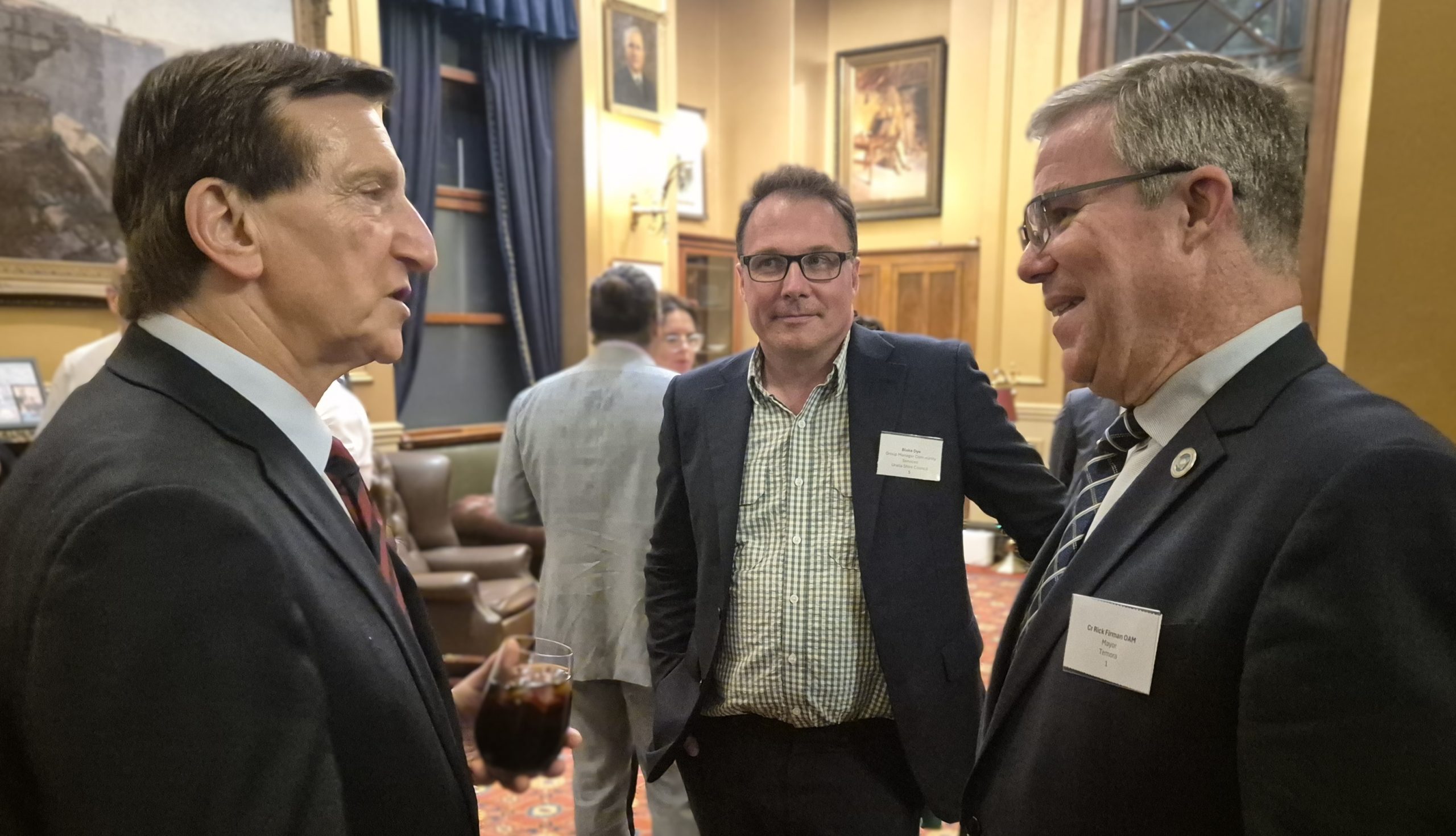
NSW Minister for Local Government, Ron Hoenig (left) and CMA chairman, Rick Firman in Sydney this week.
The removal of both was decried by councils across New South Wales. The loss of attendance by AVL was seen as restricting councillors’ abilities to represent their communities and for the possibility of misuse because council meetings could be deliberately scheduled for times when some councillors would not be able to attend in person.
While the loss of private briefings was seen as restricting councillors’ opportunities to be better-informed about the matters under their consideration.
“In person attendance at every meeting is not realistic for many councillors in remote, rural and regional New South Wales,” Mr Firman said.
“The CMA wanted to see an amendment to the Code that recognised this situation. It is very unfortunate that despite on-going discussions with the Minister for Local Government, the Hon Ron Hoenig MP, the Greens and the Coalition formed the view that the only way to achieve the amendment was by disallowing the entire Code.
“Councils across New South Wales are now in a position of having to undo changes that have been put into place since the introduction of the Code last year.




“For many, it will be a costly and time-consuming exercise,” he said.
CMA deputy chairman, Russell Fitzpatric, echoed concern about the costs associated with the now defunct 2025 Code as well as the time it has taken for amendments the CMA lobbied for.
“Councillors and general managers just want certainty on the process they must follow,” Mr Fitzpatrick said.
“We understand the Government had been examining the feedback received from Dr Cohn MLC, the Country Mayors Association and Local Government NSW on the Model Meeting Code, with quite advanced drafting on an updated code.
“We are hoping drafting for the new Code will be completed as soon as possible. We encourage the Government, Coalition, Greens and Cross-Benchers to work as quickly and as collaboratively as possible to remove the current uncertainty.
“The CMA as a key stakeholder would welcome any opportunity to provide input into the resolution of the issue,” he said.
However, in a media statement issued Wednesday, Minister for Local Government Ron Hoenig said the Upper House reactivated the ability for New South Wales councils to hold secretive, private briefing sessions, undoing measures the Minns Labor Government introduced to increase transparency and public confidence in local government.
“The Government’s rewrite of the Model Meeting Code, which came into effect in January, 2026, banned private briefings, required all councils to livestream and record council meetings, as well as provided clearer powers and processes for mayors so meetings may be conducted in a dignified manner and in the full view of the public,” Mr Hoenig said.
“Members of the Liberals and Nationals banded together with the Greens and Mark Latham to disallow the regulation that enacts the Code – completely disregarding the principles of open decision-making and recommendations of the ICAC to prevent corruption in local government.
“Every council will now be burdened with unnecessary confusion and uncertainty as the transparency and other measures contained in the new Code need to be wound back by each of New South Wales’ 128 councils.
“The Liberal-Nationals, the Greens and Mark Latham unity ticket in the NSW Upper House has thrown the baby out with the bathwater,” he said.
“While extensive consultation with stakeholders was undertaken in developing the new Code, the Government had agreed to consider a number of wording amendments to address any unintended consequences.
“This was mainly in response to issues raised by rural and regional councils where the circumstances can be unique to a particular area.
“Constructive meetings were held earlier this month with Local Government NSW and the Country Mayors Association where the Government agreed to a range proposals from the sector.
“Last night’s actions go against recent representations made on behalf of the sector.
“Not only are the political games being played by the Liberal-Nationals and Greens in the Upper House hampering the state government’s ability to legislate, but they are now also directly impacting on local government and all 128 councils,” Mr Hoenig said.
“The Government is now considering options in relation to these long overdue reforms which were introduced to improve the transparency and decency of council meetings and reduce corruption risks.”



0 Comments