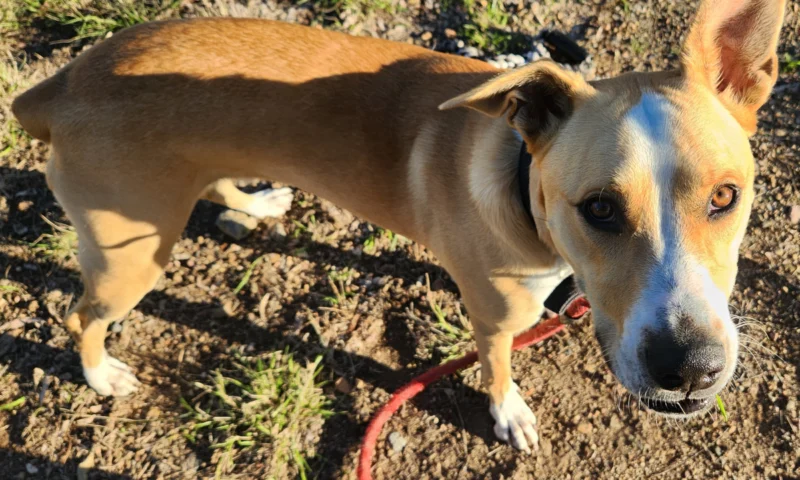
Bernie is among the pets that would be covered by Moree Plains Shire Council’s proposed Keeping of Animals Policy, and gives the editor a convenient excuse to publish a photo of his dog. Image: Moree Online News
New rules for keeping dogs, cats and poultry have been proposed for homes across the Moree Plains Shire.
The DRAFT Keeping of Animals Policy sets animal limits based on property size. It also explains what Council expects from owners and how animal complaints may be handled.
Proposed animal limits
Under the draft, the proposed limits would be:
| Property size | Dogs | Cats | Poultry |
|---|---|---|---|
| Less than 2,000 square metres | 2 | 2 | 6 hens, no roosters |
| 2,001–5,000 square metres | 3 | 3 | 10 hens, no roosters |
| 5,001 square metres–1 hectare | 4 | 4 | 20 poultry, no roosters |
| Greater than 1 hectare | npl | npl | npl |
npl = No prescribed limit
The draft says the limits are meant to guide residents and help Council officers deal with animal complaints in a more consistent way.
Numbers would not be the only issue
The number of animals kept on a property would be only one part of the picture.
Council could still act if animals caused ongoing noise, smell, waste, vermin or other problems for neighbours, even if the owner stayed within the proposed limits.
In the same way, keeping more animals than the limit would not always lead to automatic action. Council could investigate whether the animals were affecting public health, animal welfare, the environment or nearby homes.
The draft says Council would usually encourage owners to fix problems before formal action was considered.
Existing owners would be protected
People already lawfully keeping more animals than the proposed limit would not be required to reduce their numbers when the policy began.
However, any later increase in animal numbers could be judged against the new limits.
Puppies and kittens younger than three months would not count towards the limit if they were part of a litter born to an animal lawfully kept on the property.
Once they reached three months, owners would be expected to rehome, sell or otherwise lawfully remove them unless the total number of animals still met the limit.
What owners would need to do
The draft also sets out basic expectations for animal owners.
Dogs and cats would need to be properly contained and managed so they did not create a nuisance. Owners would also need to meet existing NSW microchipping and registration rules.
Poultry would need to be kept in suitable enclosures and managed to reduce smell, flies, vermin and other impacts on nearby properties.
The policy would not apply to approved commercial animal boarding or breeding establishments, land not used for residential purposes, veterinary practices, Council pounds, animal shelters or animal management facilities, working dogs on bona fide rural properties, registered breeders operating in line with NSW legislation, or temporary animal care arrangements approved or supported by Council, such as fostering.
What happens next
Councillors will consider placing the draft policy on public exhibition for 28 days at the Ordinary Council Meeting on Thursday, July 16.
If it goes on exhibition, residents will be able to make written submissions before the policy returns to Council for final consideration.