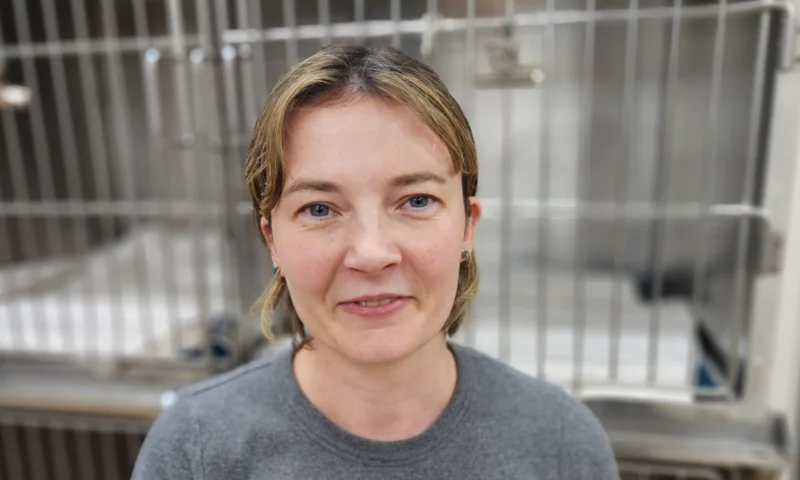
Veterinarian Eliza McInnerney says bird owners should phone Moree Veterinary Hospital before bringing an unwell bird to the clinic so staff can assess the situation and prepare appropriate biosecurity measures. Photo: Moree Online News.
Bird owners are being urged to phone Moree Veterinary Hospital before bringing in a sick bird, allowing staff to assess the situation and prepare appropriate infection-control measures.
The clinic introduced the additional precautions after reviewing its avian influenza protocols with its district veterinarian. The measures are precautionary, and no H5 bird flu cases have been reported in the Moree Plains region.
Veterinarian Eliza McInnerney said calling ahead allowed staff to assess a bird’s symptoms over the phone and determine the safest next step.
“We talk to them on a phone triage and figure out what the best course is for that particular bird,” she said.
For pet birds and backyard poultry, the clinic’s advice is broadly the same, with each case assessed individually.
The advice differs for wild birds.
Ms McInnerney said members of the public should avoid handling sick or dead wild birds where possible and report suspected cases through the Emergency Animal Disease Hotline.
“We’re happy to talk as well, but we’d probably say call the hotline first,” she said.
H5 bird flu has been detected in migratory seabirds in Australia, including a giant petrel found near Hawks Nest in New South Wales.
As of 9am on July 14, the Australian Government had confirmed 13 detections in wild birds nationally: seven in Western Australia, five in South Australia and one in NSW. There was no evidence of infection in poultry or the wider agricultural industry.
The NSW Government said the state’s detection remained limited to the single migratory seabird near Hawks Nest, with no evidence of spread to local wildlife and no detections in commercial poultry, captive birds or other birds in NSW.
What signs should bird owners look for?
Ms McInnerney said respiratory symptoms were among the most concerning signs, including discharge from the eyes, nose or throat, coughing and difficulty breathing.
“Unfortunately, the signs for avian flu can be pretty broad,” she said.
“Any kind of sickness we would treat as potentially suspicious.”
Other possible signs include lethargy, reluctance to walk, eat or drink, a droopy appearance, ruffled feathers, swelling around the head and neck, diarrhoea, a sudden decrease in egg production and unexplained sudden death.
Simple steps to reduce the risk
Ms McInnerney said backyard bird owners should try to separate domestic birds from wild birds and prevent them from sharing food or water.
Bird owners should also protect feed and water from wild birds, quarantine new birds before adding them to a flock, clean equipment and footwear, limit visitor access and practise good hygiene.
NSW Health says the current risk of bird flu to people in Australia is low. People should avoid contact with sick or dead wild birds and report multiple sick or dead birds or other animals.
If you find a sick bird
Owners of pet birds or backyard poultry should phone Moree Veterinary Hospital on (02) 6752 1444 before bringing a sick bird to the clinic. Calling ahead allows staff to assess the situation and prepare appropriate biosecurity measures if needed.
Members of the public who find sick or dead wild birds should avoid handling them and report the situation to the 24-hour Emergency Animal Disease Hotline on 1800 675 888.
The clinic said the procedures were intended to protect patients, staff and other animals while allowing sick birds to receive appropriate care.